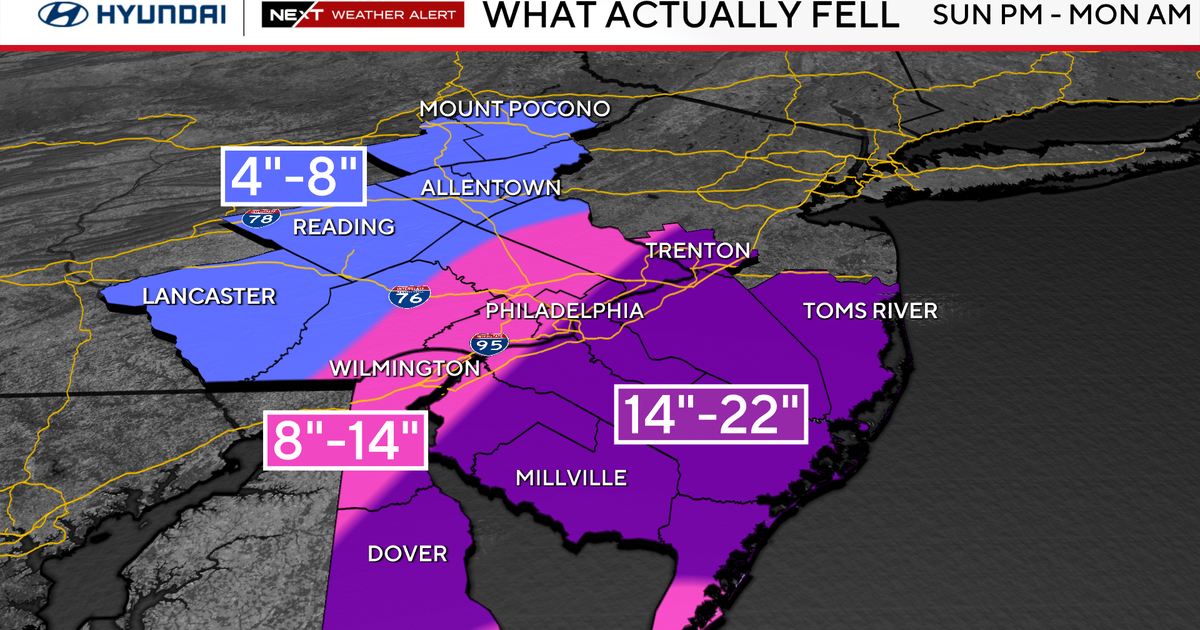
A powerful blizzard dumped over a foot of snow across the Delaware Valley, with Philadelphia International Airport reporting 14 inches and localized totals up to 22 inches in Langhorne and 21 inches in Morrisville; the storm produced snowfall rates exceeding 2 inches per hour and has pushed the 2025–2026 season into the top 20 snowiest on record for Philadelphia. Warnings have been canceled as precipitation tapers, but refreezing and black ice risks remain, creating short-term disruptions for airports, roads and municipal services and modest near-term impacts on regional transportation and operations.
Market-structure: Heavy, wet snow winners are winter-input suppliers and last-mile services that charge surge rates — think road-salt/minerals, snow-removal contractors, and big-box retailers that sell shovels/heaters. Losers are short-duration transport providers (regional flights, same-day couriers) and municipalities facing unexpected OPEX; expect a 1–3 day spike in delivery delays and localized pricing power for emergency services (10–30% higher per-job rates).
Risk assessment: Immediate risk (0–7 days) is operational: flight cancellations, UPS/FDX reroutes, and refreezing creating secondary incidents; short-term (weeks) risk is municipal budget pressure and potential insurance claims from roof/auto damage. Tail risks include prolonged infrastructure outages or multi-week supply-chain interruptions in the Northeast that could ripple into Q1 retail metrics and small-muni credit stress. Catalysts that could worsen outcomes: extended sub-freezing nights, rapid melt causing flooding, or a cascade of airline rescheduling across hubs.
Trade implications: Favor select longs in Compass Minerals (CMP) and Home Depot (HD)/Lowe’s (LOW) for a 2–12 week seasonal bump; tactical shorts or put spreads on regional airline exposure (UAL, LUV) and short-dated underweight on UPS/FDX for 3–7 days of above-normal cost. Use options to cap risk: buy-weeklies or 2–6 week call spreads on CMP/HD and buy 1–2 week put spreads on regional airlines; consider a small long in UNG (natural gas volatility) if temps remain below-normal >3 days.
Contrarian angles: The consensus will overweight HD/LOW; that may be crowded — smaller niche plays (CMP, regional snow-removal contractors or municipal services ETFs) are underpriced. Insurers’ exposure is often underestimated for heavy wet snow (roof collapse/claim clusters) — consider short-dated event hedges on select regional P&C names if claim reports surface in 7–14 days. Historical parallel: 2013–14 big East Coast snow produced outsized local salt/mineral sales but muted national retail uplift — allocate accordingly.
AI-powered research, real-time alerts, and portfolio analytics for institutional investors.
Request DemoOverall Sentiment
neutral
Sentiment Score
0.00
