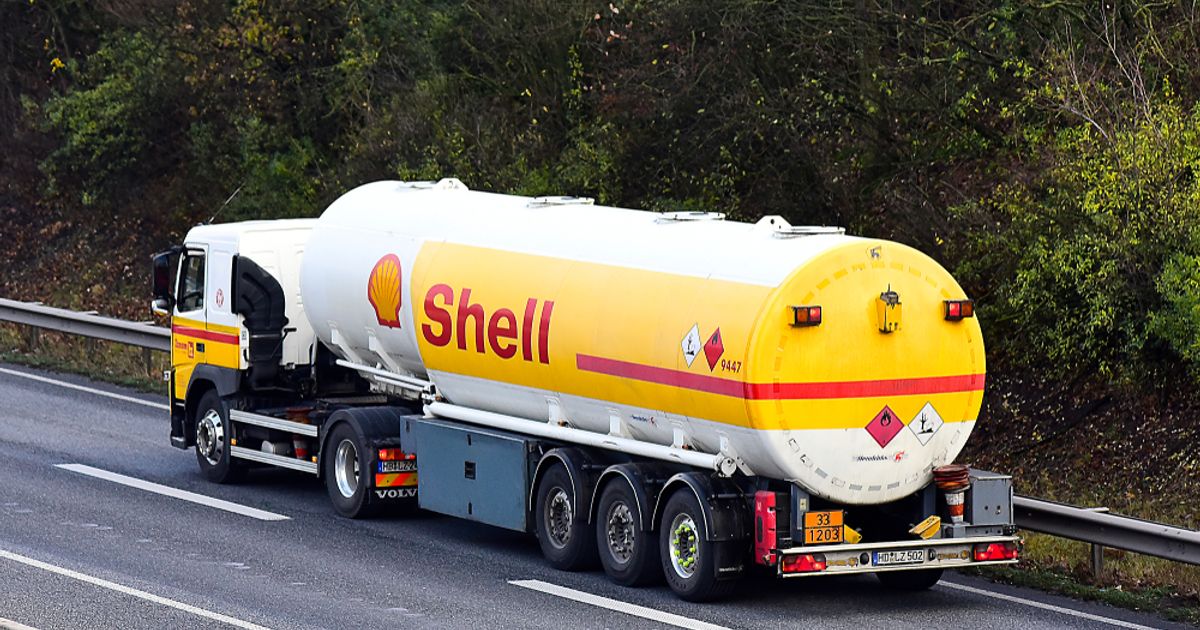
Shell reported Q4 2025 adjusted earnings of $3.26bn, down 40% and below analyst expectations of $3.5bn, and full-year adjusted earnings of $18.5bn versus $23.72bn in 2024. Management cited tax adjustments and weakness in chemicals despite stronger integrated gas, upstream and marketing results, raised the quarterly dividend 4% to $0.372 per share and launched a $3.5bn buyback, while net debt rose to $45.7bn (gearing 20.7% vs 18.8%). The shareholder returns signal continued capital allocation discipline amid weaker oil prices, even as profitability and balance-sheet leverage have deteriorated.
Market structure: Shell’s $3.5bn buyback and 4% dividend raise are defensive moves that directly benefit equity holders and supporting market-makers in the near term while pressuring credit investors as net debt rose to $45.7bn and gearing to 20.7%. Smaller E&Ps and chemicals-heavy players (who lack large buyback capacity) are the likely losers if crude stays weak; integrated majors retain relative pricing power via capital returns even as sector cash flow compresses. Cross-asset: expect modest widening in Shell credit spreads if debt creeps toward $55bn+, slight lift in implied equity volatility around earnings, and continued sensitivity of GBP and NOK to oil swings; commodities remain the primary driver of cash flow volatility.
Risk assessment: Tail risks include (1) European windfall taxes or retroactive tax adjustments (10–15% low-probability, high-impact), (2) sustained Brent < $60 for >3 quarters, or (3) an S&P/Moody’s downgrade if gearing >25% or net debt >$55bn; each would force buyback cuts. Immediate (days) reaction: buyback supports price; short-term (weeks–months): earnings and Q1 oil price will be key; long-term (quarters–years): structural weakness in chemicals could depress ROIC absent portfolio changes. Hidden dependencies: chemicals margins, tax reclaims, and FX translation effects on reported earnings can swing adjusted EPS materially; OPEC+ decisions and European fiscal policy are primary catalysts.
Trade implications: Direct play — consider a modest tactical long in SHEL (2–3% portfolio position) funded from cyclical E&P exposure, capturing buyback-induced floor for 3–6 months while monitoring net debt. Pair trade — go long SHEL / short EQNR (1:1 notional) for 3 months to express buyback and cap‑allocation divergence; close or rebalance after Q1 results. Options — hedge with a 6‑month put spread sized ~25% of the equity stake (buy 15% OTM put, sell 30% OTM put) to cap downside cost, and sell 3‑month covered calls ~8% OTM to enhance yield if holding shares. Sector rotation — trim chemicals/refiners exposure by ~25% over 30 days and tilt into integrated majors (SHEL, TTE) and LNG winners.
Contrarian angles: The market may over-penalize Shell for a single-quarter EPS miss while underweighting the signalling effect of consistent buybacks (17 quarters ≥$3bn), creating a short-term mispricing if oil rebounds to $70–80. Conversely, buybacks can mask deteriorating free cash flow — if net debt breaches $55bn or gearing >25% rapidly, downside could be larger than implied by options vol; historical parallels (2015–16) show majors can sustain buybacks until a cliff forces abrupt cuts. Actionable watch: treat buyback as conditional liquidity — add only up to target allocation and force-sell on explicit thresholds (net debt >$55bn, dividend cut, or >15% EPS miss vs consensus).
AI-powered research, real-time alerts, and portfolio analytics for institutional investors.
Request DemoOverall Sentiment
mixed
Sentiment Score
-0.05
Ticker Sentiment
