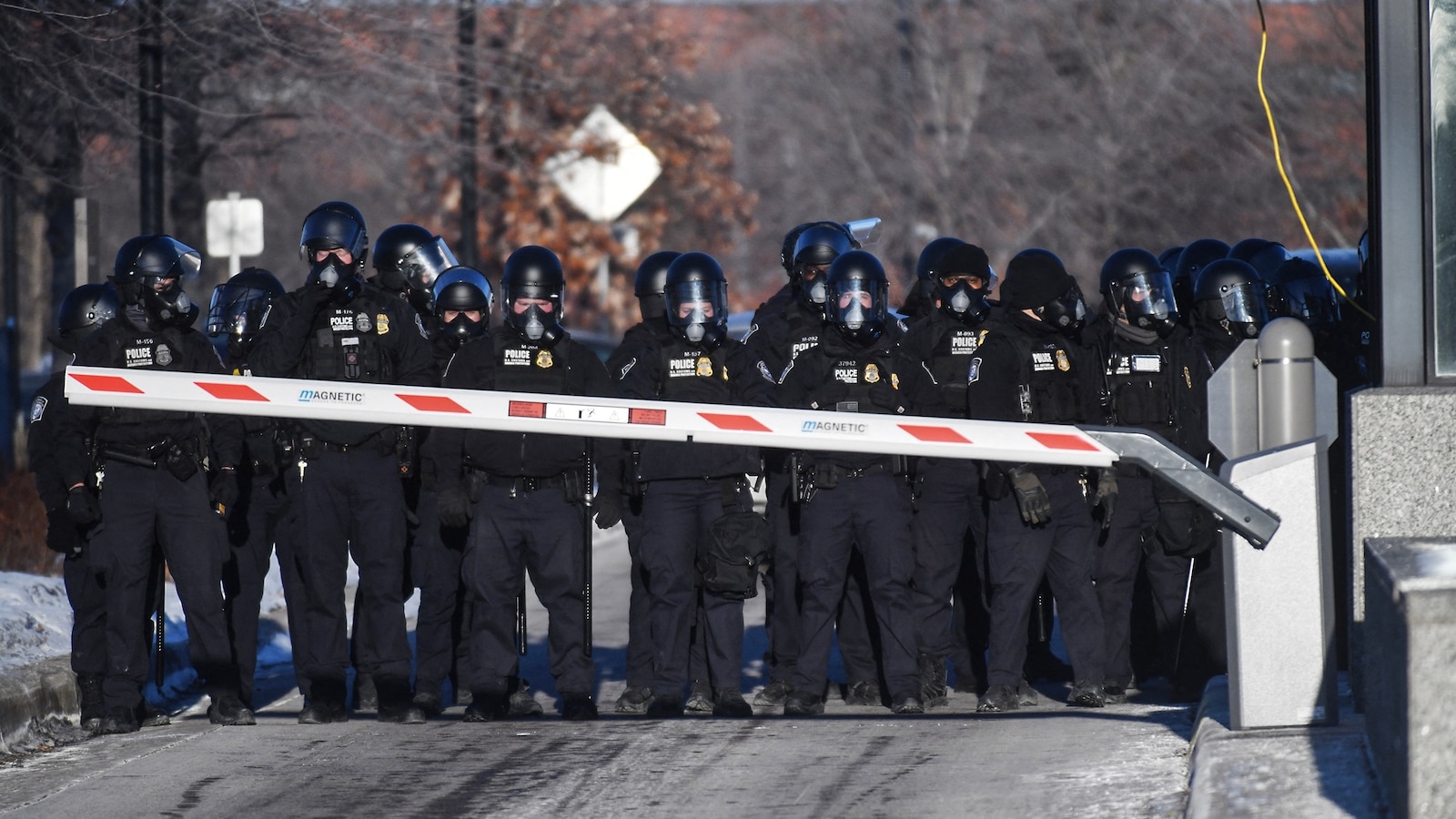
The Pentagon’s Northern Command stood down more than 1,500 active-duty soldiers from the 11th Airborne Division in Alaska who had been placed on alert for potential deployment to Minneapolis, with additional preparatory orders reportedly issued to units nationwide including about 200 Texas National Guard troops. The alerts followed President Trump’s threat to invoke the Insurrection Act amid protests and federal officer-involved shootings; Minnesota Governor Tim Walz activated the state National Guard to secure the Whipple Federal Building. DHS announced Minneapolis officers will begin wearing body cameras with plans to expand the program nationally, while officials indicated no specific federal mission had been ordered.
Market structure: Immediate winners are vendors of law‑enforcement hardware/software — primarily AXON (AXON) and Motorola Solutions (MSI) — as DHS’s announced body‑camera expansion signals $200–400M incremental procurement over 12–24 months and recurring cloud revenue upside. Defense primes (LMT, NOC, LHX) see mixed impact: a domestic stand‑down reduces short‑term expeditionary logistics demand but preserves Pacific deterrence posture, sustaining medium‑term budgets for Arctic/airborne capabilities. Cross‑asset: de‑escalation is a mild risk‑on impulse — expect equities +0.5–1% and safe‑haven Treasuries to give back ~5–15 bps near term; USD slightly firmer, oil unaffected absent wider unrest.
Risk assessment: Tail risk includes full invocation of the Insurrection Act (low prob but high impact), triggering politicized procurement freezes or DOJ scrutiny that could hit contractors’ revenues; model a 5–10% downside to affected defense names in that scenario. Time horizons: days — headline volatility; 1–3 months — DHS contract signals and congressional appropriations; 6–24 months — material revenue recognition for vendors. Hidden dependency: federal procurement requires appropriations and RFP cadence — winning a pilot does not equal nationwide rollout. Catalysts: DHS RFPs/awards (30–90 days), congressional hearings, new incidents that reopen deployment debate.
Trade implications: Direct: establish a 2–3% long position in AXON over 3–6 months to play hardware + SaaS lift; add a tactically sized 1–2% long in LHX or MSI for communications/body‑cam integration exposure. Options: buy AXON 3–6 month call spreads (delta ~0.30) sized to limit premium to 0.5–1% of portfolio, roll on RFP outcomes. Pair trade: long AXON / short JETS (airline ETF) 1%/1% to express security spending upside vs travel‑sensitivity; exit or rebalance on DHS award or if AXON rises 30%.
Contrarian angles: Consensus underestimates the SaaS annuity from body‑cam evidence platforms — if AXON secures a multi‑agency deal, 6–12 month EPS upside could be 20–40% vs current expectations. Reaction may be underdone for small-cap vendors and overdone for cyclic airlift names already rallied on China deterrence narratives. Unintended consequence: privacy/regulatory pushback could cap multiples for device vendors; set stop losses at 10–15% and monitor legislative hearings within 30–60 days.
AI-powered research, real-time alerts, and portfolio analytics for institutional investors.
Request DemoOverall Sentiment
neutral
Sentiment Score
-0.15
Ticker Sentiment
