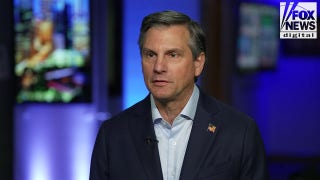
Secretary of State Marco Rubio met Pope Leo and Vatican officials in a constructive diplomatic engagement centered on the U.S.-Iran conflict, Middle East peace efforts, and humanitarian concerns. Trump reiterated that Iran must not obtain a nuclear weapon, while the Vatican has criticized rhetoric targeting Iran’s population as unacceptable. The article signals U.S.-Holy See coordination but contains no direct market-moving policy decision.
The market implication is not the Vatican headline itself, but the signaling that the administration is keeping the diplomatic channel warm even while preserving maximalist pressure on Iran. That lowers the odds of an immediate, accidental escalation premium in oil and defense stocks, but it does not remove the underlying tail risk: any breakdown in talks or a misread of red lines can still reprice energy and volatility within days. The more important second-order effect is that Europe, especially Italy, now has a slightly larger role as an intermediary, which modestly improves the odds of a managed-off-ramp rather than a clean break.
For defense and infrastructure names, this is a mild positive for procurement optionality, not a new demand driver. A contained Middle East posture reduces urgency for near-term emergency spending, but it raises the probability of steady, multi-year replenishment orders if policymakers conclude deterrence has to be sustained without open conflict. In that regime, prime contractors and missile-defense suppliers tend to outperform legacy ground-warfare exposures because the budget mix shifts toward air defense, ISR, and munitions rather than large troop-intensive programs.
The contrarian read is that consensus may be overestimating the durability of any de-escalation narrative. A Vatican-mediated softening of rhetoric does not change regime incentives in Tehran, and it can actually create a false sense of stability that compresses crude volatility too much. That creates a favorable asymmetry for buying cheap upside convexity in energy and defense over the next 1-3 months, especially if headlines remain calm while physical risk remains unresolved.
AI-powered research, real-time alerts, and portfolio analytics for institutional investors.
Request DemoOverall Sentiment
neutral
Sentiment Score
0.00
