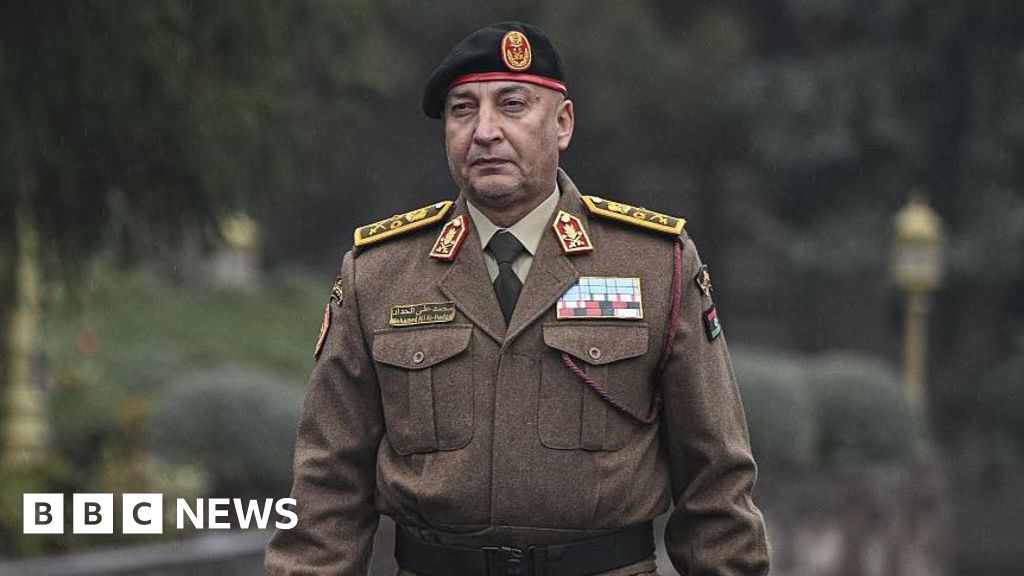
Libyan army chief Gen. Mohammed Ali Ahmed al-Haddad and four others were killed when a Falcon 50 business jet crashed southwest of Ankara after losing contact about 42 minutes after takeoff; the Tripoli-bound jet had issued an emergency landing request and wreckage was located near Kesikkavak in Haymana district. The delegation had been in Turkey for talks to deepen military and security cooperation; Libya's prime minister called the deaths a significant national loss and Turkish authorities have opened an investigation. The incident creates short-term political and security uncertainty for Libya and could raise investor risk premia on Libyan exposure and heighten regional geopolitical risk given Ankara's strategic role in Libya.
Market structure: The immediate shock increases tail-risk premium for Libyan oil and regional security; if Libya output (currently ~1.1 mbpd pre-2020 variability) falls by >100k bpd it would likely push Brent $3–8/bbl within 2–6 weeks. Winners: short-duration oil volatility plays, global oil services (short-term demand for shipping/security), gold and USTs as safe havens. Losers: EM equities (Turkey, North Africa exposure), insurers/reinsurers with regional nat-cat/war clauses.
Risk assessment: Tail scenarios include factional escalation in Libya or deterioration in Turkey-Libya military ties leading to sanctions or naval incidents — low probability but >$10/bbl oil shock if ports/terminals closed for months. Near-term (days) expect volatility spikes in Brent/TRY, short-term (weeks) potential EM outflows, long-term (quarters) political realignment if Turkey’s role changes. Hidden dependency: pipelines/terminals concentrated in eastern Libya mean localized leadership voids can disproportionately affect exports.
Trade implications: Tactical trades favor short-dated oil upside (buy-call spreads on Brent/BNO or USO 2–8 week expiries) and gold longs (GLD) as a 1–2% portfolio hedge; tactically reduce Turkey/TUR and broad EM (EEM) beta by 1–3%. Seek defensive sovereign-credit protection for MENA/EM exposures (buy 6–12 month CDS or put spreads on sovereign ETFs) and small long positions in large defense primes (RTX, LMT) for 3–9 months if geopolitical cooperation increases.
Contrarian angles: Consensus may underprice short-lived supply disruptions — buy granular short-dated Brent convexity if Brent moves <+$2 in first 72 hours. Conversely, if markets gap oil +$5 immediately, energy-ETFs/contango will mean selling rallies into strength (take profits at +25–40%). Historical analog: 2011 Libya shocks spiked Brent then faded as global spare capacity absorbed flows; use clear stop-losses and time-bound option expiry to exploit reversion.
AI-powered research, real-time alerts, and portfolio analytics for institutional investors.
Request DemoOverall Sentiment
moderately negative
Sentiment Score
-0.30
