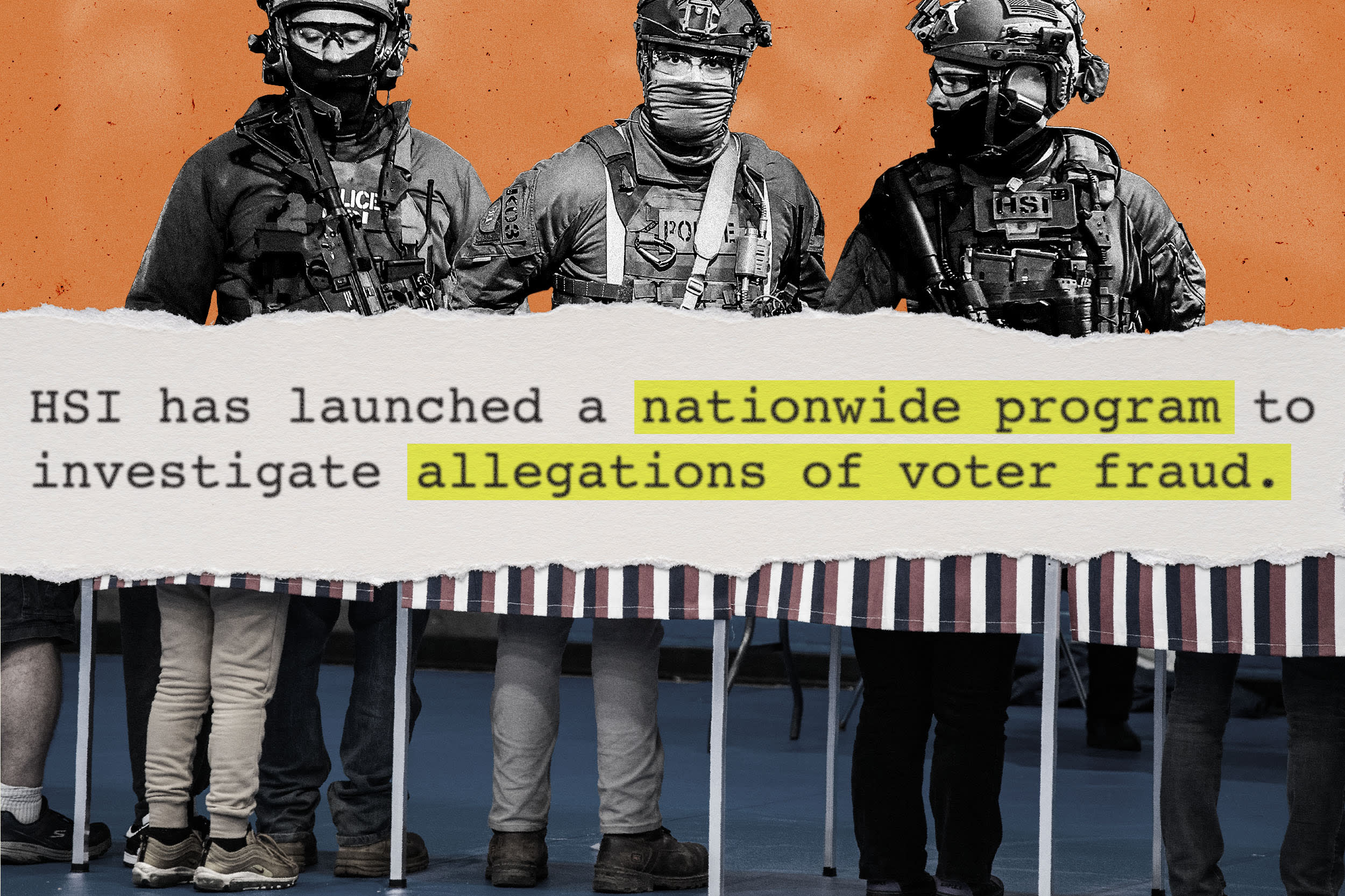
Homeland Security Investigations has launched a White House-directed nationwide program to review open and closed cases alleging illegal voting by noncitizens and to identify naturalized citizens who may have registered or voted before naturalization, with agents asked to report instances where charges were declined. The escalation — tied to Executive Order 1428 and accompanied by discussions of deploying law enforcement to polling places — has prompted alarm among federal prosecutors and agents about potential voter intimidation and legal exposure, raising political and regulatory risk ahead of the midterms while posing limited direct market implications.
Market structure: The immediate winners are federal defense/security and data-analytics contractors (LHX, LMT, NOC, PLTR, BAH, CACI) as DHS/HSI workloads and procurement for election security, analytics and physical security rise; losers include niche voting-technology incumbents (largely private) and civil-liberties NGOs facing legal pressure. Pricing power shifts modestly toward prime contractors able to scale quickly — expect 3–12 month procurement-driven revenue bumps rather than permanent margin expansion. Cross-asset: election/legal volatility should lift Treasury demand (10y T-note down yields), push modest USD safe-haven flows, and increase equity implied volatility in small/mid-cap defense and analytics names.
Risk assessment: Tail risks include judicial injunctions or state-level pushback which could arrest federal spending (low probability, high impact), or aggressive prosecutions that ignite nationwide protests and broader risk-off. Immediate (days): headline-driven equity swings; short-term (weeks–months): contract RFPs, DOJ announcements; long-term (quarters–years): potential regulatory reforms constraining DHS scope or creating recurring federal budgets for election security. Hidden dependencies: actual contract timing (procurement cycles lag headlines by 60–180 days), and congressional appropriations which can amplify or negate the win for vendors.
Trade implications: Direct plays favor selectively long prime defense/analytics contractors via call spreads to cap cost (3–12 month tenors) and short idiosyncratic small-cap names that can’t scale. Pair trade: long PLTR (analytics exposure) vs short a small IT government services name with weak backlog (e.g., small-cap CACI peer) to capture relative upside. Use 3-month TLT or 10y futures as a 1–2% portfolio hedge for election-driven risk; consider buying 1–2% notional VIX calls if midterm volatility spikes.
Contrarian angles: Markets may underprice procurement speed — White House-driven priorities can produce accelerate-able direct awards (months) not years, creating mispricings in mid-cap contractors; conversely, consensus may be underestimating legal/regulatory backlash that could delay spend. Historical parallel: post-9/11 repricing favored primes within 6–18 months but smaller contractors faced churn; unintended consequence: aggressive enforcement rhetoric could trigger bipartisan restraints that reverse the trade within 12–24 months.
AI-powered research, real-time alerts, and portfolio analytics for institutional investors.
Request DemoOverall Sentiment
mildly negative
Sentiment Score
-0.25
