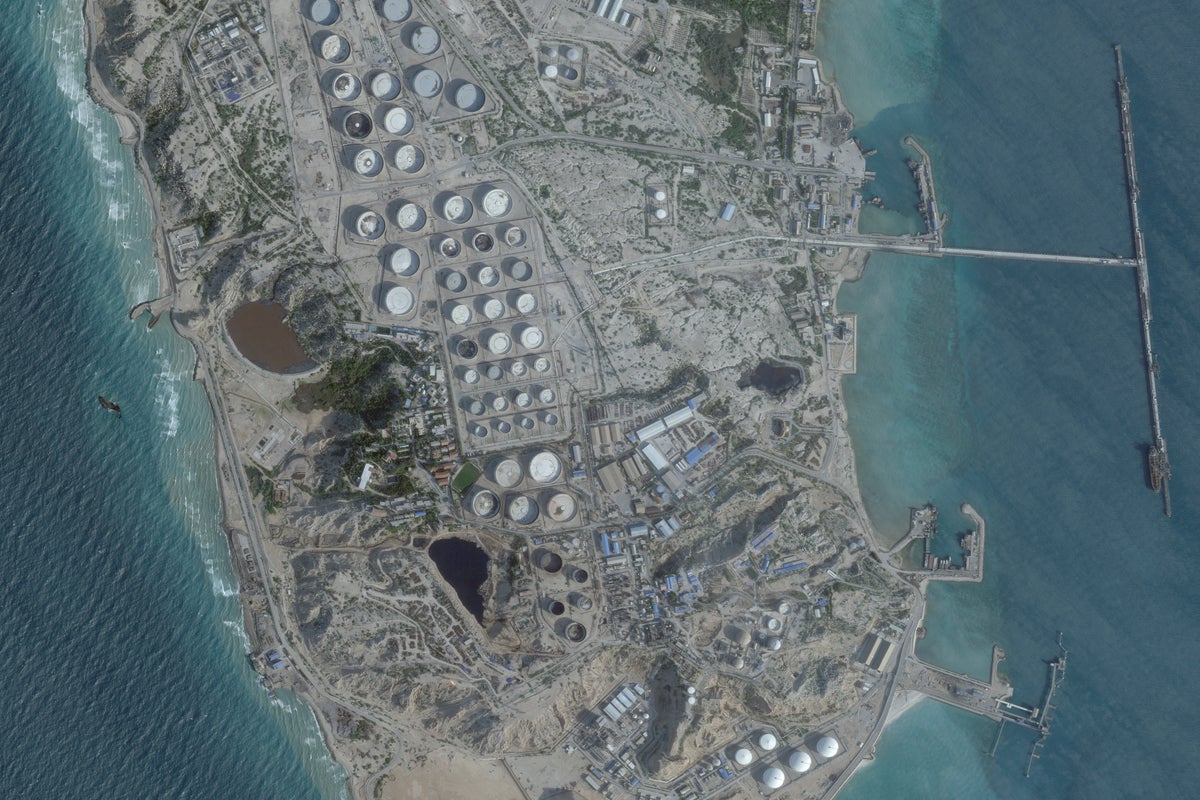
Kharg Island handles roughly 90-94% of Iran’s oil exports and US forces have launched strikes while discussing a possible seizure, raising the risk of a sustained cutoff of Iranian oil. Oil has already surged above $100/bbl since the war began and Iranian officials have warned prices could reach $200/bbl if hostilities escalate. Seizing or disabling Kharg would materially pressure Iran’s fiscal receipts (oil ~40% of government revenue), disrupt global supply chains via the Strait of Hormuz, and likely force a prolonged, market-moving standoff that would be highly negative for risk assets and inflation expectations.
Market mechanics: the prospect of a contested control point in the Gulf acts as a volatility multiplier rather than a one-way supply shock — war-risk premia, P&I and hull insurance, and time-charter rates react within days while physical rerouting and legal tussles take weeks to months to crystallize. Expect tanker dayrates (VLCC/Suezmax) to spike in the first 1–6 weeks if export chokepoints persist, with a materially higher basis for storage economics that benefits owners of liquid shipping capacity and floating storage arbitrageurs.
Second-order competitive dynamics favor asset owners of mobility and storage over commodity processors. Traders and tanker owners capture outsized spreads through logistics dislocation; refiners with complex configurations and access to alternative feedstock enjoy optionality, whereas thinly capitalized, simple refiners in Europe and Asia face margin squeezes and FX stress. Insurance and marine services see premium-led revenue bumps but also correlated claims risk; defense/ISR suppliers pick up durable demand if occupation or mine-clearance operations extend beyond short tactical windows.
Risk/catalysts and timing: on a days-to-weeks horizon, headline risk drives price gaps of $15–40/bbl; on a 1–3 month horizon, successful diplomatic de-escalation or a Saudi/Emirati surge capacity response can compress that volatility materially. The true tail (months–years) is terminal damage or sustained occupation that removes export capacity — a low-to-medium probability but high-impact event that would keep structural prices elevated and force durable re-routing of supply chains.
Contrarian read: consensus prices in options markets already bake in headline risk; upside is front-loaded while mean reversion is plausible if Gulf producers coordinate output or SPR releases are executed. That argues for asymmetric, volatility-aware exposure rather than outright long crude or one-way equity bets — buy protection of the squeeze and optionality on elevated freight rather than full-duration commodity exposure.
AI-powered research, real-time alerts, and portfolio analytics for institutional investors.
Request DemoOverall Sentiment
strongly negative
Sentiment Score
-0.70
