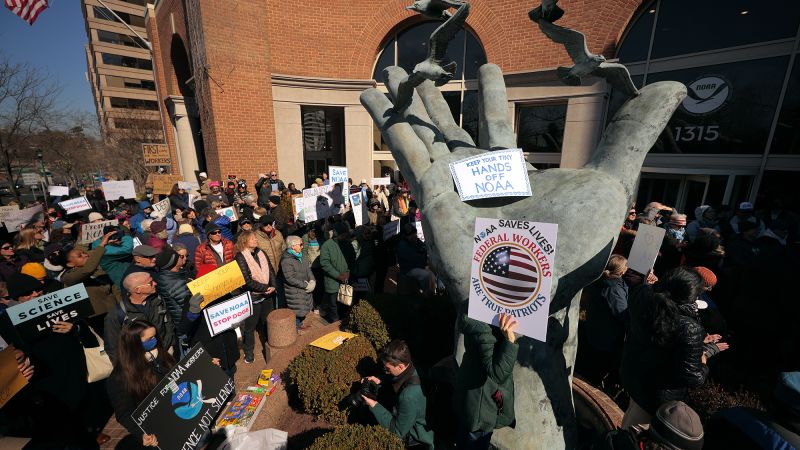
President Trump has issued executive orders stripping collective bargaining rights from approximately one million unionized federal workers, citing national security concerns. Labor leaders view this as the "single largest attack" on the U.S. labor movement, fearing it could reverse recent union momentum and serve as a blueprint for private sector employers. This action, potentially dwarfing historical precedents, signals a significant shift in federal labor policy with broad implications for labor power dynamics and future contract negotiations across industries.
The Trump administration's executive orders to strip collective bargaining rights from approximately one million federal workers represent a significant escalation in anti-union policy with broad market implications. Labor leaders characterize this as the "single largest attack on the labor movement in our history," fearing it will act as a blueprint for the private sector. This move directly counters the recent momentum unions gained under the previous administration, which saw high-profile organizing wins at firms like Amazon and Starbucks and substantial contract victories at Boeing and the Big Three automakers. The administration's actions are reminiscent of President Reagan's 1981 firing of PATCO strikers, a move that weakened unions for decades, though labor leaders assert the current situation "dwarfs PATCO" in scale. The order's immediate impact is financial, crippling union funding by halting automatic dues deductions and forcing staff cuts, as seen with the AFGE reducing its workforce by a third. While the White House frames its agenda as pro-worker, these actions are viewed by labor as a direct attempt to weaken their political opposition and organizing capacity, creating a period of heightened legal and industrial uncertainty as unions contest the orders in court.
AI-powered research, real-time alerts, and portfolio analytics for institutional investors.
Overall Sentiment
strongly negative
Sentiment Score
-0.70
Ticker Sentiment
