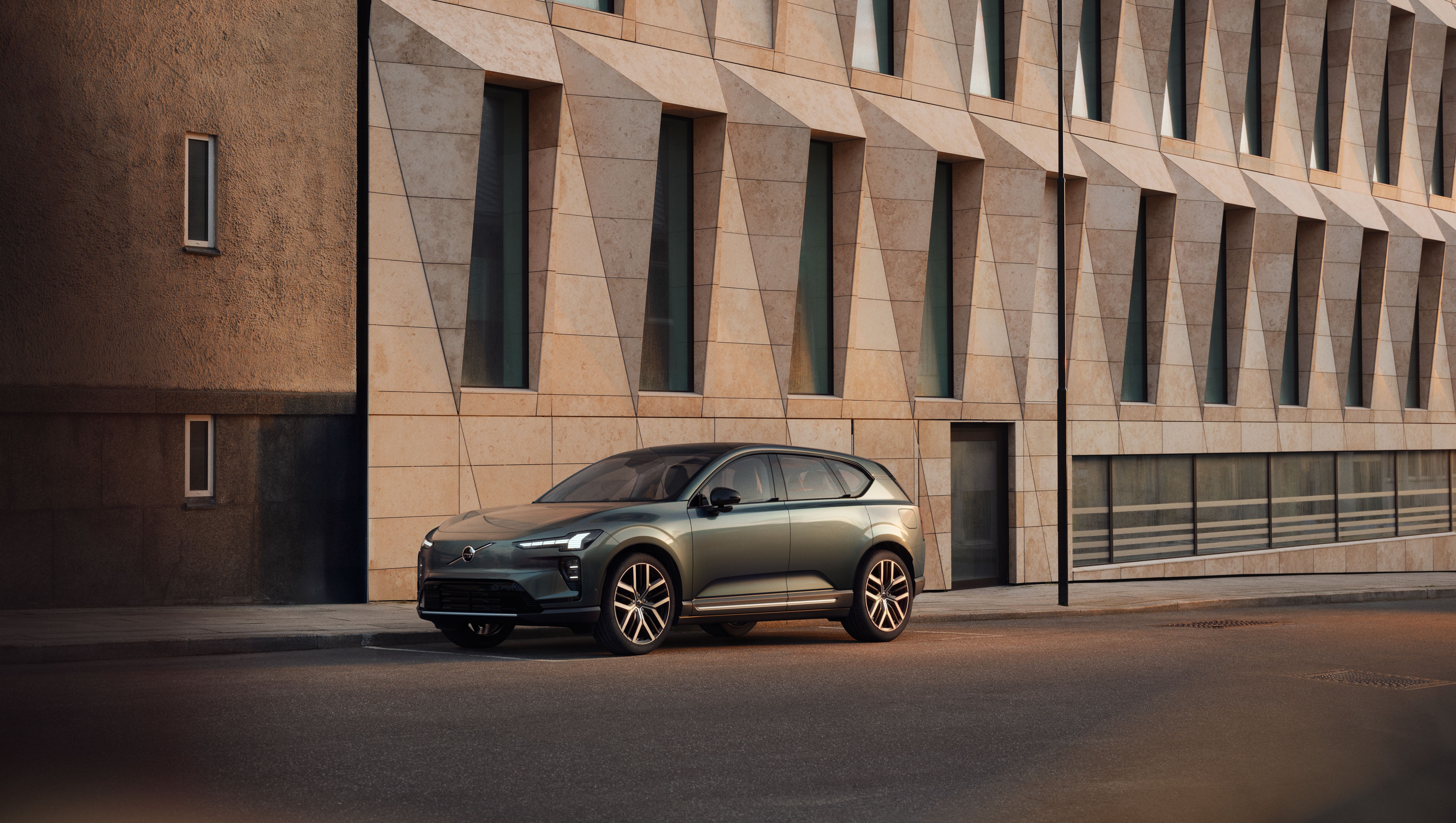
Volvo Cars launched the EX60, an all-electric mid-size SUV built on the new SPA3 architecture and HuginCore system, offering class-leading range (up to 640 km for the P12 AWD and 514 km for the P10 AWD, preliminary EPA-based estimates) and fast-charging capability (up to +270 km in 10 minutes on 400 kW). The model expands Volvo’s addressable electric market, emphasizes new in‑house tech (cell‑to‑body, mega casting, next‑gen e‑motors), is positioned at a more accessible price point (Canadian P10 deliveries from fall 2026 starting at CAD 77,500 before fees), and enters production in Sweden this spring — complementing Volvo Car Group’s strong 2024 financials (SEK 27bn core operating profit; SEK 400.2bn revenue; 763,389 cars sold).
Market structure: Volvo's EX60 raises competitive pressure in the mid‑size EV SUV segment by combining >500–640km claimed range, 400kW fast‑charge capability and lower price points; winners include VOLCAR B (Volvo Cars) for share gains, Google (GOOGL) for deeper in‑car services monetization, and semiconductor/compute suppliers (NVDA, QCOM) for higher content per vehicle. Losers are incumbent PHEV sellers and premium combustion‑centric models facing price and range compression. At scale this favours OEMs with vertical software stacks and proprietary battery/mega‑casting tech, tightening pricing power for efficient EV producers while increasing raw‑material demand for batteries but moderating per‑kWh growth via efficiency gains.
Risk assessment: Key tail risks are production delays, EPA range shortfalls vs. Volvo's 640km claim, limited 400kW charger availability, and regulatory/privacy pushback on deep Google/Gemini integration; any of these could cut projected sales by >20% in 2026–27. Near term (days–months) expect sentiment moves around EPA numbers and production updates; medium/long term (quarters–years) the story hinges on delivery cadence, battery cost declines (<$100/kWh threshold materially expands margin) and software monetization timelines. Hidden deps include cell suppliers, 400kW network adoption and Android Automotive licensing terms.
Trade implications: Tactical ideas — buy VOLCAR B exposure to capture MSRP‑driven share gains and Europe/Canada rollouts (target 2–3% net equity; horizon 9–18 months), buy GOOGL 6–12M call spreads to play Gemini in cars (target 2% notional), and a small NVDA binary call (0.5–1%) to capture higher ASP for in‑car AI compute. Pair trade: long VOLCAR B vs short BMW.DE (0.5–1% each) to express Volvo’s efficiency premium; use stops if Volvo misses production windows by >2 quarters.
Contrarian angles: Consensus underrates infrastructure and delivery risk — 640km claims are preliminary and EPA confirmation will drive re‑rating; software integration may be more costly to monetize than assumed, and mega‑casting/cell‑to‑body raises near‑term capex (pressuring supplier credit). Historical parallels: early VW/ID product ramps showed strong headlines but prolonged margin pressure; if Volvo cannibalizes its PHEV volumes, net EV margin improvement could be muted. Monitor EPA range release, Q2/Q3 2026 production metrics and Google monetization KPIs as 3 primary catalysts.
AI-powered research, real-time alerts, and portfolio analytics for institutional investors.
Request DemoOverall Sentiment
moderately positive
Sentiment Score
0.50
Ticker Sentiment
