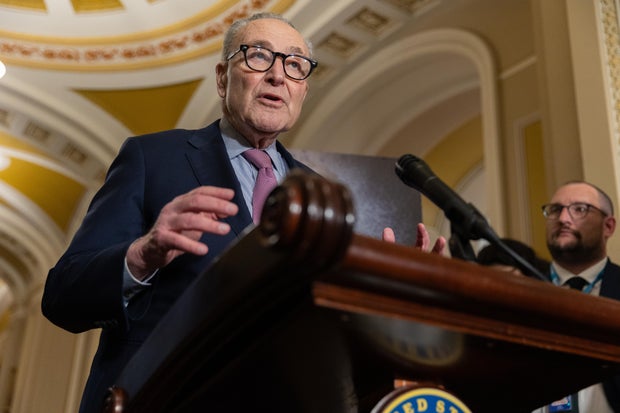
Senate Democrats are blocking a six-bill funding package because it includes Department of Homeland Security funding after the fatal Border Patrol shooting of Alex Pretti, raising the prospect of a partial government shutdown when funding expires Friday, Jan. 30. Six of 12 appropriations bills have been enacted, but the remaining grouped measures (including DHS, Defense, HHS/Education, Transportation/HUD, State, and Treasury) need 60 votes in the 100‑seat Senate; Democrats and some Republicans are urging DHS be split out for separate negotiation while the House is in recess and a winter storm has shortened the Senate calendar, increasing near-term political and operational risk even though many agencies would remain funded.
Market structure: A short, targeted partial shutdown risk concentrates downside on DHS-dependent contractors (surveillance/immigration tech: PLTR, LDOS, LHX) and any vendors with near-term DHS milestone payments; large DoD-centric primes (LMT, NOC, RTX) and Treasury/beneficiary-heavy sectors are relatively insulated because 6 of 12 bills are signed and DoD funding often has carryover. Funding uncertainty tightens near-term demand for border-security CapEx and professional services, pressuring small/SMID government contractors and increasing working-capital strain for sub‑contractors over the next 2–8 weeks.
Risk assessment: Tail risks include a multi-week standoff (>2 weeks) that could delay contract awards/payments, shave ~0.1–0.3% off GDP per additional week of shutdown, and force repricing of small-cap government receivables; reputational and regulatory risk (investigations) could trigger contract cancellations months out. Hidden dependencies: federal pay/timing affects consumer staples and regional services in corridors with high federal employment; cascading vendor liquidity stress could surface within 30–60 days. Catalysts to watch: Senate motion to split DHS (unanimous consent threshold), House return schedule, and DOJ/DHS investigation outcomes — any event moving shutdown probability above 30% should widen risk premia.
Trade implications: In the immediate 48–72h window, favor defensive duration (buy TLT) and selective longs in large diversified defense primes (1–3% position sizes in LMT/NOC) while short small DHS‑exposed contractors (PLTR, LDOS) sized 0.5–1% or buy 6–12 week puts. Use options to express convexity: buy 1‑month SPY 3% OTM put spread to hedge equity exposure and buy a 3–6 month TLT call spread (protective, capped cost). Exit or reduce hedges if Senate strips DHS from the package or the shutdown probability falls under 20%.
Contrarian angle: The market may overstate systemic risk—96% of government funding remains; dislocations will be idiosyncratic and transient, creating buying opportunities in beaten-down cyclicals and reseller/subcontractor stocks once clarity arrives (look to re-enter on 10–20% intraday dips). Historical parallels (short shutdowns 2013/2018) show sharp volatility spikes but limited permanent equity damage; prefer nimble, event-driven positioning with pre-defined stop losses rather than permanent shifts in allocation.
AI-powered research, real-time alerts, and portfolio analytics for institutional investors.
Request DemoOverall Sentiment
moderately negative
Sentiment Score
-0.35
