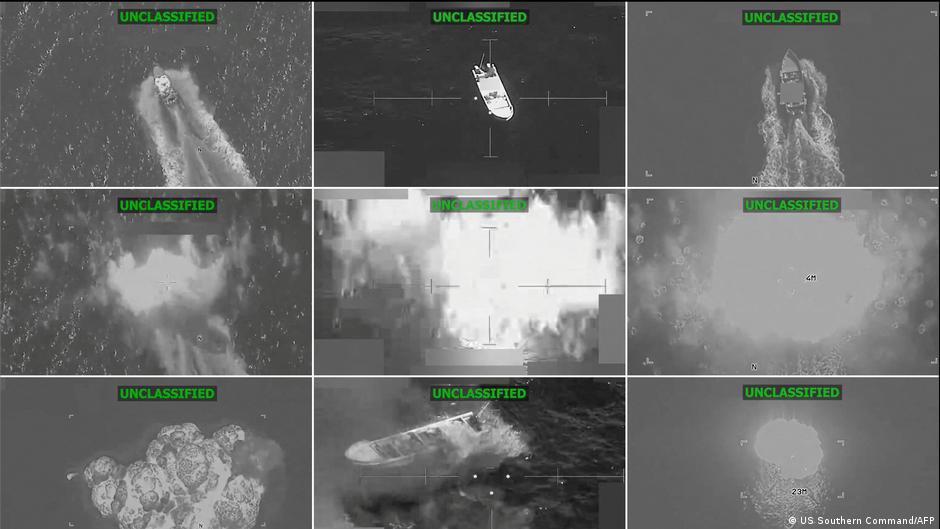
The US has resumed strikes on alleged drug boats, bringing the reported total sunk to more than 50 since September 2025 and at least 177 deaths, intensifying legal and human-rights scrutiny. The administration frames the campaign as self-defense against cartels, while critics call the attacks extrajudicial killings and question their effectiveness. Beyond counter-narcotics, the article suggests the strikes may also be tied to pressure on Venezuela and domestic political goals ahead of upcoming elections.
The immediate market read is not about narcotics interdiction efficiency, but about the normalization of cross-border kinetic policy. That raises a higher-beta tail risk premium across EM sovereigns with opaque security relationships, especially any asset exposed to US unilateral action, secondary sanctions, or maritime insurance repricing. The first-order beneficiary is the US defense/security ecosystem, but the second-order winners are legal-risk intermediaries: insurers, maritime security contractors, ISR vendors, and compliance tools that monetize persistent ambiguity rather than decisive battlefield gains. The more important underappreciated effect is that this can compress risk appetite for Venezuela-linked assets without requiring formal regime change. If Washington is effectively signaling that it will use force to shape political outcomes, then oil, service contracts, and any exposure tied to Venezuelan export normalization become hostage to headline risk. That creates a skewed setup: limited upside if diplomacy improves, but immediate downside if strikes expand or are re-labeled as broader counterterror operations. The same logic applies to Caribbean shipping and smaller coastal logistics names, where even a modest uplift in war-risk premiums can hit margins before volumes show stress. Contrarian view: the market may be overestimating the durability of the escalation. If this is primarily election-cycle signaling, the campaign could fade once domestic optics are achieved, leaving only a temporary spike in defense and insurance premiums. The bigger mispricing is that cartel flow adapts faster than military posture, so any trade predicated on a lasting supply shock should be avoided unless there is evidence of sustained interdiction along multiple routes over several months. Near term, the catalyst window is days to weeks for headlines and legal challenges; the real asset-price effect would show up over 1-3 months via insurance, freight, and EM spreads. The key reversal would be a court constraint, allied pushback, or a shift to nonlethal interdiction that reduces legal and diplomatic risk premia. Absent that, this is a volatility event with asymmetric downside for Venezuelan-related and Caribbean-exposed assets, and modest upside for defense, surveillance, and maritime risk-management providers.
AI-powered research, real-time alerts, and portfolio analytics for institutional investors.
Request DemoOverall Sentiment
mildly negative
Sentiment Score
-0.35
