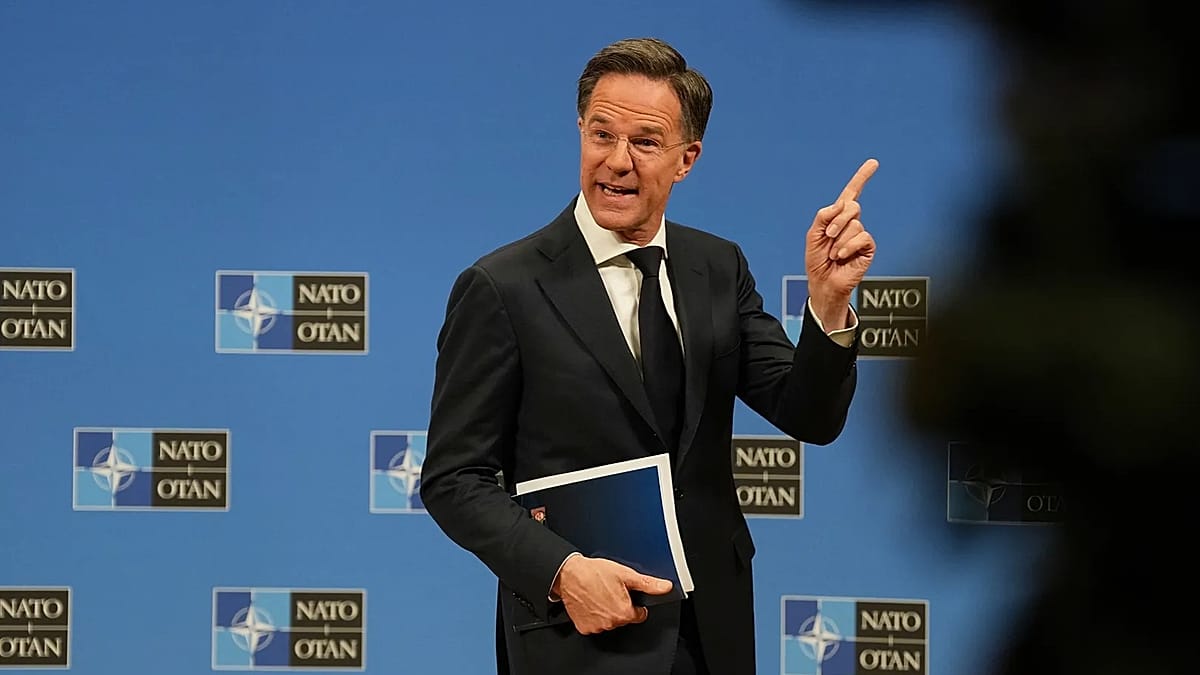
NATO adopted a new 5% of GDP defence target (including 3.5% in hard capabilities) after all allies reached the 2% of GDP benchmark, a shift Secretary General Mark Rutte attributes to pressure from US President Trump. Rutte labeled Russia the most direct threat and supported US-led actions degrading Iranian military capability as NATO and a 30+ nation effort (UK/France to chair talks) consider reopening the Strait of Hormuz, which carries ~20% of global oil flows and has driven energy-price volatility. Implication: sustained upward pressure on defence spending should benefit defence contractors and suppliers, while continued Strait-of-Hormuz tensions pose upside risk to oil prices and broader market volatility.
A sustained step-up in allied defense budgets creates a multi-year demand shock that will not be monetized evenly. Large primes with existing assembly lines and classified backlog can convert awards into free cash flow within 12–24 months, while Tier‑2/3 suppliers face 18–36 month ramp cycles and input-cost passthrough risk; expect order-book wins to outpace revenue recognition initially, compressing small-cap margins.
Commodity and supply‑chain dislocations will concentrate in a few inputs: specialty steels, titanium, high‑reliability semiconductors and select rare earths. Firms controlling capacity in those niches can see price realizations of 10–30% above normal over 12–24 months, but capex lead times and export controls mean constrained supply and second‑order inflationary pressure for defense projects.
Geopolitical operations around key maritime transit corridors raise near‑term transport costs and insurance premia, effectively adding a $1–3/bbl wedge to delivered hydrocarbon prices in stress windows and widening energy price volatility. Politically driven fiscal re‑allocations in several European sovereigns create a pathway for 20–60bp wider 10yr spreads over the next 6–18 months for fiscally weak issuers, increasing borrowing costs and tilting currency flows toward safe‑haven USD.
AI-powered research, real-time alerts, and portfolio analytics for institutional investors.
Overall Sentiment
mixed
Sentiment Score
0.00
