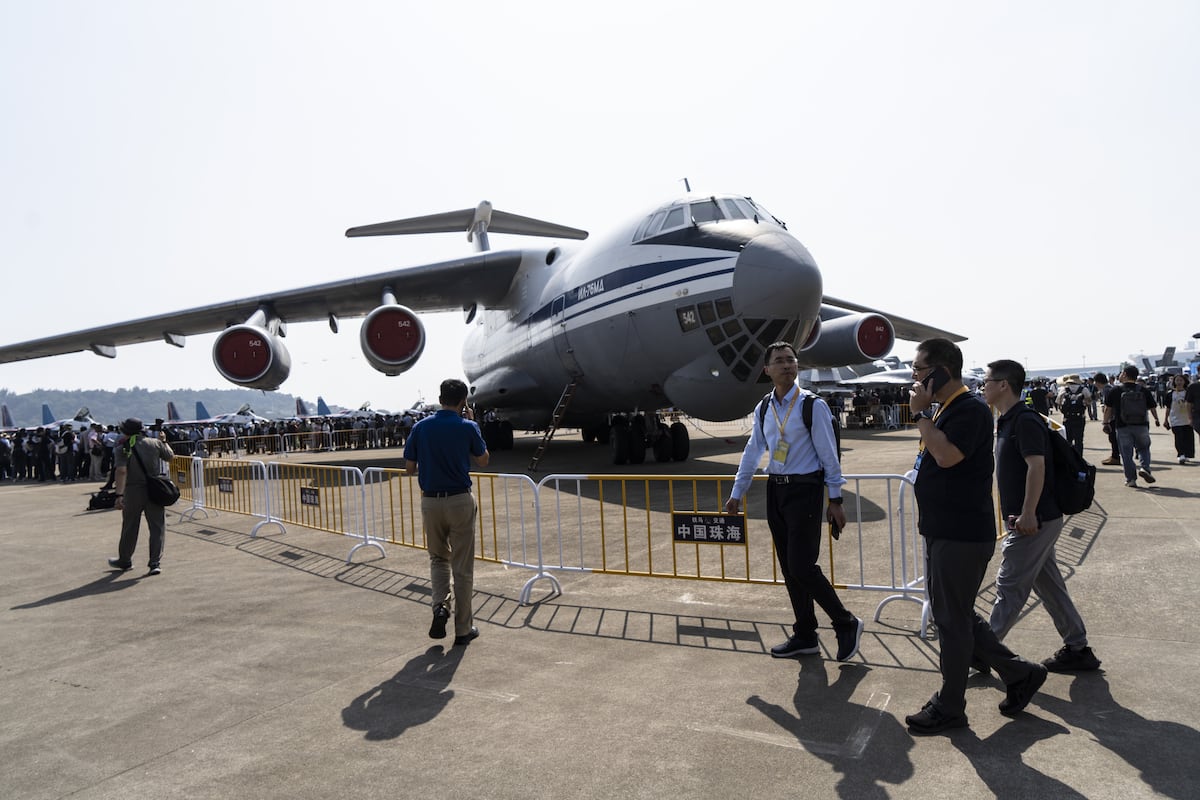
A Russian government-affiliated Ilyushin Il-76 (registration RA-78765) operated by Aviacon Zitotrans landed at Cuba’s San Antonio de los Baños Air Base after stops in the Dominican Republic, Mauritania and Algeria, renewing concerns about Moscow supplying military materiel to Havana. The aircraft, previously used to deliver Pantsir-S1 and Buk-M2E systems to Venezuela and operated by a company sanctioned by the U.S., Canada and Ukraine, arrives amid a March 2025 Russia‑Cuba military cooperation agreement and recent U.S. measures — including a Jan. 29 executive order declaring a national emergency and tariffs tied to oil supplies to Cuba. The flight heightens geopolitical risk in Latin America, keeps defense and sanctions enforcement angles active, and poses modest downside pressure on regional stability, energy routing and defense-related equities.
Market structure: The flight amplifies asymmetric demand for defense hardware, logistics services that can evade sanctions, and insurance for sanctioned shipments. Winners: large U.S. defense primes (LMT, RTX, NOC) and specialist military avionics/space suppliers who gain pricing power if regional contingency spending rises 5–15% over 12 months; losers: niche cargo operators, sanctioned brokers, and EM tourism/utility credits in Cuba/Venezuela. Commodities: 1–3% upside risk to Brent on tighter regional oil access; gold and USD likely to rally on risk-off flows.
Risk assessment: Tail risks include rapid U.S. escalation or secondary sanctions that spike oil +15% and EM credit spreads +200bp within 30 days; alternatively diplomatic de-escalation could unwind defense premia. Immediate horizon (days): volatility and safe-haven flows; short-term (weeks–months): re-rating of defense contractors and insurer spreads; long-term (quarters–years): durable supply-chain realignment for sanctioned logistics and increased defense capex. Hidden dependencies: marine insurance capacity, tanker routing, and China’s political posture — any single node can amplify market moves.
Trade implications: Favor overweight in large defense primes and volatility instruments rather than small-cap suppliers; use gold as a portfolio hedge and trim EM equity/currency exposure. Options: implement structured call exposure to capture a 10–20% move in defense names while capping downside. Sector rotation: move 3–6% from EM cyclicals into US defense, gold, and select oil-shipping equities over the next 1–3 months.
Contrarian angles: Consensus expects perpetual escalation; that may be overdone — a contained diplomatic outcome would compress defense and gold IV and create short-term mean-reversion. Mispricing likely in off-the-run defense suppliers and reinsurance names that have not priced a 100–200bp widening; consider buying credit protection selectively. Historical parallels (Crimea/2014) show initial knee-jerk rallies in defense then profit-taking once headlines normalize — size positions for 3–12 month windows and use options to define risk.
AI-powered research, real-time alerts, and portfolio analytics for institutional investors.
Request DemoOverall Sentiment
moderately negative
Sentiment Score
-0.40
