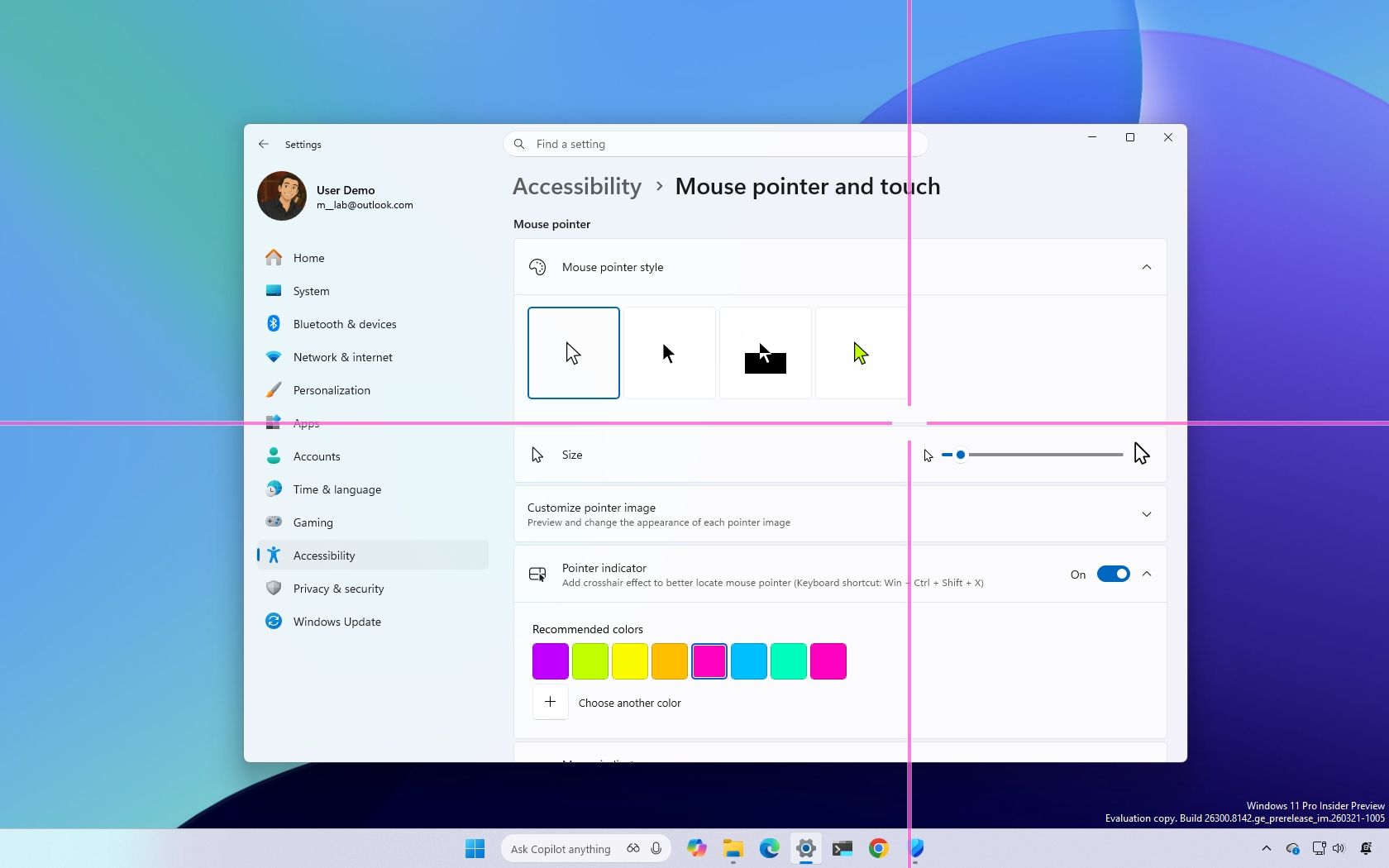
Microsoft released 9 Windows 11 Insider preview features in late March across Dev, Beta and Canary builds (examples: 26300.x, 26220.x, 28020.x, 29558), highlighting accessibility (Pointer Indicator, touchpad options), security (Administrator Protection), shared audio and File Explorer/Console updates. Administrator Protection introduces an isolated, ephemeral elevation account to reduce token-exploitation risk, Task Manager gains NPU telemetry and Windows Console incorporates Windows Terminal improvements; these are product-quality and security enhancements with minimal near-term impact on MSFT equity but could modestly improve enterprise security posture and platform stickiness over time.
Microsoft’s steady OS-level tightening and deeper telemetry for on-device AI are less about headline UX and more about economic leverage: they raise switching costs for enterprise clients that standardize on Microsoft’s management and security stack. If enterprises accelerate migration from legacy management tools to Intune/Defender-style controls, Microsoft can convert a mid-single-digit percentage of adjacent SaaS spend into incremental ARR over 12–24 months, with gross margin expansion given scale.
Greater visibility into client-side neural processing and a convergence of legacy tooling with modern terminal/runtime stacks will lower developer friction for hybrid AI workloads, shortening product cycles for ISVs that ship on Windows. That mechanically increases the addressable market for silicon with on-device neural engines; expect a 6–18 month lead time before OEM refresh cycles and partner SKUs start to monetize this in components revenue and OEM channel orders.
Audio and peripheral tight-integration are low-margin but high-frequency upsell levers — they don’t move GAAP revenue much immediately but lift accessory ASPs and attachment rates, benefiting headset/consumer-electronics players and platform stickiness for gaming/entertainment bundles. The main countervailing risks are fragmentation across OEM customization and driver ecosystems, which can delay uniform adoption and create support costs that blunt net margin benefits.
Watch for two catalysts: (1) enterprise deployment commentary and adoption metrics in the next 2 quarterly earnings calls, and (2) partner OEM order flow (channel inventory reductions or build-backs) over the next 6–12 months. A significant security regression or a widely reported compatibility incident would be the fastest trigger to reverse the constructive adoption narrative within weeks.
AI-powered research, real-time alerts, and portfolio analytics for institutional investors.
Request DemoOverall Sentiment
neutral
Sentiment Score
0.05
Ticker Sentiment
