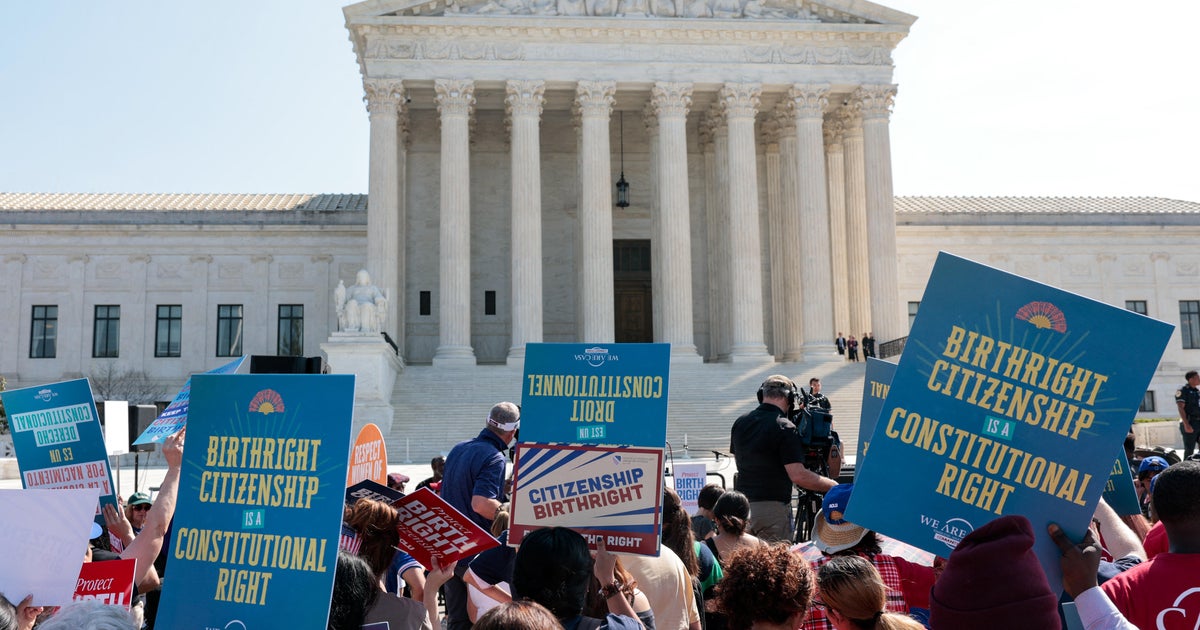
The U.S. Supreme Court appeared open to rejecting President Trump's executive order seeking to limit birthright citizenship, with a ruling expected by the summer. About 300,000 babies were born in 2023 to parents without legal status (under 1% of the U.S. population); the hearing—attended by Trump, the first time a sitting president has appeared—has heightened anxiety in South Florida immigrant communities. Local counsel notes the order likely wouldn't be retroactive and justices raised enforceability concerns; this is a material legal/political development but with limited direct market impact.
The immediate market footprint of this legal fight will be micro-regional and policy-specific rather than a national macro shock; the main channels are consumer confidence in immigrant-dense MSAs, incremental enforcement spending, and regulatory demand for immigration-related services. In metros where immigrant households form a single-digit to low-teens share of consumer spending, even small shifts in precautionary behavior (reduced discretionary spend, travel, or healthcare utilization) can produce outsized revenue swings for neighborhood retail, pediatric healthcare, and small-service providers over the next 1–6 months. Expect the effect to be highly concentrated — think zip-code level hits rather than broad sector rotations.
Second-order winners and losers are not the headline political actors but vendors and balance sheets tied to enforcement and local public services. Companies selling detention, biometric and case-management solutions or those with revenue linked to expanded detention/prison populations face a de-risking if the legal route to expanded enforcement weakens; conversely, community-facing consumer names and regional banks that rely on deposit flows from immigrant populations benefit from a removal of regulatory tail risk. Municipal credit effects are possible but likely limited to incremental budget pressures in jurisdictions that would face higher enforcement costs; absent sustained policy shifts the credit impact should remain idiosyncratic.
From a timing standpoint, this is a tactical event: a court outcome will compress uncertainty quickly and produce knee-jerk re-pricings in niche exposures over days-to-weeks. The consensus behavioral reaction — hoarding documents, delaying durable goods — is fragile and will snap back if legal clarity favors existing citizenship rules, creating a short window to trade regional consumer and enforcement-tech positions. The larger, multi-year implication is political: any decision that meaningfully changes enforcement scope will rewire campaign narratives and could alter sector-specific regulatory risk premia into the next election cycle.
AI-powered research, real-time alerts, and portfolio analytics for institutional investors.
Request DemoOverall Sentiment
mildly negative
Sentiment Score
-0.15
