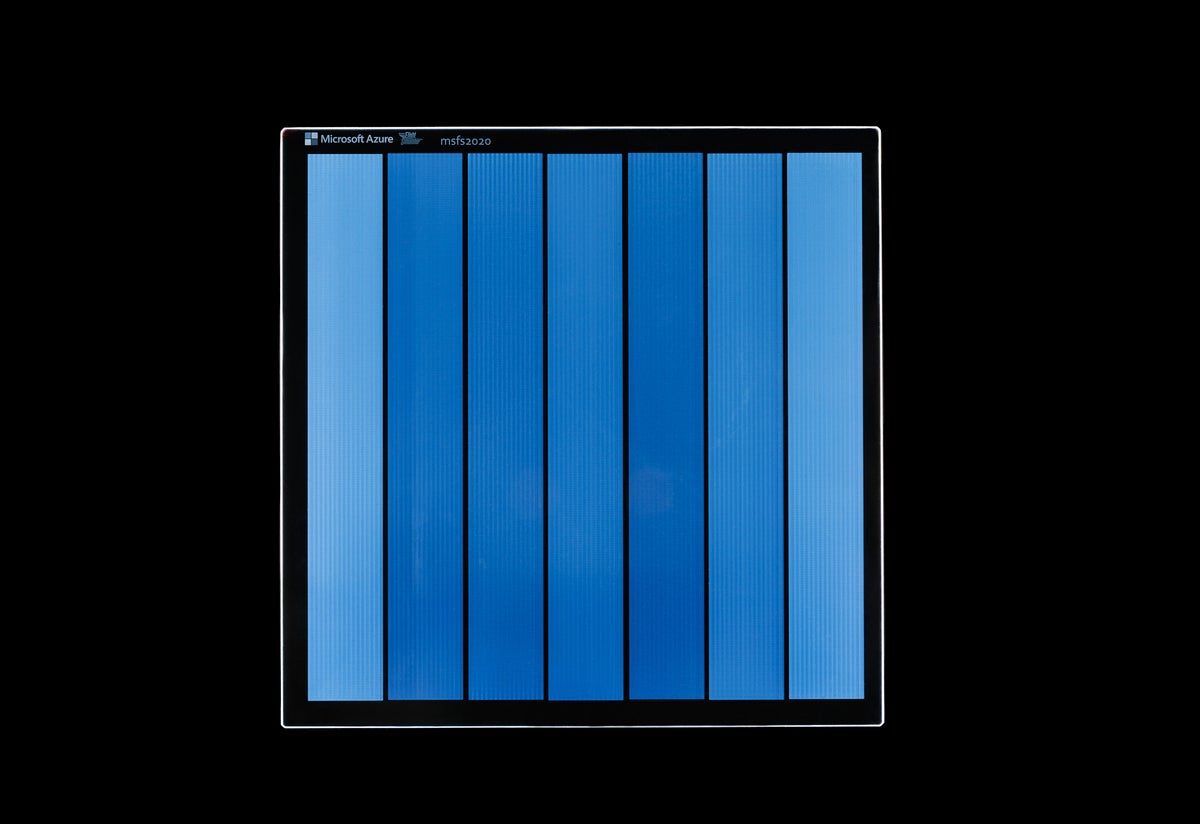
Microsoft Research demonstrated a glass-based archival system that encodes 4.8 TB in a 12 cm², 2 mm-thick piece of glass by etching 301 stacked voxel layers with femtosecond laser pulses; writing consumes ~48.9 kJ and reading relies on microscope imaging plus machine-learning to interpret symbols. Thermal aging tests extrapolated stability at 290°C for over 10,000 years (longer at room temperature), though the study did not test mechanical stress, corrosion or loss risks, and the approach is positioned as a durable alternative to hard drives and DNA-based archives for infrequently accessed records.
Market structure: This is a niche but strategically important archival technology that creates clear winners among IP/compute owners (MSFT) and precision glass/laser equipment suppliers (e.g., GLW exposure thesis) while posing gradual demand risk to tape/HDD incumbents (WDC, STX) over multi-year horizons. If Microsoft integrates this into Azure or licenses the process, it raises switching costs for institutional archives and could command pricing power for premium "cold archival" services; adoption is likely measured (low single-digit % of archival market each year) rather than immediate mass replacement.
Risk assessment: Tail risks include IP/legal disputes, failure to industrialize the laser-writing throughput (throughput shortfall >50% vs target), or destructive handling/loss events that blunt demand. Expect no market-moving revenue impact in 0–6 months, early commercial pilots in 6–24 months, and material market share effects only after 24–60 months; hidden dependencies include standards for encoding/decoding, ML model portability, and supply of femtosecond lasers.
Trade implications: The asymmetry favors taking modest long-optionality on MSFT (strategic optionality & cloud channel) and selective exposure to glass/precision-laser suppliers while trimming cyclic storage hardware (WDC). Use relative-value pairings (long MSFT or GLW vs short WDC/IRM) and calibrated options (vertical call spreads) to buy optionality with defined risk; monitor licensing or Azure product announcements as 90–180 day catalysts.
Contrarian angles: Consensus may overestimate near-term commercial impact and underweight industrial scaling costs—historical parallels (optical microfilm, niche archival formats) show durable tech can remain a low-share, high-margin niche for decades. Conversely, markets may underprice MSFT’s ability to monetize through Azure differentiation; the winning path is dependent on software/ML ecosystem adoption and standardization, not just materials science.
AI-powered research, real-time alerts, and portfolio analytics for institutional investors.
Request DemoOverall Sentiment
mildly positive
Sentiment Score
0.25
Ticker Sentiment
