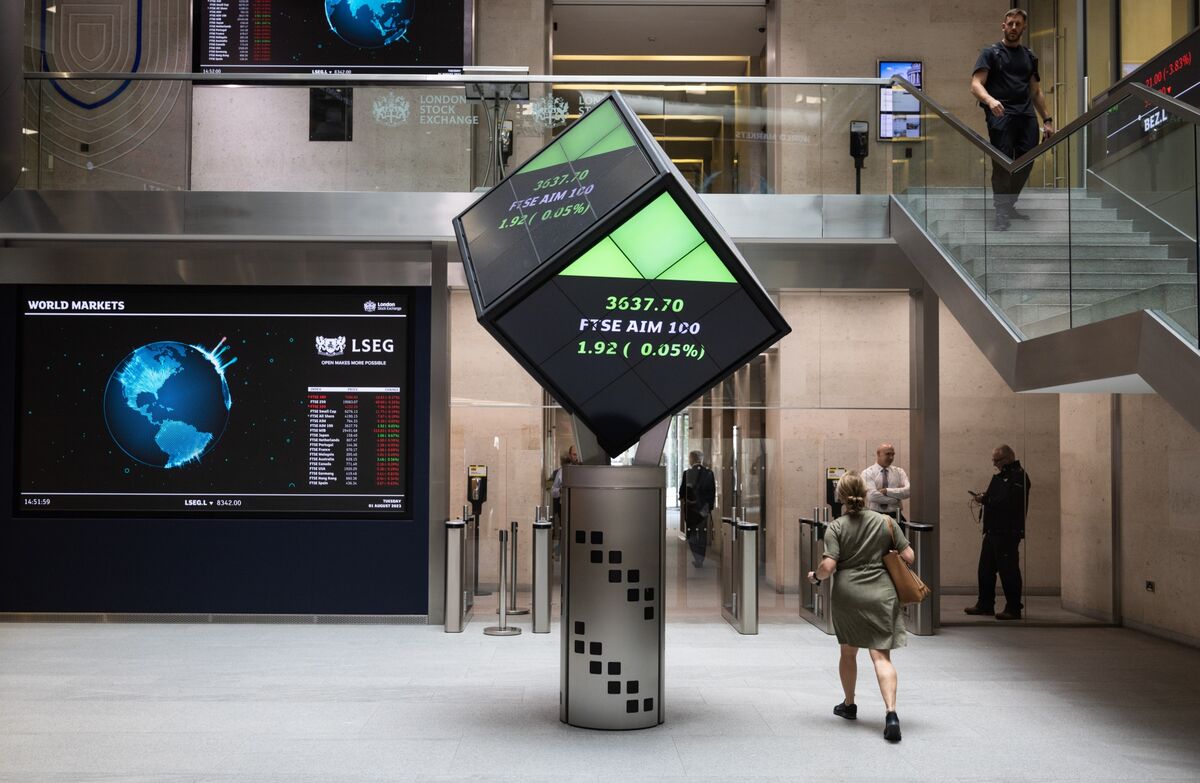
After Chancellor Rachel Reeves’s budget delayed tax-raising measures until later this decade, UK gilts and the pound pulled back from a post-budget rally—gilts are poised to snap a five-day advance and the pound ended its best run since early August. The FTSE 100 underperformed peers as investors reassess the fiscal trajectory and its implications for yields, FX and the country’s sovereign debt outlook.
Market structure: The budget’s delay of tax rises lifts expected near-term fiscal support but increases projected gilt issuance and term premium, pressuring gilts and GBP—expect 10y gilt yields to reprice +10–35 bps within 1–3 months and GBP to weaken 1–3% on momentum. Winners are exporters and commodity-heavy FTSE 100 constituents (FX-translated earnings); losers are domestic cyclicals, real-estate and long-duration Gilts. Cross-asset: higher UK yields raise UK sovereign credit spreads vs. core Europe, increase UK curve steepness and push demand into inflation-linked bonds and FX hedges (GBP options implied vol +15–30% vs. pre-budget levels).
Risk assessment: Tail risks include a sovereign credibility shock or ratings downgrade that could spike yields 100–300 bps and knock GBP down 10–20%; probability low but impact systemic for UK banks and pension LDI pools. Timeframe: immediate (days) driven by flows/positioning; short-term (weeks) driven by gilt auctions/BOE reaction; long-term (quarters) by fiscal path and rating agency reviews. Hidden dependencies: pension LDI collateral mechanics, BOE intervention capacity, and foreign real-money buying are the key second-order drivers. Watch upcoming gilt syndication schedule and any OBR/rating commentary over next 30–90 days.
Trade implications: Tactical plays favor short 10y gilts and structured GBP downside exposure while rotating from domestically focused FTSE 250 names into export/commodity majors. Use futures for duration, buy 3–6m GBP put spreads to limit premium, and prefer inflation-linked Gilts for asymmetric protection. Position sizing: keep directional gilt/FX exposure to 1–3% portfolio initially and scale into moves of +10–20 bps or GBP down 1%.
Contrarian angles: The market may be underestimating growth upside from delayed tax increases—if growth surprises and inflation stays sticky, gilts could rerally and GBP recover, penalizing shorts. Historical parallel: post-shock FX moves (e.g., 2016) reversed as earnings converted; therefore cap risk (stop-losses at 15–25 bps on gilt shorts, or hedge with steepener options). Unintended consequence: aggressive short-gilt positions risk forced covering if BOE or primary dealers step in during auction stress.
AI-powered research, real-time alerts, and portfolio analytics for institutional investors.
Request DemoOverall Sentiment
mildly negative
Sentiment Score
-0.35
