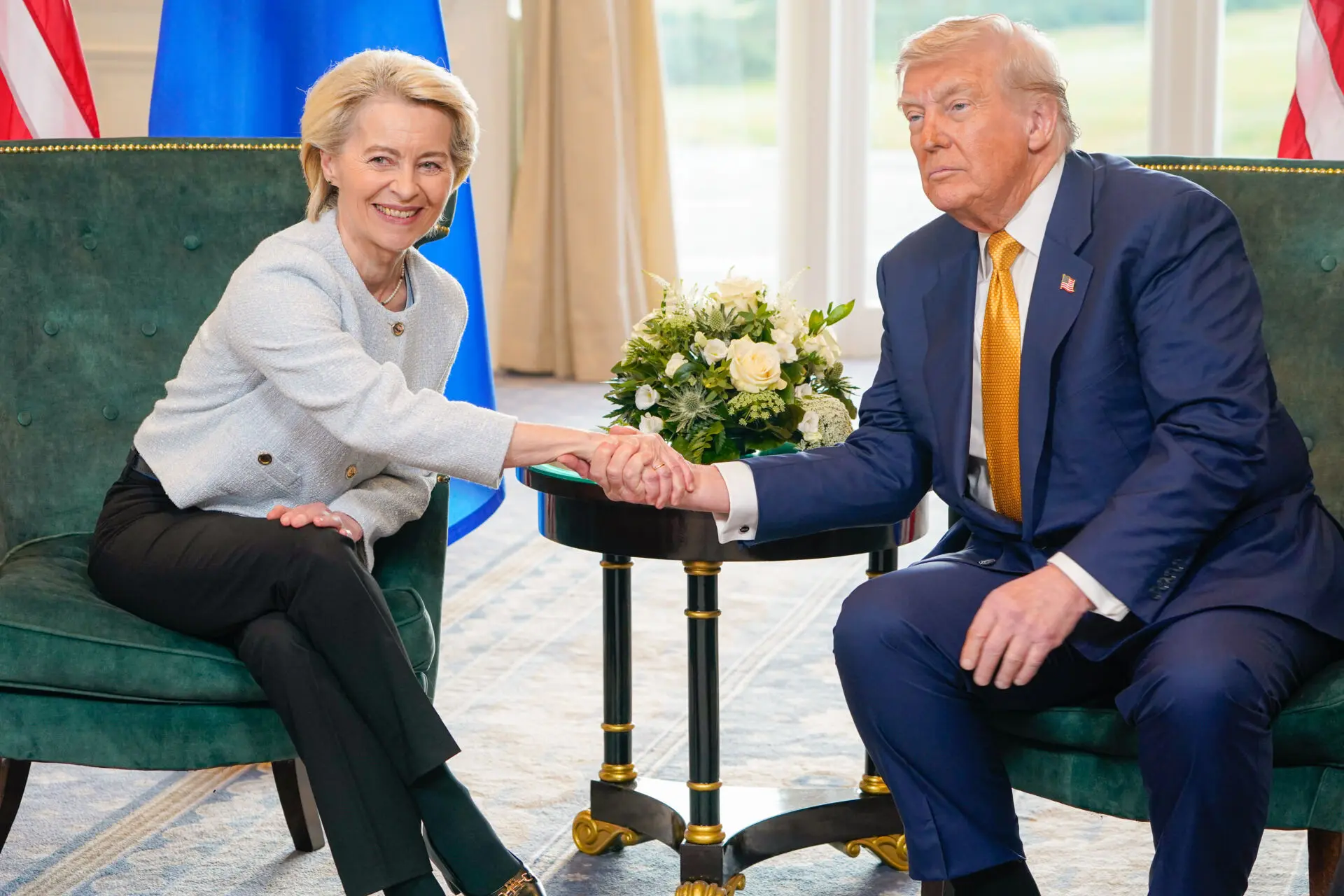
A new EU-US trade deal establishes a 15% US tariff on most EU imports, including cars and pharmaceuticals, while the EU eliminates its sectoral tariffs and pledges significant purchases of US gas ($750B by 2028) and investment ($600B). Although widely criticized in Europe as a capitulation, the agreement is viewed as preventing a more severe transatlantic trade war and higher 30% tariffs. However, the deal is currently a symbolic political understanding, not legally binding, leaving its economic impact uncertain, with potential for a 0.2-0.8% EU GDP fall and disproportionate effects on key member states and sectors. This provisional arrangement highlights broader concerns regarding US trade policy predictability and necessitates a strategic re-evaluation for the EU.
A new EU-US trade deal has been announced, averting a threatened 30% tariff but establishing a new 15% US tariff on key EU imports including cars, pharmaceuticals, and semiconductors. This represents an increase from the previous 10% rate. In exchange, the EU has agreed to eliminate its 10% duty on car imports and pledged substantial, albeit currently unenforceable, commitments to purchase USD 750 billion in US gas by 2028 and increase US investments by USD 600 billion. The deal is largely viewed as a political de-escalation rather than a comprehensive, legally binding agreement, leaving significant room for misinterpretation and future friction. This provisional nature creates substantial uncertainty, reflected in the pessimistic sentiment score of -0.6. The economic impact is difficult to quantify but is projected to be negative for the EU, with GDP estimates suggesting a potential contraction between 0.2% and 0.8%. The burden will be unevenly distributed, with export-heavy nations like Germany, Italy, and Ireland, and sectors such as automotive and industrial machinery, facing disproportionate headwinds. The final economic outcome hinges on critical variables, including the extent to which EU exporters absorb costs versus passing them to US consumers and the trajectory of the EUR/USD exchange rate, which could further impact European competitiveness.
AI-powered research, real-time alerts, and portfolio analytics for institutional investors.
Overall Sentiment
strongly negative
Sentiment Score
-0.60
Ticker Sentiment
