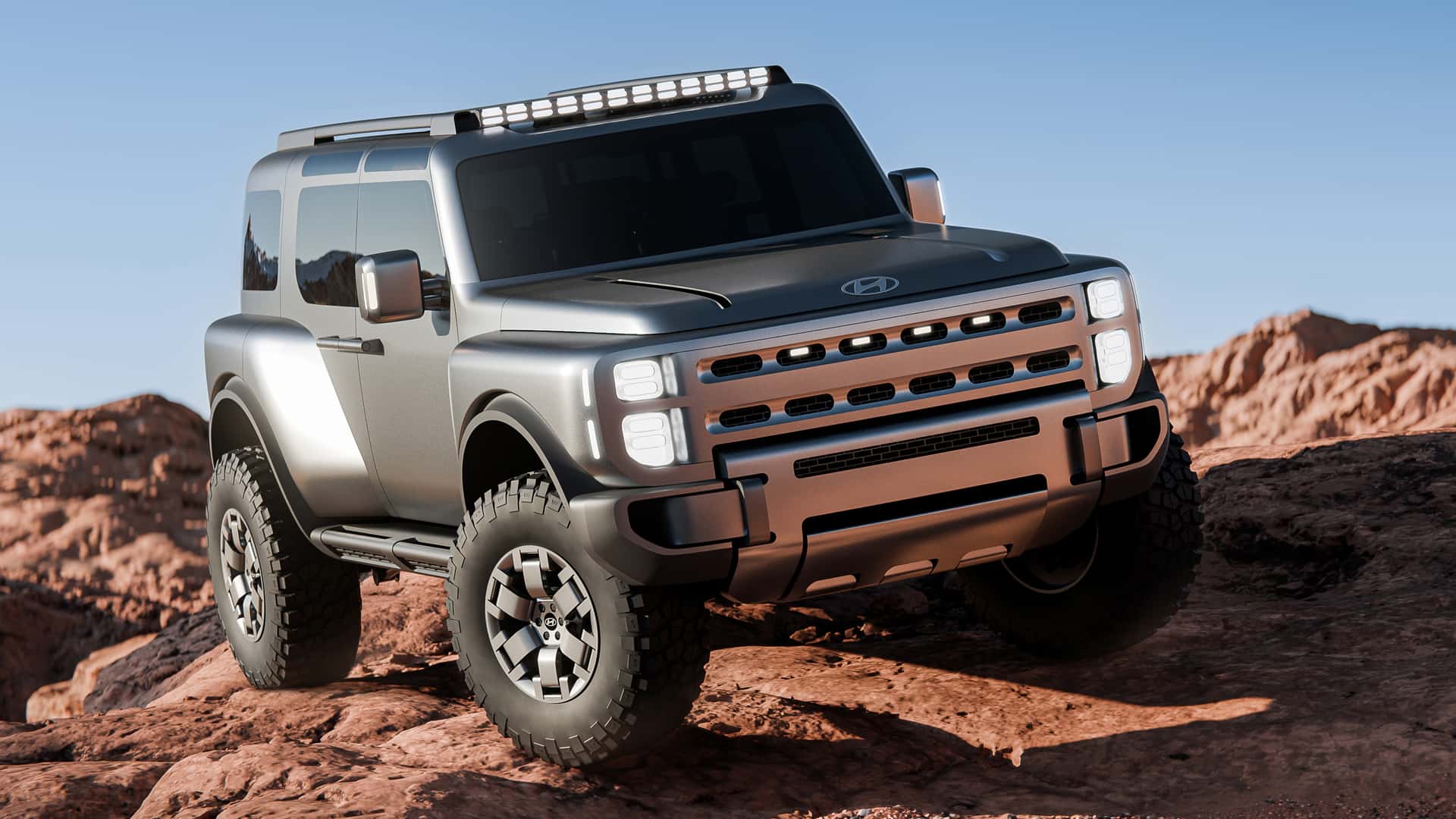
Hyundai previewed its first body-on-frame platform with the Boulder concept and confirmed a midsize pickup on that platform will arrive by 2030. The Boulder showcases boxy, off-road-oriented design cues (37-inch mud-terrain tires, full-size spare, aggressive approach/departure angles) and interior innovations (HUD-style windshield info and multiple small displays). Hyundai says the platform will underpin additional models, likely including an off-road SUV, and is expected to support electric, hybrid, and combustion powertrains. This positions Hyundai to compete more directly in the midsize truck segment (e.g., Toyota Tacoma) and broaden its lineup ahead of the decade end.
When a major new OEM program targets the midsize/off-road segment it shifts procurement from broad tier-1 paint-and-interiors to heavy-content chassis, axle, and thermal-management suppliers; that reweights incremental OEM content per vehicle by 10-20% toward mechanical suppliers versus software/UX vendors. Expect RFP cycles to concentrate volume (and advanced pricing leverage) into 2–4 winners per region, creating lumpy revenue ramps for contractors that can beat consensus by multiple quarters once awarded.
Electrification creates a meaningful margin bifurcation: an EV ladder-frame variant increases battery pack engineering cost and cooling complexity but reduces recurring drivetrain service revenue; conversely, an ICE/hybrid variant preserves high-margin transmission and exhaust supply streams. This dichotomy produces a binary supplier outcome — capture the EV-pack integration or retain the legacy powertrain BOM — with value swings of +/-30-50% across bidders depending on program architecture.
Retail and remarketing will feel second-order effects first: higher-end off-road trims lengthen new-vehicle order-to-delivery and lift used-vehicle wholesale by low-double-digits for comparable trucks, materially improving F&I and reconditioning margins for well-capitalized dealers. Online-only retailers and inventory-finance dependent platforms face inventory-carry and funding-cost sensitivity; a single OEM program push can tighten availability windows and crystallize funding stress within 3–9 months for weaker balance sheets.
AI-powered research, real-time alerts, and portfolio analytics for institutional investors.
Overall Sentiment
mildly positive
Sentiment Score
0.15
Ticker Sentiment
