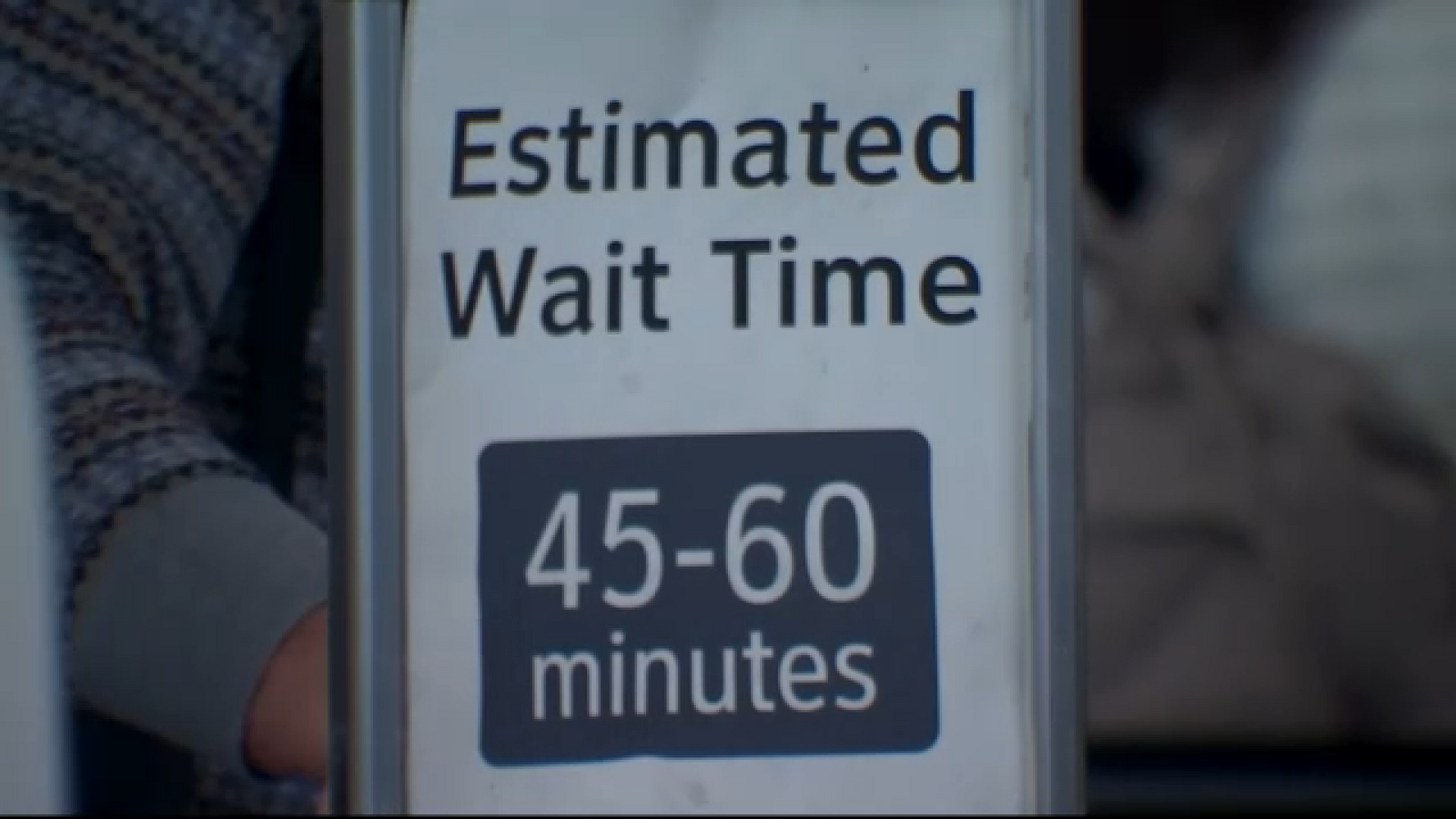
More than 11% of TSA agents were absent nationwide on Tuesday, with 39% callouts at Houston's Bush Intercontinental and 43% at Hobby, causing multi-hour security delays earlier in the week that improved to ~90 minutes by Wednesday. Lighter travel volume and deployment of CLEAR, ICE and airline staff eased congestion, but elevated absence rates pose near-term operational risk for airport and airline punctuality and passenger experience; limited broader market impact expected.
The episode exposes an operational fragility that propagates non-linearly: small increases in front-door friction (security queue times) cascade into misconnects, longer aircraft turn times, and outsized re-accommodation costs for carriers that operate tight short-haul schedules. Expect incremental per-passenger disruption costs to concentrate on carriers with the highest turn frequency and lowest slack in schedules — those costs hit margins immediately (days–weeks) and degrade loyalty (months).
The competitive dynamic favors two structural beneficiaries: operators of expedited/biometric flows and airlines with built-in IRROP (irregular operations) resilience. Vendors that reduce checkpoint touchpoints can monetize on both deployment (capex/service contracts) and recurring per-passenger fees, while full-service carriers can capture share from LCCs when passengers choose reliability over price during visible disruption windows. Ground-handling and staffing contractors face higher overtime and replacement-hire costs; unions and agencies could press for premium pay, creating a sustained cost inflation vector lasting quarters.
Key catalysts to watch are (1) public-health indicators (respiratory virus upticks) in the next 2–6 weeks that would perpetuate absenteeism, (2) rapid deployment of tech or federal relief (overtime pools/reserves) that would blunt the operational shock within 1–4 weeks, and (3) an earnings-season narrative where carriers quantify re-accommodation expense vs. ancillary revenue recovery over the next 2 quarters. The consensus underestimates speed of tech adoption at airports — a visible high-profile week of disruption materially accelerates procurement and pilot-rollouts, which is a 3–12 month revenue story for vendors.
AI-powered research, real-time alerts, and portfolio analytics for institutional investors.
Request DemoOverall Sentiment
mildly negative
Sentiment Score
-0.15
