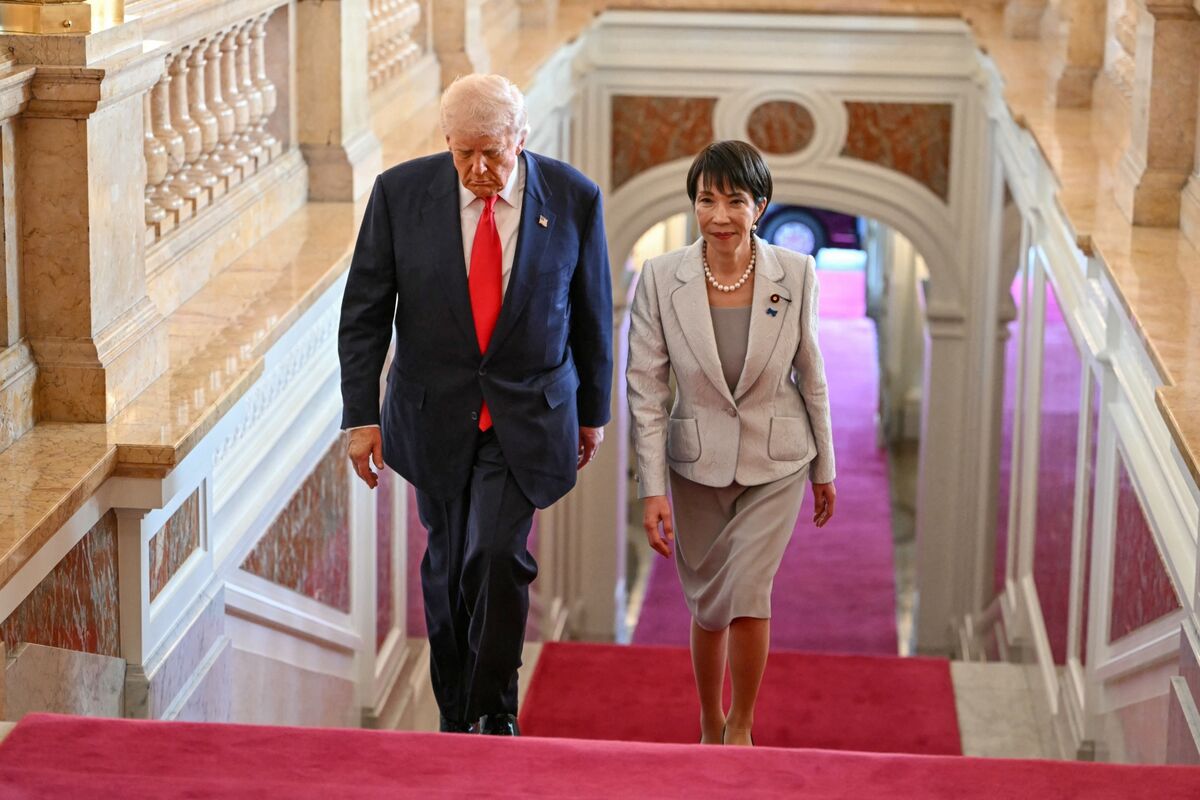
Japanese Prime Minister Sanae Takaichi said she spoke with U.S. President Donald Trump at his request, during which he briefed her on his call with Chinese President Xi Jinping and both leaders reaffirmed the importance of close U.S.-Japan cooperation. The conversation comes amid a diplomatic spat between Japan and China triggered by Takaichi’s recent comments on Taiwan, a development that keeps regional political risk elevated but does not contain immediate market-moving policy or economic data.
Market structure: Elevated Japan–China diplomatic friction and US–Japan coordination mechanically favors defense OEMs, domestic industrial suppliers and semiconductor onshoring players while pressuring travel, hospitality and discretionary exporters to China; expect order-intent (RFP/LOI) flows to Japanese defense names to rise by mid-quarters, potentially lifting backlog-to-revenue multiples by 5–15% for winners over 6–12 months. Supply/demand: near-term safe‑sourcing demand raises pricing power for qualified domestic suppliers (parts, test, equipment); shipping/air cargo volumes to/from China could dip 3–7% regionally if non-tariff barriers escalate. Cross-asset: risk-off episodes will likely push JPY stronger by 1–3% intramonth, compress JGB yields (10–30bp), widen Asian equity vols 20–40% and add a $2–5/bbl oil risk premium if maritime routes are threatened.
Risk assessment: tail risks include a limited military incident (5–10% near-term probability) or targeted sanctions/cyberattacks (10–20%) that would sharply disrupt East Asian supply chains and semiconductor output for 1–3 months. Immediate (days): elevated headline volatility and FX moves; short-term (weeks–months): order reallocation and capex announcements; long-term (quarters–years): structural onshoring and re-rating of domestic defense/industrial complexes. Hidden dependencies: many Japanese exporters have Taiwan/China inputs—revenue impact may lag 2–3 quarters. Key catalysts: formal US–Japan security agreements, Chinese retaliatory trade measures, or Japanese defense budget revisions announced within 30–90 days.
Trade implications: establish small, tactical longs in Japan defense/industrial and FX protection: 1–2% long position in Mitsubishi Heavy (7011.T) and 1% long Tokyo Electron (8035.T) with 6–12 month horizon; hedge with 0.5% notional 3‑month USD/JPY puts (strike ~3% below spot) to capture JPY safe‑haven moves. Pair trade: long 7011.T / short Japan Airlines (9201.T) sized 1:1 to express defense vs travel divergence; take-profit targets +25% and stop-loss −10% within 6 months. Options: buy 3–6 month call spread on LMT (buy 1, sell 1 higher) sized 0.5–1% notional to play US defense upside if regional tension persists.
Contrarian angles: consensus underprices multi-year Japanese capex reallocation away from China; a 6–18 month conviction long on select domestic capital-goods suppliers (8035.T, 6503.T) is asymmetric if a security-driven onshoring program >¥2–3tn is announced. Conversely, short-term panic selling of China-exposed cyclical stocks is likely overdone—allocate watchlist for selective buys in Chinese export names 3–6 months after clear de‑escalation. Unintended consequence: sustained defense spending could force higher JGB issuance and upward pressure on long yields after initial safe‑haven rally—monitor 10Y JGB yield moves above +40bp from current levels as a signal to trim duration exposure.
AI-powered research, real-time alerts, and portfolio analytics for institutional investors.
Request DemoOverall Sentiment
neutral
Sentiment Score
0.00
