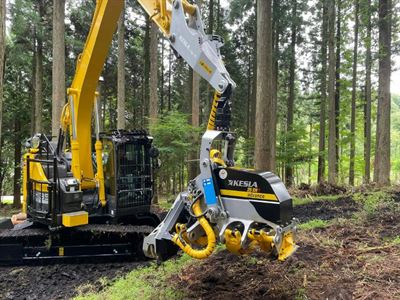
Kesla Oyj has launched upgraded stroke-harvester heads — the KESLA 20SH-II Advance and 25SH-II Advance — featuring optimized hydraulics, optional tilt lock and proportional pressure control, stronger delimbing blades, new sensor solutions and durability and serviceability improvements; deliveries to Japan began in early 2026 with global replacements planned in Q1 2026. The product refresh aims to boost competitiveness in challenging harvesting conditions and expand configurable options for customers; Kesla reported Group turnover of €44.3 million in 2024 (53% exports) and employs ~232 staff, and its shares trade on Nasdaq Helsinki.
Market structure: The SH‑II Advance tweaks give Kesla (Helsinki‑listed small cap focused on forestry equipment) clearer product differentiation in high‑feeding‑force, low‑power machine niches (mountainous and difficult species). Direct winners: Kesla, aftermarket parts suppliers and low‑power base‑machine OEM partners in Japan; losers: undifferentiated low‑cost stroke‑head rivals and manual contracting in niche terrains. Expect modest ability to lift ASPs by ~3–7% in affected SKUs and win share over 12–36 months; total market impact is small relative to global heavy equipment volumes.
Risk assessment: Tail risks include a manufacturing quality issue/warranty recall (could wipe 10–30% of yearly EBITDA), supply disruptions in hydraulic components, and adverse EUR/JPY swings (>5%) compressing Japan margins. Near term (days–weeks) impact is negligible; medium term (3–9 months) hinges on order uptake in Japan and Q1/2026 rollout; long term (12–36 months) depends on dealer/service network scale and global replication. Hidden dependency: revenue leverage to a handful of export markets and three Finnish plants creates concentration risk if output needs to double.
Trade implications: Direct play is a measured long in Kesla equity sized 2–3% of portfolio with a 6–12 month horizon targeting 20–35% upside if export revenue/backlog growth >15–20% QoQ after rollout. If options exist, use a 3–6 month call spread (buy 10% OTM, sell 30% OTM) sized to 1% notional to cap premium and exploit asymmetric upside. Hedge macro/commodity cyclicality by pairing long Kesla with a 1–2% short in broad heavy‑equipment exposure (XLI or large OEMs) to neutralize base‑cycle risk.
Contrarian angles: Consensus underestimates service/dealer execution as the gating factor—market share gains require scalable after‑sales; if Kesla fails to expand service footprint within 12 months, upside evaporates. Reaction is likely underdone given thin float and concentrated orders—small order wins in Japan could re-rate the stock quickly, but beware short‑term illiquidity and potential overhang if management upsizes production (capex) without margin visibility.
AI-powered research, real-time alerts, and portfolio analytics for institutional investors.
Request DemoOverall Sentiment
mildly positive
Sentiment Score
0.25
