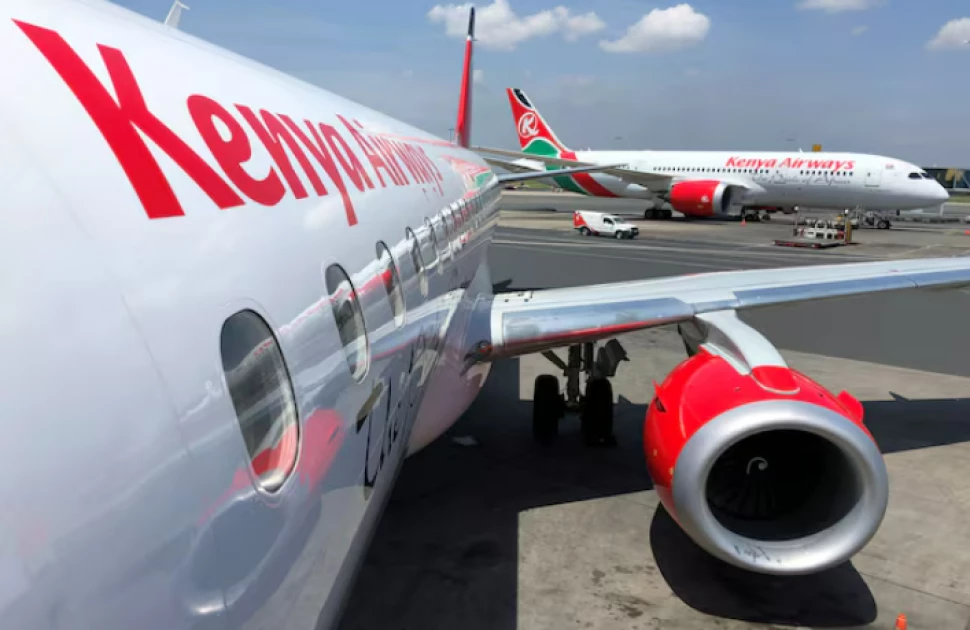
Kenya Airways has begun restoring normal schedules after an industrial strike at Jomo Kenyatta International Airport was suspended when the Kenya Aviation Workers Union called off the action following talks with the Kenya Civil Aviation Authority and the Ministry of Transport. The carrier expects full recovery of on-time operations within 24 hours, is working round-the-clock to clear a backlog, and is advising passengers to check status and rebook via its channels. The disruption appears short-lived and operationally contained, implying limited near-term revenue impact but potential short-term operational and customer-service costs.
Market structure: The immediate winners are Kenya Airways (restored capacity yields incremental revenue from rebookings/backlog clearance), ground-handling contractors and online travel agencies capturing rebooking fees; perishable cargo shippers and connecting carriers are short-term losers through missed connections. Expect a near-term load-factor bump of 5–12% on recovered flights over the next 3–7 days as backlogs clear, but no structural capacity change so pricing power remains limited beyond 30 days. Cross-asset: negligible sovereign spread move expected (<10bp) unless strikes recur; modest supportive bias for KES vs USD if tourism receipts resume.
Risk assessment: Tail risks include a coordinated wider transport strike or regulatory fines that could inflict a 5–15% EBITDA hit regionally; a prolonged dispute (>2 weeks) would materially impair cash flows and force government intervention. Time horizons: operational normalization in 24–48 hours, revenue catch-up over 1–4 weeks, potential labor-cost repricing over 2–6 months (estimate +3–7% opex if concessions granted). Hidden dependencies: third-party ground handlers, insurance claims for delays, crew duty-time limits that can cascade cancellations.
Trade implications: Tactical trades favor short-dated, event-driven exposure: establish small, targeted longs in Kenya Airways (NSE: KQ) or local travel equities to capture the 1–4 week normalization; use call spreads to cap downside. Pair trades: long KQ / short global airline ETF (NYSEARCA:JETS) to express regional operational resilience vs global cyclicality. Entry: act within 48 hours; exit target 2–4 weeks or +15–25% relative move; hard stop -8% absolute.
Contrarian angles: Consensus treats this as transitory; market may be underpricing elevated labor risk — a repeat or broadened strike would be asymmetric negative. Historical parallels (short airport strikes) show rapid rebounds within 1–2 weeks, so size positions small and use strict stops or defined-loss derivatives to avoid replay tail events.
AI-powered research, real-time alerts, and portfolio analytics for institutional investors.
Request DemoOverall Sentiment
mildly positive
Sentiment Score
0.25
