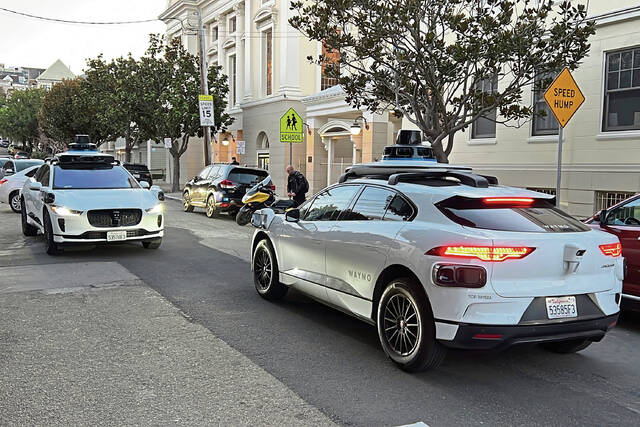
Waymo is expanding its autonomous ride-hailing service into Pittsburgh (along with Baltimore, St. Louis and Philadelphia), beginning human-led test drives downtown this week with a multi-month validation phase and no firm public launch date. The Alphabet subsidiary, which has provided over 10 million paid rides and operates in five U.S. markets while testing or planning in 21 more, commands a reported price premium (Obi: ~41% above Lyft, ~31% above Uber) indicating potential higher revenue per trip but competitive pressure from legacy ride-hail players and AV rivals such as Aurora; the move also revives local regulatory and labor sensitivities given past city pushback on autonomous taxi pilots.
Market structure: Alphabet (GOOGL) is the primary beneficiary as Waymo gains geographic depth; component suppliers (LIDAR/chips/cloud — e.g., NVDA exposure to inference demand) and municipalities capturing congestion/efficiency gains are secondary winners. Uber (UBER) and Lyft (LYFT) face secular competitive pressure on urban ride-share TAM, but near-term pricing power for Waymo looks premium (article cites Waymo ~31–41% pricier), so immediate share displacement will be concentrated in higher-margin trips rather than mass-market price competition. Supply is capital‑constrained (fleet capex, safety validation), implying slow churn of market share; expect higher IV on UBER/LYFT options and modest widening of credit spreads for loss-making ride-hail debt issuers if adoption accelerates.
Risk assessment: Tail risks include a fatal incident or abrupt local regulatory bans that can wipe out months of deployment and spike litigation/insurance costs; antitrust/competition probes into Alphabet’s data advantages are a plausible 12–36 month risk. Time horizons: days–weeks: headline-driven volatility; months: regulatory filings/municipal approvals; years: structural driver-cost elimination and margin capture. Hidden dependencies include insurance/regulatory regimes, city partnerships, and Alphabet’s willingness to subsidize Waymo unit economics while scaling.
Trade implications: Tactical: establish a 1.5–2% long GOOGL position targeting +20% in 12 months with a -10% stop, funded by a 1.5–2% short UBER position targeting -25% over 6–12 months with a +15% stop (pair hedges beta). Options: buy a 9–12 month GOOGL call spread (cost ≤2% portfolio) to cap capital and buy 3–6 month UBER put spreads to profit from near-term re-rating. Rotate 3–6% weight away from pure human-driver ride-hail equities into ADAS/L4 suppliers and AI compute names.
Contrarian angles: The market may overstate near-term cannibalization—Waymo’s premium pricing and limited city-by-city rollouts imply multi-year adoption curves, so short squeezes in UBER/LYFT could be overdone. Conversely, underestimate the regulatory/insurance cost tail that could make autonomous economics worse than modeled; historical precedent: Uber’s 2016 AV pullback shows exits can be swift. Prefer relative-value and volatility-selling structures rather than straight directional mega-bets until 1–2 key urban launches or regulatory rulings provide clarity.
AI-powered research, real-time alerts, and portfolio analytics for institutional investors.
Request DemoOverall Sentiment
mildly positive
Sentiment Score
0.30
Ticker Sentiment
