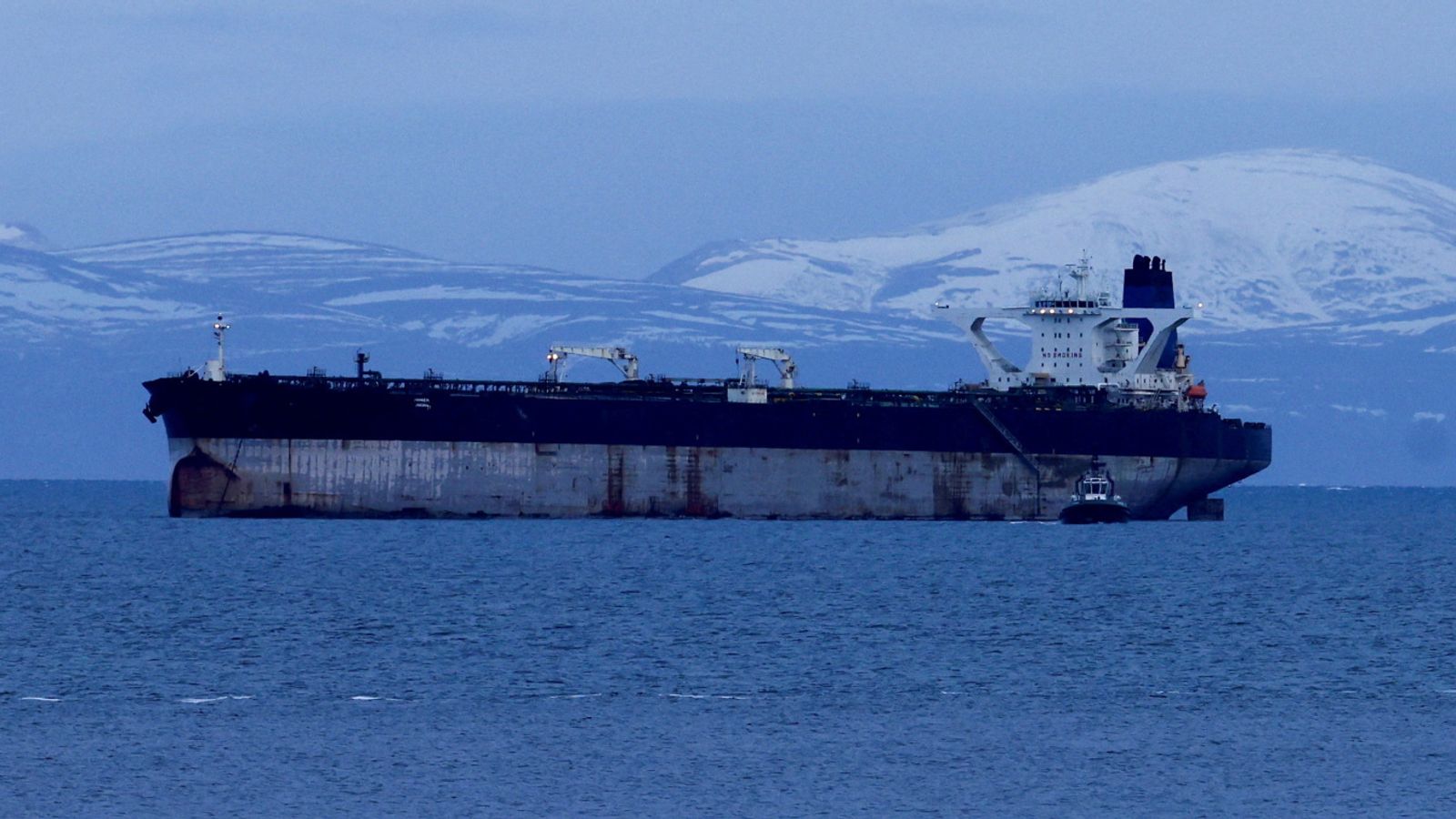
The Russian‑flagged oil tanker Marinera (formerly Bella 1), seized by US forces on 7 January off Iceland and held in the Moray Firth, had its captain and first officer transferred onto the USCG cutter Munro and removed from UK territorial waters, according to court filings. Scottish authorities had sought an emergency interdict after a mutual legal assistance request from US authorities — which required all 28 crew to be brought ashore — was later withdrawn, leaving 26 crew processed in Inverness with no asylum claims. The episode raises jurisdictional and legal friction between US and UK/Scottish authorities and introduces a limited geopolitical risk to energy/logistics stakeholders, though direct market impact appears modest at present.
Market structure: This event favors integrated oil majors (XOM, CVX) and maritime security/defense contractors (LMT, LHX) because tighter enforcement raises risk premia on "grey" barrels and increases demand for surveillance/escort services. Direct losers are small/levered tanker owners (NAT, DHT, FRO) and specialty tanker insurers because seizure/legal exposure and war-risk premiums compress free cash flow and raise operating costs. Expect short-term upward pressure on Brent/WTI (outsized moves of 3-8% possible if enforcement scales to ~100–300 kbpd of restricted flows) and higher time-charter volatility for crude tankers.
Risk assessment: Tail risks include a geopolitical escalation (naval confrontation or broad secondary sanctioning) that could disrupt 0.5–1.0 mbpd — a market-moving shock; conversely, rapid legal re-assertion by courts could reverse moves. Immediate (days): volatility in tanker equities and shipping CDS; short-term (weeks–months): rising insurance premiums and charter rates; long-term (quarters–years): structural shift away from opaque trading routes, benefiting majors and surveillance suppliers. Hidden dependencies: P&I club decisions, owner-charter contract clauses, and mutual legal assistance reciprocity — any change can rapidly reprice exposures.
Trade implications: Implement small, asymmetric positions: modest long oil exposure via XOM/CVX to capture a 5–10% crude rally, short levered tanker equities (NAT, DHT) to capture a 15–30% downside if seizures broaden, and go long defense names (LMT, LHX) for a 12–24 month secular tailwind. Use options to control risk: purchase 3-month Brent call spreads 5–10% OTM sized to 0.5–1.5% portfolio to capture spikes; hedge shipping shorts with call buys on FRO/NAT to limit gap risk. Rotate portfolio weight from pure shipping/logistics into integrated energy and defense over 2–8 weeks.
Contrarian angles: The market will likely overprice systemic supply loss — past sanctions episodes produced sharp but short-lived crude spikes (weeks) rather than persistent deficits; insurance price hikes may be transitory and could lift charter rates, improving small tanker cash flow and making shorts crowded. If court precedents constrain US extraterritorial seizures, short-tanker thesis weakens; monitor DOJ filings and P&I circulars in next 30–60 days as the clearest reversal signals.
AI-powered research, real-time alerts, and portfolio analytics for institutional investors.
Request DemoOverall Sentiment
neutral
Sentiment Score
-0.15
