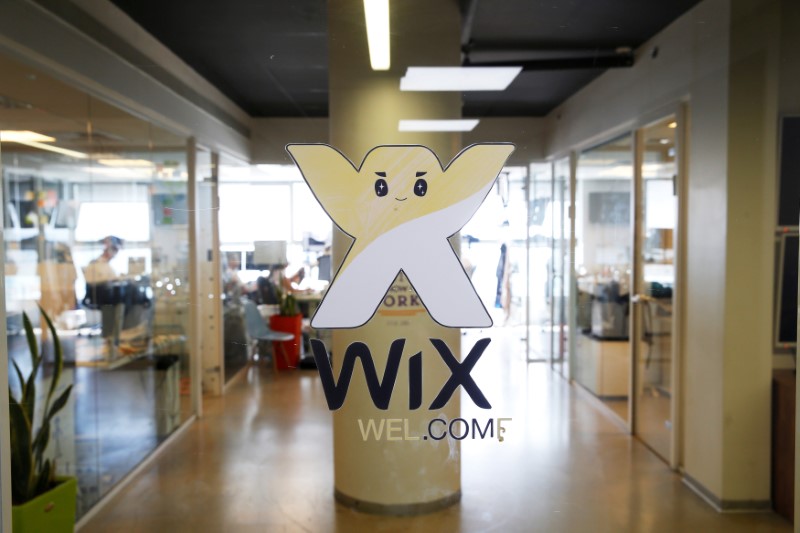
Wix is expected to report Q1 EPS of $1.25 on revenue of $544.04 million, implying 15% year-over-year sales growth but a 26% decline in earnings and an almost 8% cut to EPS estimates over the past two months. Investors are focused on whether AI initiatives like Wix Harmony and Base44 can offset profitability pressure after the company spent $1.617 billion on a Dutch auction and now carries nearly $1 billion of net debt. Despite a consensus Buy rating from 22 analysts and a $117.35 average target, recent downgrades and weaker fundamentals keep sentiment cautious ahead of Wednesday's report.
The key issue is not whether AI helps Wix acquire users faster, but whether it compresses the economic moat faster than it expands the addressable market. If website creation becomes more agentic and cheaper, the industry likely shifts from high-switching-cost SaaS to a lower-friction, workflow-driven utility, which tends to pressure net revenue retention, pricing power, and customer lifetime value before it shows up in headline growth. That makes the balance sheet more consequential: with leverage elevated after buybacks, equity holders are effectively underwriting a longer-duration product transition with less margin for error. Second-order winners are more likely to be the AI infrastructure and adjacent workflow layers than the incumbent website builder. If Wix’s AI features succeed, they may increase content generation and application creation volume, but the value capture can leak to model providers, hosting/cloud partners, and no-code/low-code competitors that can underprice bundled creation tools. In other words, better product capability may not translate into better economics if the competitive set broadens faster than Wix can monetize the added usage. The near-term catalyst is not revenue growth alone; it is the interaction between gross margin, sales efficiency, and cash conversion. A modest revenue beat won’t matter if the company has to keep spending heavily to defend share while also servicing more debt and funding acquired AI products. The stock likely remains range-bound over the next 1-3 months unless management can prove that AI investment is lifting monetization per account rather than just accelerating usage. Consensus appears to be underestimating duration risk. The market is still treating this like a transitory earnings compression story, but the more important risk is multiple compression if investors conclude AI is eroding the durability of the franchise. That said, if management shows that AI lowers churn and raises ARPU without materially increasing CAC, the move could reverse quickly because expectations are already marked down; the setup is asymmetric only if the company can demonstrate conversion of product innovation into durable free cash flow within 2-3 quarters.
AI-powered research, real-time alerts, and portfolio analytics for institutional investors.
Request DemoOverall Sentiment
moderately negative
Sentiment Score
-0.35
Ticker Sentiment
