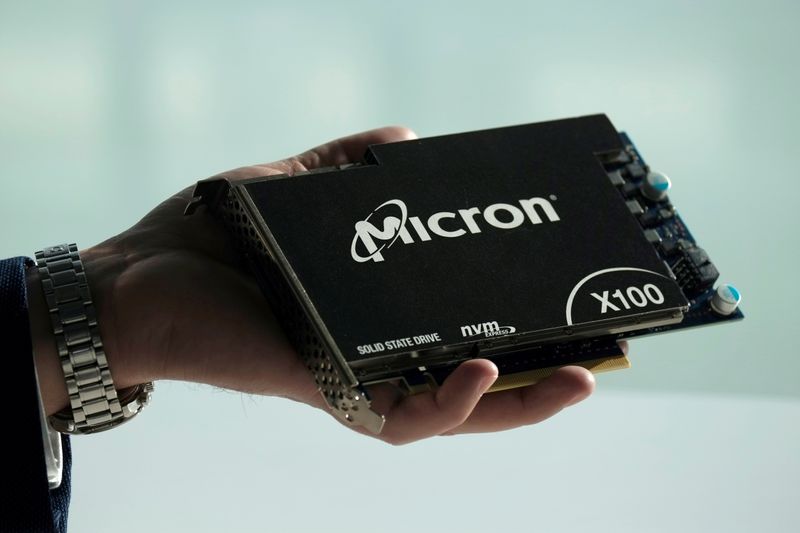
Micron selected Bechtel for phase one of its Clay, New York memory manufacturing complex, a project expected to create 50,000 jobs, including over 4,500 construction jobs, and add about $16.7 billion a year to New York's economy. The facility is slated to become the nation's largest semiconductor manufacturing plant and represents the largest private investment in New York state history. While the article is largely a construction update, it reinforces Micron's long-term growth narrative and comes alongside multiple analyst price-target increases.
This is a second-derivative bullish signal for MU because the market still underappreciates how much of the earnings inflection is tied to capacity commitment, not just spot memory pricing. Locking in a marquee build partner lowers execution risk on one of the few U.S. projects that can structurally expand domestic supply over a multi-year horizon, which should support investor willingness to underwrite a higher long-duration multiple even before revenue hits. The bigger winner may be the industrial and infrastructure ecosystem around the project: specialty contractors, electrical equipment, power, cooling, clean-room systems, and logistics should see a multi-year demand wave with less cyclicality than standard commercial construction. The hidden risk is supply-chain crowding: if this project competes with AI datacenter builds and grid upgrades for skilled labor and long-lead equipment, costs can drift higher, pushing out returns and creating intermittent margin pressure for the builders even if MU remains strategically advantaged. For MU, the main catalyst is not the announcement itself but the market’s realization that this asset can become a policy-backed scarcity asset in a world of AI memory tightness and domestic re-shoring. The counterpoint is that mega-projects often invite skepticism around timing, capex intensity, and execution slippage; if macro or memory pricing softens over the next 6-12 months, the stock could de-rate despite long-term strategic value. So the trade here is less about chasing one headline and more about owning the multi-quarter setup into future capex milestones and analyst revisions. Consensus is likely too focused on near-term memory cycle optics and not enough on option value from U.S. supply-chain de-risking. If this project stays on schedule, the market may eventually treat MU as a strategic infrastructure beneficiary with operating leverage to AI memory demand rather than a pure commodity semiconductor name, which justifies a higher trough multiple than the historical range.
AI-powered research, real-time alerts, and portfolio analytics for institutional investors.
Request DemoOverall Sentiment
moderately positive
Sentiment Score
0.62
Ticker Sentiment
