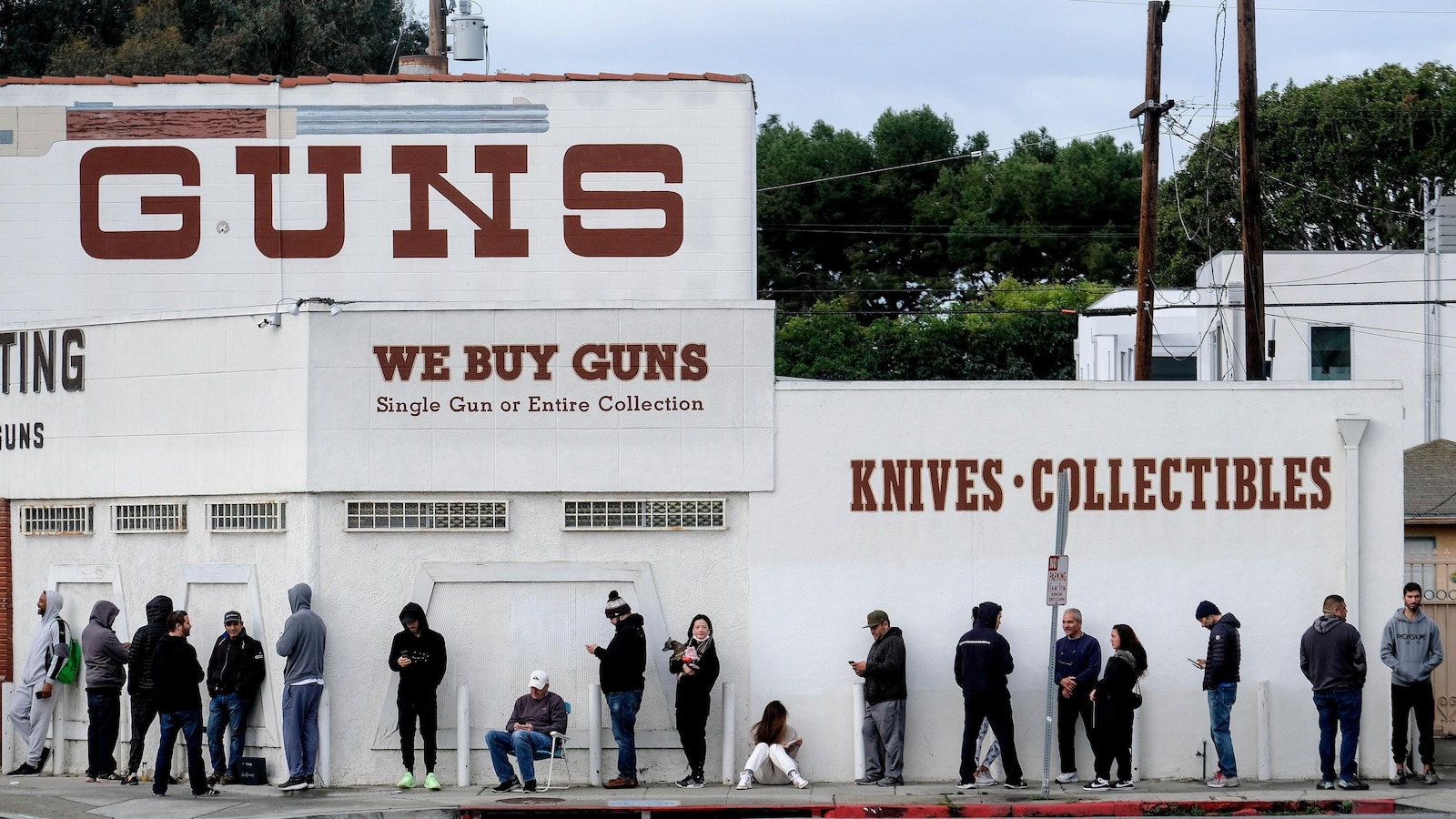
A three-judge panel of the 9th U.S. Circuit Court of Appeals (two-judge majority) found California’s law limiting open carry to counties with populations under 200,000 unconstitutional, saying the policy effectively bans open carry in urban areas where roughly 95% of the state's residents live. The case, brought by Siskiyou County resident Mark Baird, drew a dissent noting California’s statewide concealed-carry regime; officials and the California Rifle & Pistol Association signaled likely requests for en banc review, and the opinion invokes questions about applying the Supreme Court’s 2022 expansion of gun rights.
Market structure: A favorable appellate ruling for open carry shifts demand toward manufacturers (SWBI, RGR) and ammunition suppliers (OLN, VSTO) if enforcement expands; urban California contains ~95% of the state population, so even a 5–10% incremental TAM for handguns/ammo in CA over 12–24 months would be meaningful to small-cap gun makers (potential revenue lift skewed to domestic producers). Retailers with large CA footprints face regulatory uncertainty and reputational/operational costs, while national diversified retailers (DKS) will see muted benefit because CA sales are a small share of national revenue.
Risk assessment: Key tail risks include an en banc reversal within 30–90 days or SCOTUS intervention over 6–24 months that could negate the ruling — these are low-probability but high-impact for equities in the sector. Hidden dependencies include state counter-legislation, insurer/merchant de-risking (payment/insurance pullbacks) and ammo supply-chain capacity; catalysts that could accelerate moves are an en banc hearing date, a cert petition, or a legislative emergency bill in CA within 60–180 days.
Trade implications: Tactical longs in SWBI/RGR and OLN with defined option overlays are appropriate: expect elevated single-stock volatility for 3–6 months around appellate/SCOTUS action. Pair opportunities favor long ammo/parts (OLN) vs short CA-exposed retail (DKS) as relative winners/losers. Rotate modestly (2–4% portfolio tilt) into small-cap firearms/ammos and trim CA-centric consumer exposure until legal clarity (30–90 days).
Contrarian angles: The market may overstate immediate demand — urban open-carry adoption requires legal amendments, permits and social acceptance, so sales impact could be delayed 6–18 months. Conversely, a pro-gun SCOTUS signal could create a multi-year re-rating; also watch non-obvious constraints (payment processors, insurer exclusions) that could cap upside. Historical parallels: post-mass-shooting restriction debates created short-term spikes in gun sales followed by normalization, suggesting option-defined bets beat plain equity carries.
AI-powered research, real-time alerts, and portfolio analytics for institutional investors.
Request DemoOverall Sentiment
neutral
Sentiment Score
0.00
