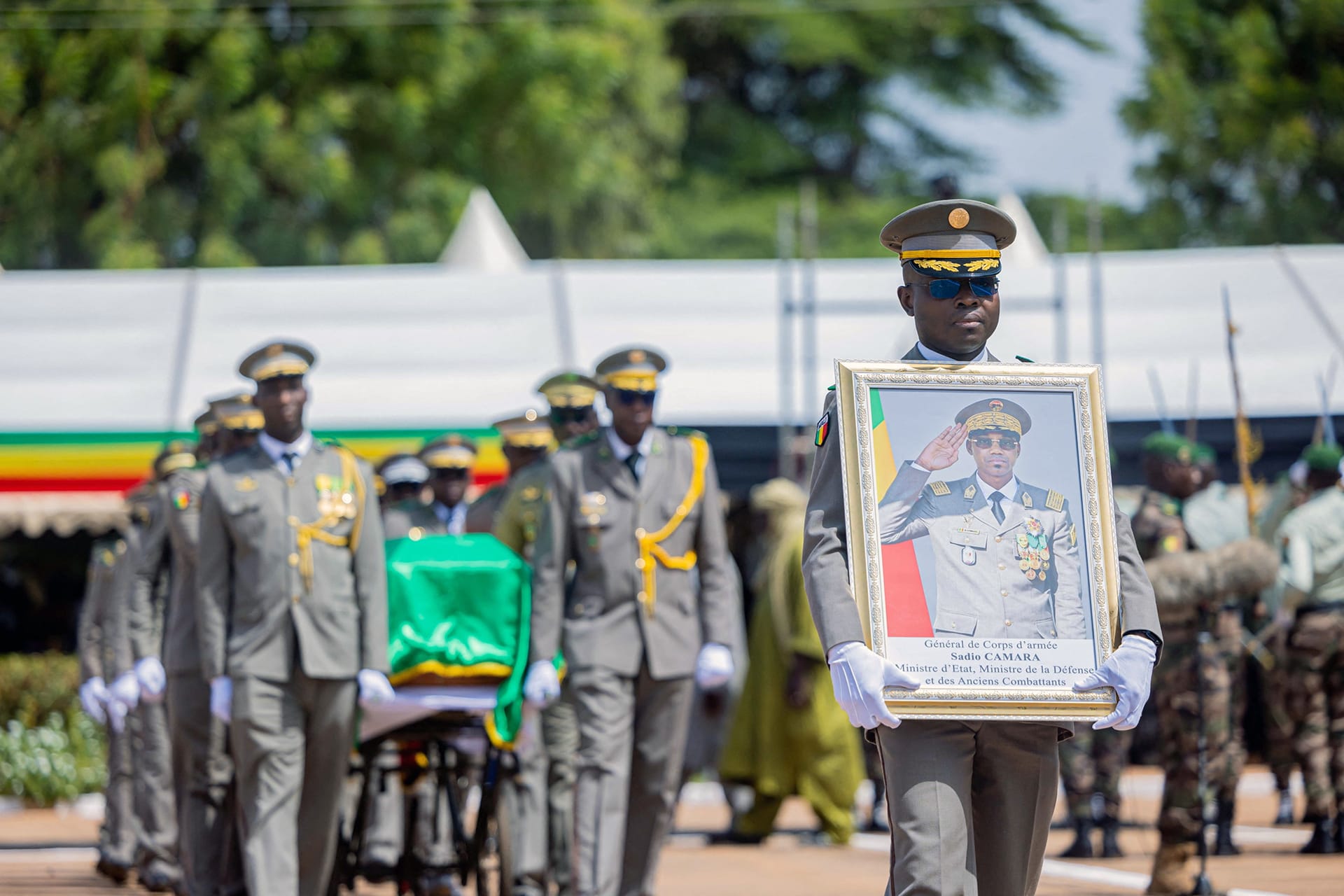
Thousands of JNIM and FLA fighters launched coordinated attacks on multiple Malian cities, reportedly killing Defense Minister Sadio Camara and forcing Russian Africa Corps mercenaries to withdraw from Kidal. The violence heightens instability across the Sahel and could embolden jihadist groups in Burkina Faso, Niger, and Nigeria while putting Mali's Russia partnership under strain. The article also flags material risks to Mali's role in the AES and to regional security dynamics involving the U.S., Russia, and neighboring states.
The market implication is not “Mali risk” in the abstract; it is a widening probability distribution for Sahel state failure. Once insurgent coalitions can force simultaneous pressure on multiple garrisons, the relevant second-order effect is not just more violence but a deterioration in logistics, insurance, and overflight economics across landlocked West Africa, which raises operating friction for miners, agro-processors, and cross-border transport operators with exposure to Mali, Niger, Burkina Faso, and northern Côte d’Ivoire. The more important investable wrinkle is the stress on Russia’s Africa playbook. If Moscow is perceived as unable to protect regime assets, its security-export model loses pricing power, and clients will either demand cheaper terms or diversify suppliers; that is a medium-term headwind for Russian quasi-state contractors and a tailwind for alternative security providers and French/US intelligence contractors once the political cycle turns. In parallel, any further degradation in Mali’s territorial control increases the odds of informal gold and lithium supply disruptions, which is bullish for ex-Mali mineral developers but bearish for local infrastructure assets and sovereign credit proxies. The near-term catalyst path is asymmetric: days to weeks brings headline shock, tighter local asset pricing, and more emergency regional military coordination; months brings either a negotiated containment or a broader contagion into Niger/Burkina that would force another round of repricing in frontier Africa risk. The key reversal variable is whether the junta can restore credible military deterrence without further alienating civilian networks; if not, the regime’s coercive capacity erodes faster than insurgents need to win outright. Consensus is likely underestimating how quickly a symbolic battlefield setback can raise funding costs and delay capex across the entire Sahel corridor.
AI-powered research, real-time alerts, and portfolio analytics for institutional investors.
Overall Sentiment
strongly negative
Sentiment Score
-0.78
Ticker Sentiment
