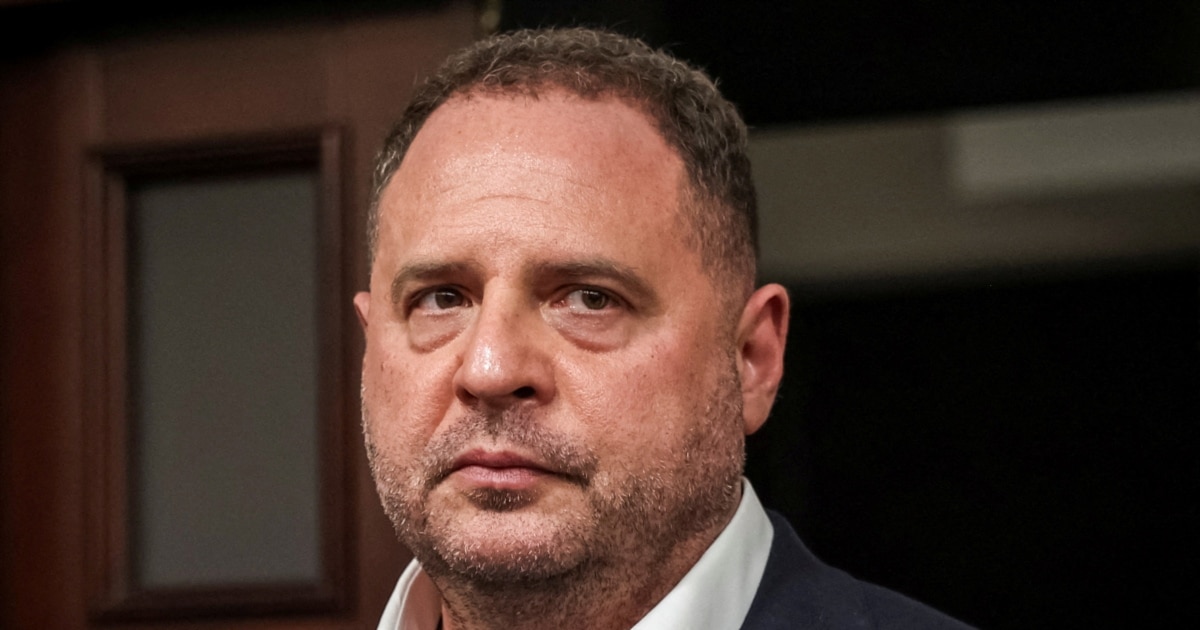
A Kyiv court ordered former Zelenskyy chief of staff Andriy Yermak jailed in a luxury real estate scandal and set bail at roughly 140 million hryvnias, or $3.2 million. The case alleges funds siphoned from air-defense systems were used by Yermak and family members to buy luxury property, further denting Zelenskyy's political standing amid war fatigue and corruption concerns. The story is politically damaging but is unlikely to have immediate broad market impact.
This is less about one politician and more about the premium investors assign to wartime continuity. The market’s real risk is that a corruption case against a top Zelensky-era operator increases the probability of a fragmented governing coalition or a rushed succession process, both of which would slow aid disbursement, procurement, and budget execution over the next 1-3 quarters. That matters because Ukraine’s near-term solvency and military capacity are highly path-dependent on administrative coordination, not just headline funding promises. The second-order loser is the domestic reform narrative that has supported Western financing. If anti-corruption credibility deteriorates, donors may add more conditionality, which can delay tranche timing and increase the effective cost of capital for the sovereign and quasi-sovereign ecosystem. In practical terms, any slippage in governance raises the odds of a weaker hryvnia, higher local rates, and tighter access to external support for banks, builders, and companies with embedded government receivables. The contrarian angle is that this may be bearish for headline sentiment but bullish for institutional clean-up over a medium horizon. If the investigation is perceived as real rather than selective, it can strengthen the case for deeper reforms and reduce the long-run governance discount. The near-term trade, however, is asymmetric to the downside because markets usually price corruption scandals as a signal of broader regime fragility before they price in reform benefits. The key catalyst window is the next 2-8 weeks: appeal outcomes, any additional named suspects, and Western donor messaging. A quick containment would limit damage; a widening probe or polling shock would amplify the pressure by raising the odds of political turnover discussions despite martial law constraints.
AI-powered research, real-time alerts, and portfolio analytics for institutional investors.
Overall Sentiment
strongly negative
Sentiment Score
-0.72
