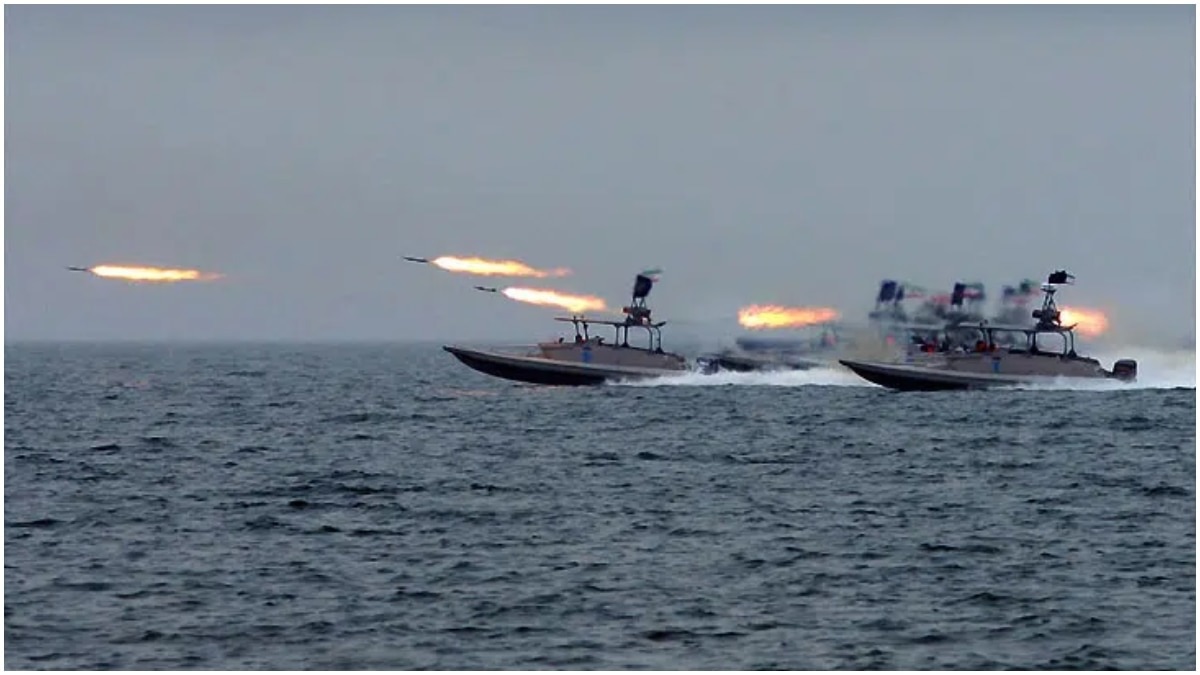
Iran says it launched drone strikes targeting US military vessels after US forces seized the Iranian cargo ship Touska near the Strait of Hormuz. The escalation threatens the fragile ceasefire and heightens disruption risk in a corridor that handles roughly one-fifth of global oil flows. Brent crude jumped about 7% to $96.85 per barrel as markets priced in higher supply and shipping risk.
This is less a one-off headline than a regime shift in the risk premium for the Strait of Hormuz. The market is now pricing not just lost barrels, but a higher probability of intermittent “gray-zone” interference that forces shippers to reroute, slows port throughput, and widens the spread between paper crude and delivered physical barrels. That second-order effect matters because the first leg higher in oil often comes from futures, while the real squeeze shows up later in refined-product cracks, tanker availability, and insurance costs. The immediate winners are not only upstream energy producers, but also firms with exposure to freight, marine insurance, and defense logistics, since each escalation increases demand for escort, surveillance, and replacement capacity. The losers are refiners and chemical names with heavy Middle East feedstock exposure, as well as import-dependent Asian and European manufacturers that face higher input costs with limited ability to pass them through in the next 1-2 quarters. If traffic is even briefly disrupted, the tighter bottleneck could create a bigger relative move in products than in crude itself. The key catalyst window is days to weeks: either the incident broadens into repeated maritime harassment, or both sides step back to preserve the ceasefire and avoid a self-inflicted economic shock. A meaningful de-escalation would need a visible restoration of transit confidence, not just rhetoric, because shipowners typically wait for multiple uneventful sailings before removing surcharges. Conversely, any confirmed hit on a military asset or sustained boarding/interdiction activity would likely force a fast re-pricing higher in Brent, tanker rates, and defense names. The consensus may still be underestimating how quickly this filters into inflation expectations and policy odds. Even a short-lived disruption can tighten global inventories and complicate central-bank easing narratives, which matters for rate-sensitive equities and credit. The market should treat this as a volatility event with asymmetric upside in oil and defense, but also a potential growth shock if it persists past a few sessions.
AI-powered research, real-time alerts, and portfolio analytics for institutional investors.
Request DemoOverall Sentiment
strongly negative
Sentiment Score
-0.75
