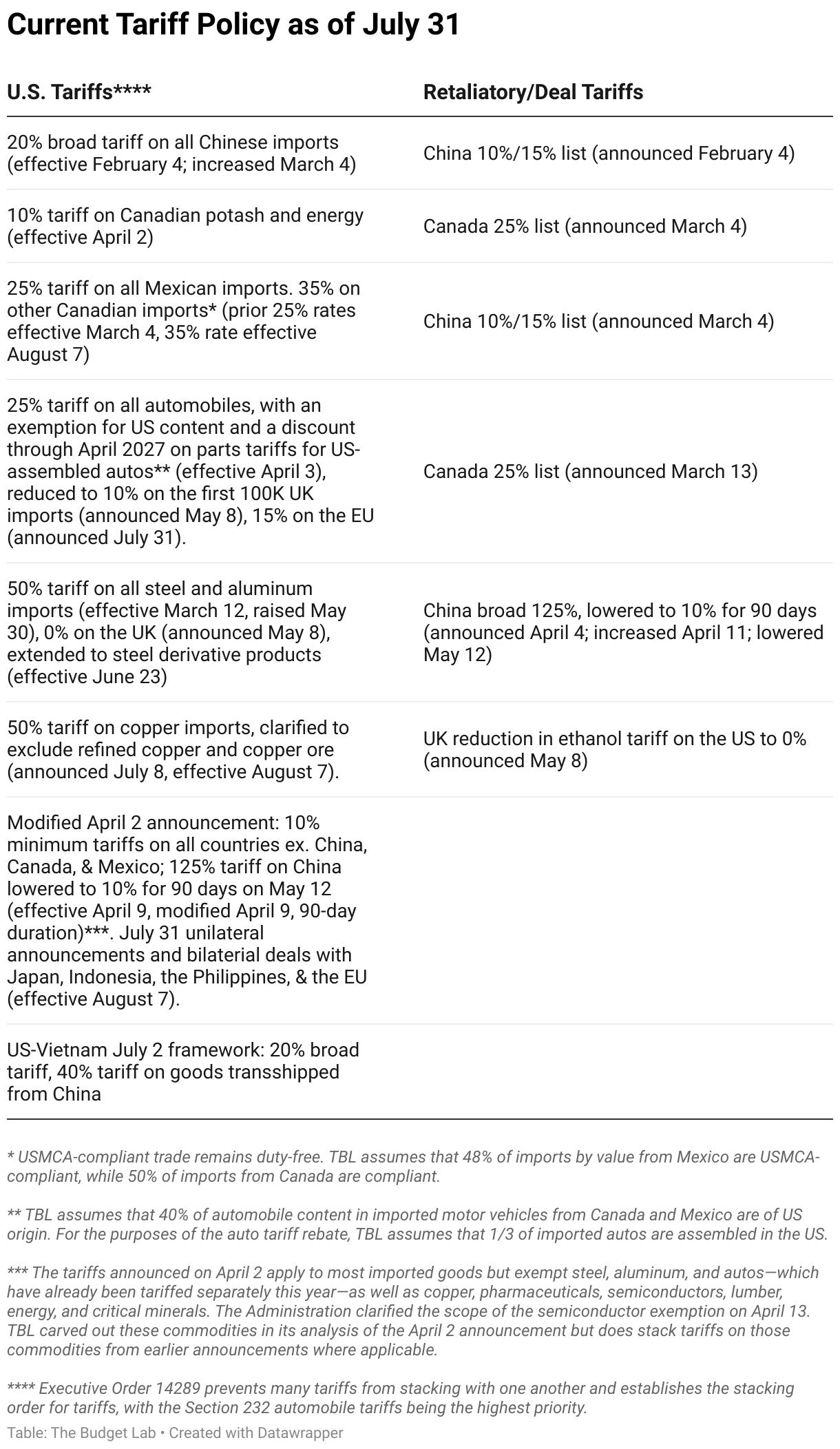
The Budget Lab (TBL) estimates that US tariffs implemented in 2025, including new 'reciprocal' tariffs, will result in an average effective tariff rate of 18.3%, the highest since 1934. This policy is projected to reduce US real GDP growth by 0.5 percentage points annually in 2025-2026, leading to a persistently 0.4% smaller economy long-term and 497,000 fewer payroll jobs by end-2025. Consumers face a 1.8% short-run price level increase, equating to an average $2,400 household income loss, with tariffs acting as a regressive tax. While manufacturing output expands by 2.1%, this is more than offset by contractions in sectors like construction and agriculture, indicating an overall drag on the economy.
The 2025 US tariff regime, as analyzed by The Budget Lab, presents a significant stagflationary shock to the US economy. The imposition of an 18.3% average effective tariff rate, the highest since 1934, is projected to directly fuel inflation by raising consumer prices 1.8% in the short term. This translates to a $2,400 average loss in household income, with a regressive impact that disproportionately burdens lower-income households. Simultaneously, the policy acts as a drag on economic output, forecast to reduce real GDP growth by 0.5 percentage points in both 2025 and 2026, and shrink the long-run size of the economy by 0.4%. The labor market is expected to weaken, with unemployment rising 0.3 percentage points and payrolls falling by 497,000 by the end of 2025. While the tariffs aim to bolster domestic manufacturing, which is projected to expand output by 2.1%, these gains are more than offset by contractions in other key sectors like construction (-3.5%) and agriculture (-0.9%), indicating an inefficient reallocation of capital rather than a net economic benefit. The report highlights specific consumer pain points, with substantial price increases for motor vehicles (+12.0%), shoes (+40%), and apparel (+38%), which will directly impact consumer discretionary spending and corporate margins in those sectors.
AI-powered research, real-time alerts, and portfolio analytics for institutional investors.
Overall Sentiment
strongly negative
Sentiment Score
-0.80
