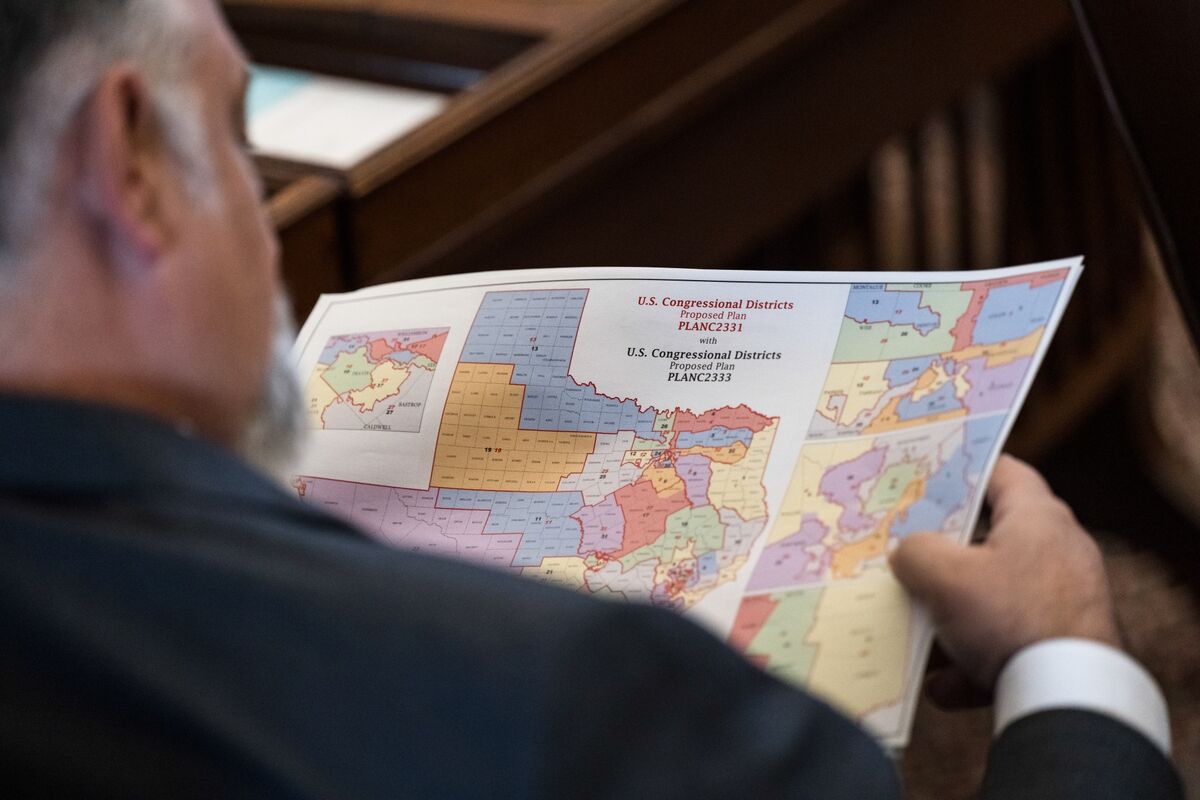
Texas asked the US Supreme Court in an emergency filing to reinstate a GOP-drawn congressional map days after a lower court found the plan—drawn at former President Trump’s behest—was likely an unconstitutional racial gerrymander. The lower-court ruling had undercut Republican hopes of gaining five seats in Texas, and the state's appeal puts the map’s fate squarely before the high court at a moment when its resolution could materially influence which party controls the House after next year’s midterm election.
Texas filed an emergency appeal to the U.S. Supreme Court asking the justices to reinstate a GOP-drawn congressional map after a lower court found the plan, drawn at former President Trump's behest, was likely an unconstitutional racial gerrymander. The emergency filing arrived days after the lower-court ruling and directly targets a decision that previously undercut Republican hopes of picking up five seats in Texas.
The dispute is consequential because those five seats were central to Republican strategies to gain control of the House after next year’s midterm election; the Supreme Court's emergency pathway accelerates resolution and could determine the operative map for candidate filing and early-voting timelines. A high-court reversal would preserve the contested map and sustain GOP pickup potential, while an affirmation would force redrawing and improve Democratic defensive prospects.
Market signals classify the development as neutral and uncertain with a low market-impact score (0.15), indicating limited immediate market-moving power, but the political outcome carries asymmetric policy and regulatory implications tied to House control that can alter risk premia. Treat this as a political-risk event to monitor for potential volatility in policy-sensitive assets rather than a direct financial shock at present.
AI-powered research, real-time alerts, and portfolio analytics for institutional investors.
Request DemoOverall Sentiment
neutral
Sentiment Score
0.00
