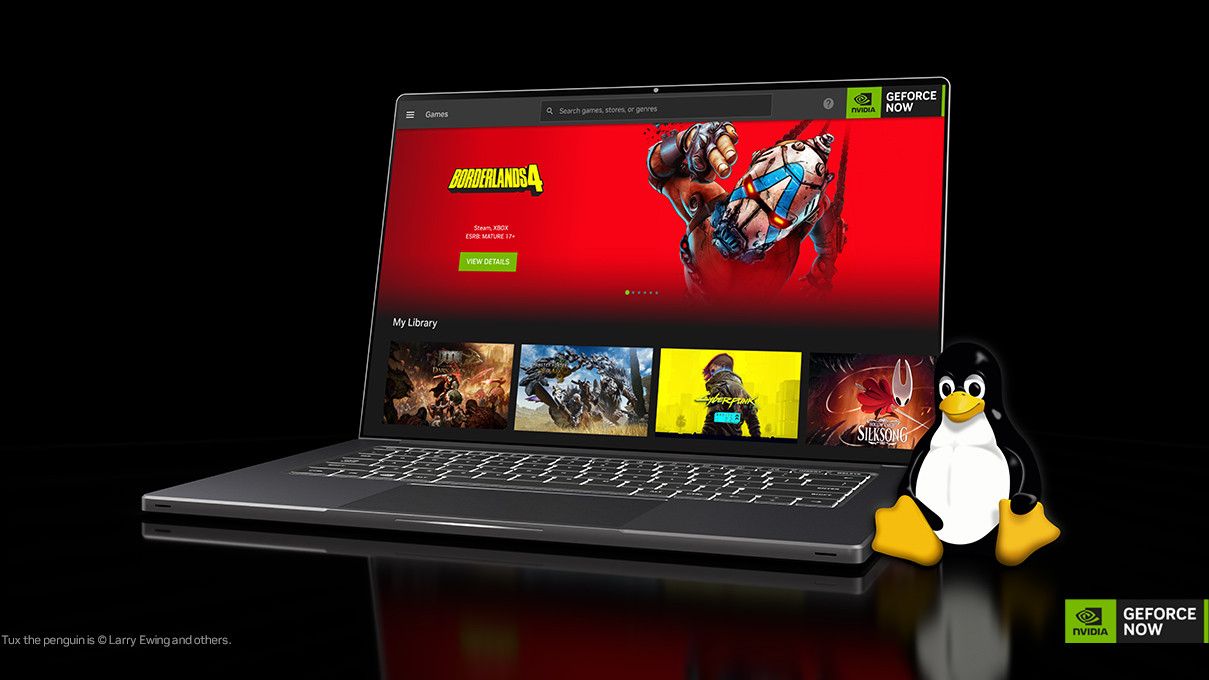
Nvidia has released a native GeForce Now beta app for Linux (initially supporting Ubuntu 24.04+), offering the full streaming experience including up to 5K at 120fps on the Ultimate tier and claimed up to 360fps at Full HD; the client resolves many Linux compatibility and anti-cheat issues that previously limited play. As a beta release, adoption will hinge on broader distro support and users' broadband quality, so the launch may incrementally expand GeForce Now subscriptions among Linux users but is unlikely to materially move Nvidia's near-term financials.
Market structure: Nvidia is the clear incumbent winner — native GeForce Now on Linux increases addressable cloud-gaming users and strengthens NVDA’s leverage over software+service economics (higher recurring revenue per GPU). Incumbent console/cloud rivals (Microsoft Game Pass/xCloud, smaller GPU retailers) face pressure: consumer upgrade cycles could decelerate 5–15% over 1–3 years as streaming substitutes hardware for a subset of users, while cloud GPU demand may rise 10–30% for Nvidia’s data-center line if adoption scales.
Competitive dynamics & supply/demand: Linux adoption is small today (~2–4% desktop share) but could double in pockets (gaming/SteamOS users) — meaning near-term subscriber lifts are modest but strategically important for platform lock-in. That strengthens Nvidia’s pricing power for cloud GPU time and software integrations; countervailing downside is potential softening of retail GPU ASPs if high-end gamers postpone upgrades, creating a bifurcated demand profile across channels.
Cross-asset & risk assessment: Market-level effects are concentrated — NVDA equity and options will react to GeForce Now subscriber metrics and data-center revenue; bond markets see marginally higher capex issuance risk for cloud providers if they accelerate GPU purchases. Tail risks include regulatory scrutiny (EU/antitrust, data sovereignty), anti-cheat/legal licensing removing titles from the service, or broadband constraints limiting adoption; these are low-probability but can halve expected cloud-revenue upside within 6–18 months.
Trade and catalyst view: Near-term catalysts to watch are NVDA monthly/quarterly GeForce Now MAUs, Linux desktop share signals (SteamOS launches), and NVDA data-center revenue prints. If GeForce Now MAUs show >10% QoQ growth for two consecutive quarters, expect follow-through in NVDA stock; absence of that signal or major title delistings should trigger rapid de-risking within 3 months.
AI-powered research, real-time alerts, and portfolio analytics for institutional investors.
Request DemoOverall Sentiment
mildly positive
Sentiment Score
0.32
Ticker Sentiment
