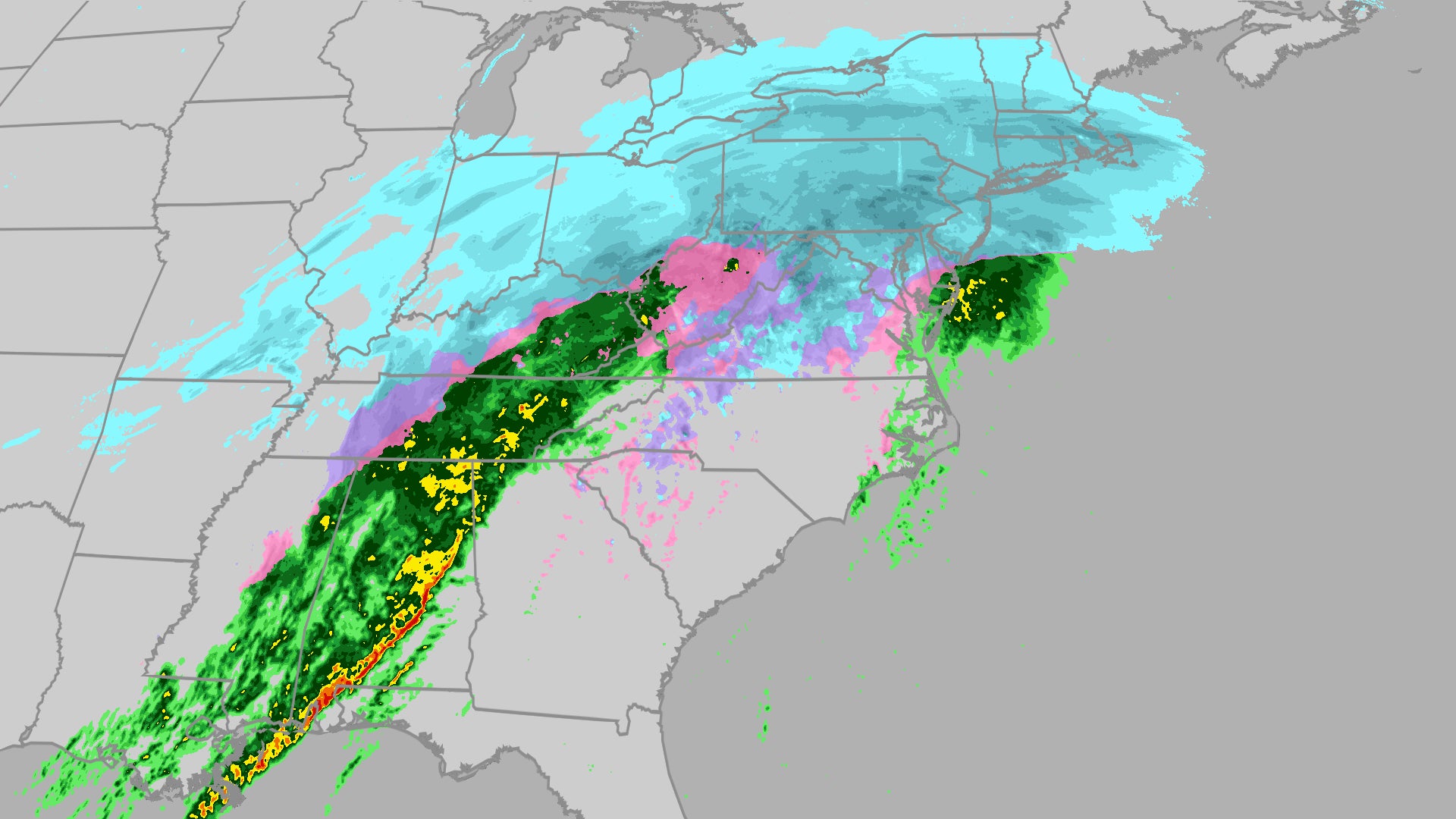
A historic Winter Storm Fern is impacting roughly 220 million people across 34 states with heavy snow (over a foot in parts of CO, IL, IN, MO, NM, OH, PA, WV) and destructive ice (half-inch+ accumulations in LA, MS, OK, SC, TN, TX), producing widespread power outages and significant tree damage in the South and hazardous travel and flight cancellations across the Ohio Valley and Northeast. The event threatens multi-day utility outages amid plunging Arctic temperatures, creates near-term upside pressure on energy demand and potential volatility for airlines, logistics providers, utilities and property insurers, and may produce regional supply-chain and infrastructure disruptions that investors should monitor closely.
Market structure: The storm creates immediate winners in short-term energy (natural gas, power) and emergency services and losers in airlines/airports, rails, and regional retail reliant on foot traffic. Expect spot power and localized DK/DA price spikes (day-ahead premiums) and Henry Hub moves of +5–25% on multi-day cold snaps; structured energy sellers with short gamma will be hurt. Regulated utilities see higher near-term outage costs but can recover via storm-recovery capex claims, shifting modest pricing power to distribution operators for 3–12 months.
Risk assessment: Tail risks include multi-day regional outages causing corporate earnings misses, large insured loss events (> $1bn) that hit small-cap P&C or reinsurance, and reputational/regulatory actions forcing utility accelerated capex. Immediate window is days for travel/transport shocks, weeks for energy price normalization, and quarters for utility rate cases and insurer loss reserves. Hidden dependencies: interties (ISO/RTO constraints), pipeline nominations, and municipal liquidity for emergency repairs.
Trade implications: Tactical trades: buy short-dated natural gas call spreads and day-ahead power exposure; short airlines/air-transport (JETS ETF or 2–4 week puts) and railways with high-snow routing. Rotate into regulated utility names and pipeline MLPs for recovery-driven cash flow; hedge insurer exposure with tight-duration protection. Option volatility will spike—use spreads to limit theta bleed and size for event risk.
Contrarian angles: Consensus will oversell utilities on outage headlines; regulated names (NEE, DUK, SO) often recover and see accretive storm-repair earnings and higher rate base over 3–12 months. Natural gas spikes are often a mean-reversion trade within 2–6 weeks—selling front-month premium after confirmation of colder-than-model weather is attractive. Airline/transport panic often fades in 7–14 days as schedules recover, exposing short-term put buyers to time decay.
AI-powered research, real-time alerts, and portfolio analytics for institutional investors.
Request DemoOverall Sentiment
moderately negative
Sentiment Score
-0.45
