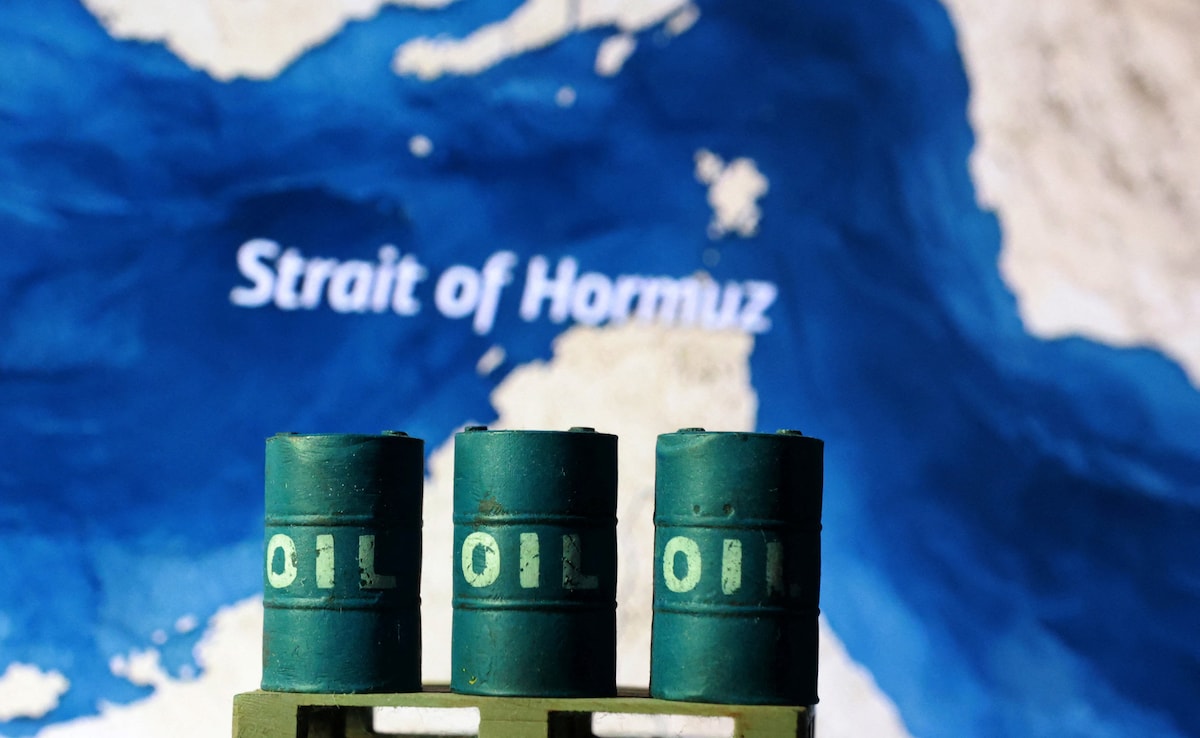
Brent crude jumped above $105/bbl and US WTI topped $103/bbl after President Trump's speech saying the US does not need oil from the Strait of Hormuz and threatening to hit Iran's energy infrastructure. Markets had briefly seen a >$1 decline earlier as hopes for de-escalation rose, but Trump's remarks signaled continued supply risk (the Strait normally carries ~20% of global crude), keeping prices elevated and raising fuel, transport and goods cost pressures globally.
The market has re-priced a meaningful short-term supply-risk premium and is treating energy infrastructure as a near-term geopolitical lever; expect elevated oil vol and risk premia to persist in the weeks-to-months window as shipping insurance, tanker availability and export terminal bottlenecks amplify any upstream disruption. Because the physical response from non-OPEC supply (notably US shale) takes multiple months to materialize, price discovery will be dominated by headline risk and logistics constraints rather than immediate production economics.
Second-order transmission will be uneven: refiners with export capability and Gulf Coast terminalling (midstream/storage owners) widen margins and realize quick cashflow, while high fuel intensity sectors (airlines, container shipping, long-haul trucking) face margin compression and accelerated hedging demand. Marine insurance and tanker charter rates are a multiplier — a sustained rise in time-charter rates materially increases delivered crude costs for import-dependent refiners and raises headline inflation risk over the next 1-3 quarters.
Winners/losers diverge by asset-capital structure: pure upstream and owners of physical export capacity capture most of the incremental crude price, integrated majors hedge and lap less upside, and service/defense names tied to infrastructure hardening benefit from incremental capex. The crowd is long directional oil exposure; that creates opportunities for asymmetric option structures and pair trades that express a view on realized volatility and sector dispersion rather than just price direction.
Near-term catalysts that could reverse the repricing are discrete: credible diplomatic de-escalation, coordinated releases of strategic inventories, or a sudden collapse in tanker insurance costs — any of which could compress vol and retrace the trade within 2-8 weeks. The more probable path absent those catalysts is sideways-to-higher oil with episodic jumps tied to headlines, making convex (option) exposure and relative-value spreads preferable to naked directionals.
AI-powered research, real-time alerts, and portfolio analytics for institutional investors.
Request DemoOverall Sentiment
mildly negative
Sentiment Score
-0.30
