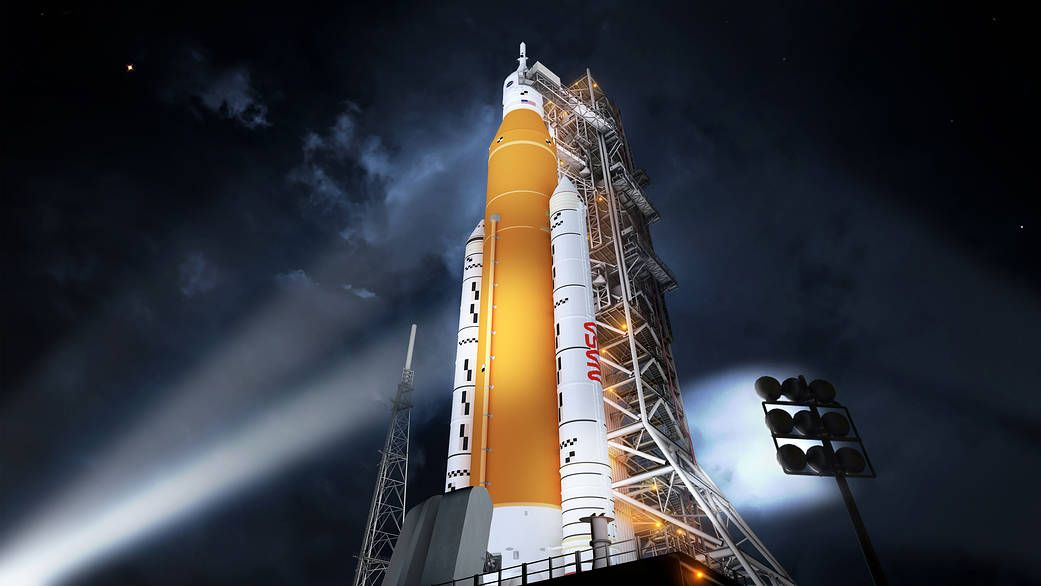
NASA is preparing to roll the Artemis II Space Launch System and Orion crew capsule from the Vehicle Assembly Building to Pad at Kennedy Space Center as soon as Jan. 17, ahead of a wet dress rehearsal at the end of January and a launch window as early as Feb. 5–6, 2026 (no later than April 2026). Artemis II will be the program’s first crewed flight—four astronauts on a roughly 10-day lunar flyby mission—intended to validate systems ahead of a planned lunar landing campaign culminating in Artemis III by 2028. Engineers are troubleshooting ground-support hardware (including leaky oxygen supply lines) and will delay rollout for adverse weather or technical issues, leaving schedule risk for contractors and insurers but limited direct market impact at this stage.
Market structure: A successful Artemis 2 rollout and wet dress rehearsal (end-Jan) crystallizes near-term revenue visibility for traditional NASA primes — Lockheed Martin (LMT), Northrop Grumman (NOC) and Boeing (BA) — and component suppliers (Aerojet Rocketdyne/AJRD, Maxar/MAXR). Expect incremental contract tailwinds in the range of multi-hundreds-of-millions to low-single-digit billions annualized for primes over 3–5 years; industrial-gas suppliers (Linde/LIN, Air Products/APD) should see measurable upticks in cryogen demand for launch operations. SpaceX (SPCE) remains a competitive cross-pressuring factor because of HLS work and Starship cadence, capping pricing power for legacy primes.
Risk assessment: Key tail risks are a high-profile launch failure or another technical delay that could cascade into program re-scopes, causing 10–30% drawdowns in small-cap suppliers and 5–15% moves in large primes within days. Immediate risks: rollout/weather in next 7–14 days; short-term catalysts: wet dress rehearsal end-Jan and Flight Readiness Review in Feb; long-term: congressional appropriation shifts or HLS/contract awards over 12–36 months. Hidden dependencies include cryogen logistics, ground-support hardware reliability (recent oxygen leaks) and contractor labor/parts bottlenecks.
Trade implications: Set tactical exposure ahead of wet dress rehearsal but trim on successful completion. Favor a 1–2% long in LMT and 0.75–1% long in NOC with 12–15% stop-losses; add 0.5% long in LIN or APD for cryogen upside. Relative trade: pair long LMT vs short BA (equal notional) to express program execution over aerospace OEM headline risk. Use options: buy LMT 6-month call spread (5–20% OTM, 0.5% portfolio) to cap premium while keeping upside tied to milestone success.
Contrarian angles: The market may underprice Boeing/AJRD upside if Artemis proceeds cleanly — BA shares could rebound sharply from oversold levels; conversely, small suppliers with single-program revenue (identify names before committing) are overvalued on ceremony alone and vulnerable to 50%+ drawdowns on a single anomaly. Historical parallels: Apollo-era supplier winners were concentrated among diversified primes; don’t extrapolate ceremony into broad small-cap moon plays. Watch NASA contract award notices and FFR/Anomaly reports within 0–90 days as binary catalysts to re-rate positions.
AI-powered research, real-time alerts, and portfolio analytics for institutional investors.
Request DemoOverall Sentiment
neutral
Sentiment Score
0.15
