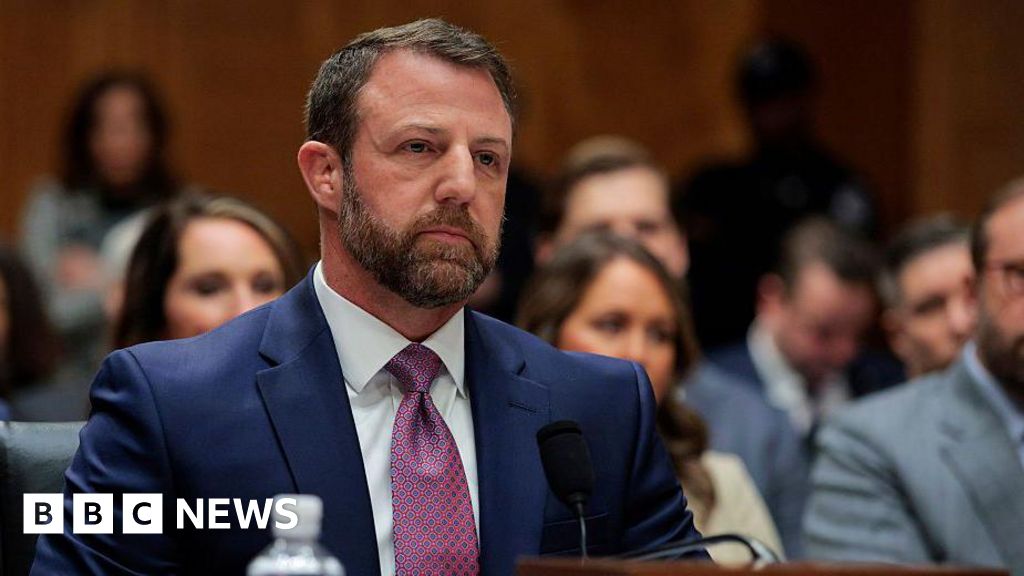
280,000 DHS employees are roughly on day 30 without pay amid a funding lapse as Markwayne Mullin faces a committee vote this week to advance his nomination for Homeland Security secretary. The three-hour hearing focused on ICE enforcement practices (use of judicial warrants, potential new detention centers), Mullin's prior controversial remarks, and operational strains at TSA—more than 300 TSA employees have quit and call-out rates have more than doubled—creating political and staffing risk but limited direct market impact.
The nomination process is a near-term binary that amplifies policy optionality across government security and detention-related supply chains; a confirmation materially raises the probability of accelerated contract awards for federal services and facility construction within a 3–12 month window, while continued funding gridlock keeps cash flows for contractors lumpy and front-loaded. Private operators and mid-tier federal contractors will see dispersion in outcomes: awards may be large but delivery timelines and legal challenges will front-load risk, compressing near-term multiples for any firm priced as a steady revenue stream. Operationally, persistent workforce stress at security agencies creates a wage/attrition feedback loop that will show up first in outsourced labor markets (screening, facility guards, logistics) and then in airline on-time performance and airport concession revenues over the next 1–3 quarters. That dynamic favors firms with automated screening, cloud/cybersecurity and managed services that can substitute headcount, while pressuring labor-heavy service providers and lower-margin concession operators. Key catalysts to watch are the committee vote (days), a full Senate decision (1–3 weeks) and appropriation negotiations tied to DHS funding (weeks–months). Tail risks include high-profile litigation or major protest events that could stall facility siting or force contract cancellations, and a surprise funding patch that reroutes appropriations away from capital projects into operating payroll back-pay, delaying revenue recognition for builders and systems integrators. The consensus tends to over-index to headline politics and underweight implementation friction — contracting lead times, community legal challenges and procurement audits mean revenue is likely realized in tranches over 6–24 months, not immediately. Use option structures and pairs to express views: capture upside from a policy pivot while keeping downside capped against legislative reversal or execution risk.
AI-powered research, real-time alerts, and portfolio analytics for institutional investors.
Request DemoOverall Sentiment
neutral
Sentiment Score
0.00
