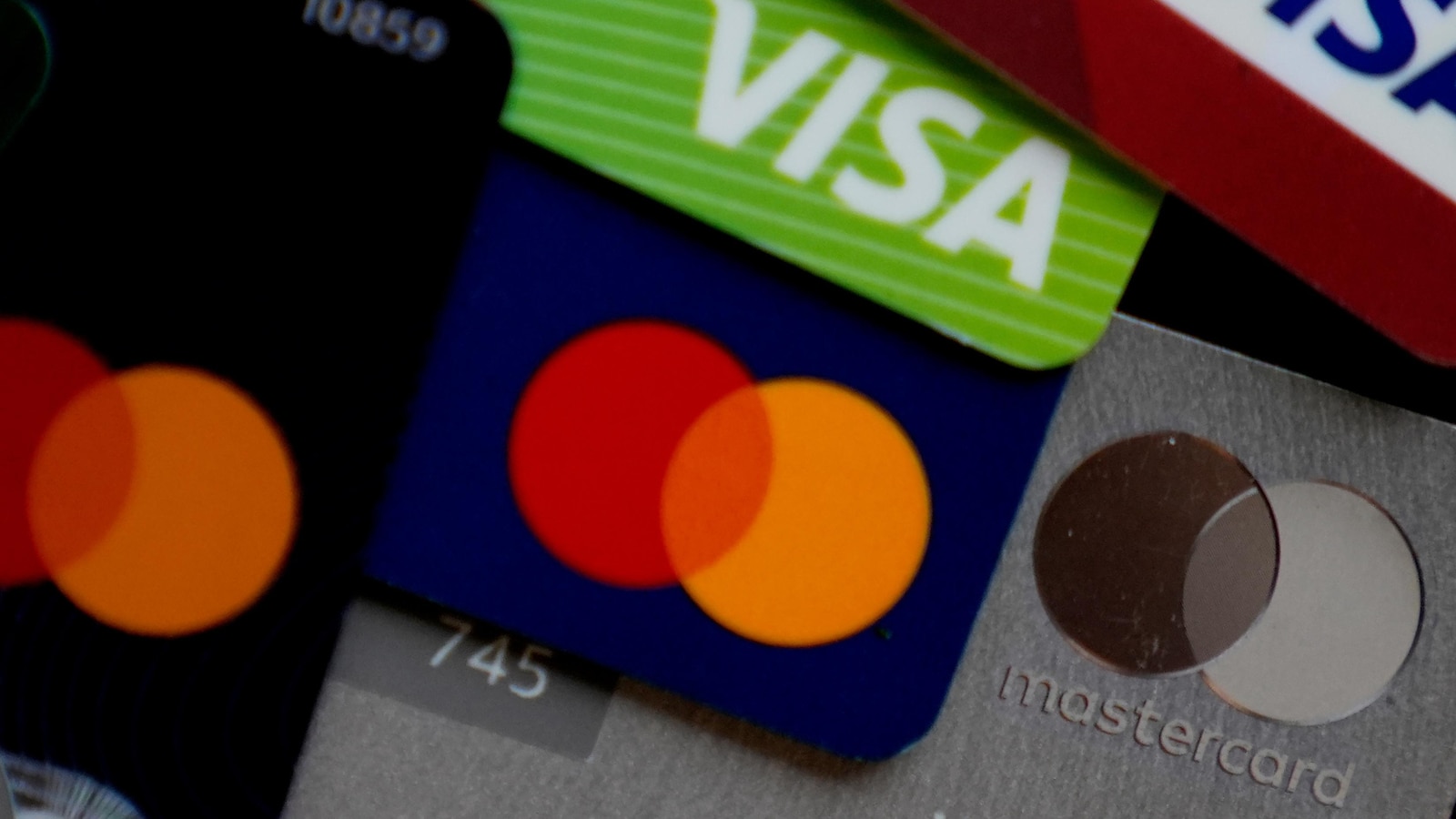
President Trump proposed a one-year, 10% cap on credit card interest rates (targeted to be in place by Jan. 20), a move researchers estimate could save Americans roughly $100 billion a year; the U.S. had about 195 million cardholders paying $160 billion in interest and carrying roughly $1.23 trillion in card debt with average rates near 20% in recent data. Banks and trade groups warned the cap would force credit-line cutbacks for higher-risk borrowers and reduce rewards, while lawmakers on both sides have introduced or signaled support for related legislation, making this a material regulatory risk to card issuers and bank earnings.
Market structure: A 10% cap would transfer ~ $100B/yr in interest from issuers to consumers and materially compress card NIMs given average card APRs ~20% and $1.23T outstanding. Winners: rate-sensitive consumer cyclicals (discretionary, travel) and some fintech lenders that price differently; losers: large card issuers (COF, AXP, DFS) and payment networks if merchant-fee politics follow. Expect banks to seek revenue substitution (annual fees, securitization, higher overdraft/payments), and rewards programs to be curtailed quickly for lower-margin cohorts.
Risk assessment: Tail risk includes an unexpected executive action or fast-track legislation within 30–90 days that forces immediate repricing, causing credit-line closures and ABS spread widening; worst-case: sharp re-rating of bank credit card securitizations and a 100–250bps rise in ABS spreads. Short-term (days-weeks) volatility on bank/card equities and MA/V; medium-term (3–9 months) credit stress for sub-600 borrowers; long-term (1–3 years) structural shift toward merchant-paid models or higher non-interest fees. Hidden dependency: if merchant fees fall in retaliation, payments networks’ margins could compress even if interest is capped.
Trade implications: Expect equity volatility and credit spread moves—buy protection on consumer ABS and use options to hedge card issuers; favorable relative trade is long diversified banks (JPM) vs short pure-play card issuers (COF, AXP, DFS) over 3–9 months. Retail/travel (UAL) could see demand tailwinds if durable income effect materializes; payment networks are mixed—possible short-term underperformance if interchange becomes politicized.
Contrarian angles: Consensus overstates immediate systemic harm; historical precedent (debit-interchange cap) saw temporary reward cuts then partial restoration, implying large incumbents will innovate (fee re-pricing, targeted offers) rather than exit. The market may underprice cliff-risk to subprime borrowers—if lenders tighten, payday lending and BNPL sectors will expand, creating new regulatory flashpoints and investment opportunities in alternative lenders.
AI-powered research, real-time alerts, and portfolio analytics for institutional investors.
Request DemoOverall Sentiment
moderately negative
Sentiment Score
-0.35
Ticker Sentiment
