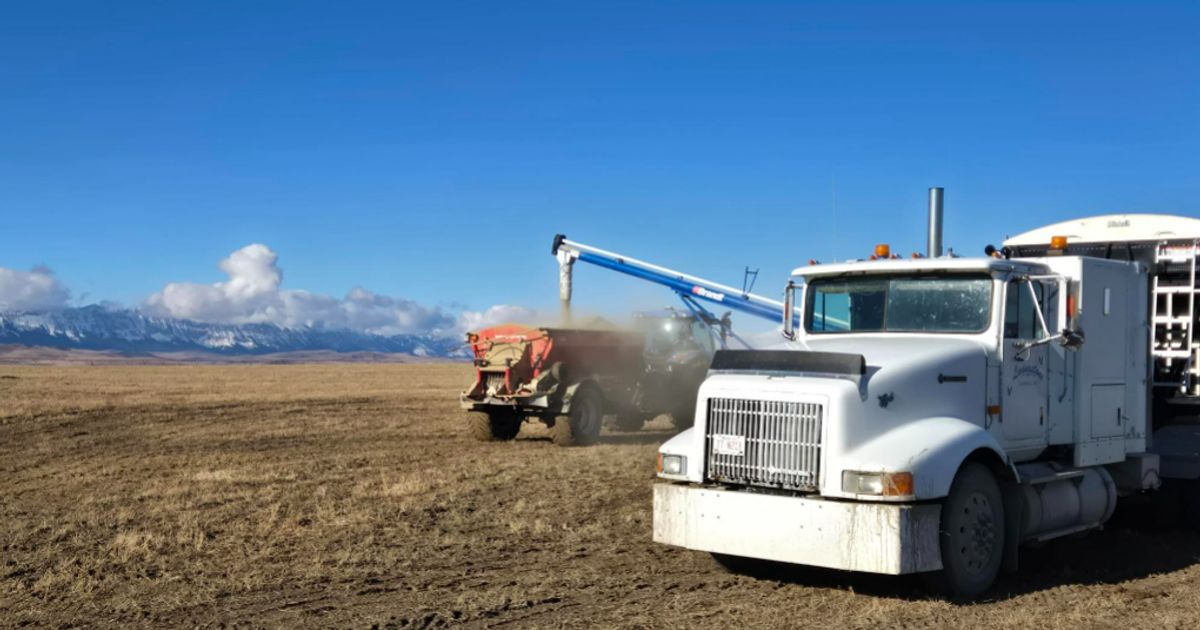
Replenish Nutrients (CSE:ERTH, OTC:VVIVF) advanced its Beiseker granulation facility to sustained production rates of 4–5 metric tonnes per hour, on track for a targeted ~2,000 tonnes/month as 24-hour operations come online, and has shifted to steady-state commercial operations. The company rolled out a patented pellet fertilizer and a retail product (Replenish 1) across Western Canada, and pursued a capital-light licensing model with MJ Ag Solutions (Western Canada) and Farmers Union Enterprises (US Midwest) to generate per-tonne licensing revenues as partner plants ramp; management says 2026 will focus on full Beiseker production, initiating licensed production and improving cash-flow visibility.
Market structure: Replenish’s Beiseker ramp to ~2,000 t/month (≈24k t/yr) and a capital-light licensing model shifts value from asset-heavy incumbents to IP/licensor economics. Winners are licensing partners (MJ Ag Solutions, Farmers Union Enterprises) and specialty/regenerative input suppliers; losers are regional commodity-centric distributors who compete on price not formulation. Pricing power will be localized—expect downward pressure on margins for commodity blends in Western Canada but only modest national impact given majors’ scale.
Risk assessment: Key tail risks include operational underperformance (sustained output <50% of 2k t target by June 2026), failed licensing commercialization, or regulatory limits on “regenerative” claims that curtail demand. Near-term (days–months) volatility will be driven by production cadence and cash-flow updates; medium-term (6–12 months) risk centers on first licensing receipts and patent enforcement; long-term hinge on adoption rates of regenerative practices and policy subsidies.
Trade implications: For active portfolios, this is a small-cap, high-volatility opportunity — score it as speculative growth in 2026 tied to measurable production and licensing KPIs. Cross-asset: limited FX effect (CAD upside if exports rise), negligible bond-market impact, and minimal pressure on global fertilizer commodity prices but potential basis compression regionally. Options/structure should prefer limited-loss long-dated plays to capture 2026 licensing inflection.
Contrarian angles: Consensus optimism may underweight execution risk and working-capital needs—licensing rarely pays immediately; first revenues can lag 6–12 months post-agreement. Historical parallels: specialty ag startups that scaled too fast saw margin erosion and liquidity strains. Unintended consequence: partners operating plants may prioritize volume over formulation fidelity, diluting brand/IP value and royalty rates.
AI-powered research, real-time alerts, and portfolio analytics for institutional investors.
Request DemoOverall Sentiment
moderately positive
Sentiment Score
0.45
Ticker Sentiment
