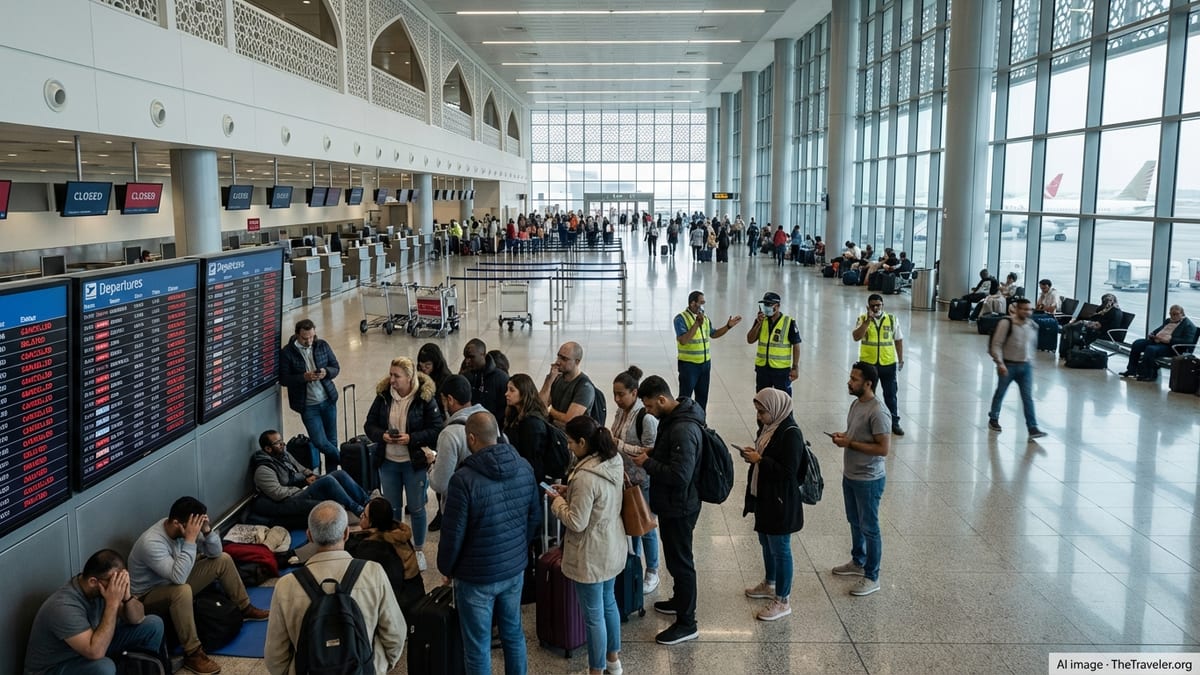
The article centers on a widening multinational effort to secure and reopen the Strait of Hormuz, a chokepoint that carries a major share of global oil and LNG flows. Qatar is aligning more closely with the US-led coalition, while UN diplomacy and naval planning are advancing in parallel, underscoring elevated escalation risk near Iran. The key market implication is renewed downside pressure for energy, freight, and supply chains, with potential for sharp moves in crude, LNG, tanker rates, and insurance costs if disruption intensifies.
The market is still underpricing the second-order effect of a Hormuz security umbrella: the first move is not an outright shutdown, it is a persistent increase in “friction cost” across the Gulf basin. That means higher tanker insurance, wider time-charter rates, and more expensive inventory financing even if flows continue, which hits the weakest links first — smaller refiners, commodity merchants, and levered shipping names with short-duration contracts. The beneficiaries are less the obvious defense primes and more the infrastructure around rerouting, surveillance, and risk management, where pricing can re-rate before volumes actually change. The key asymmetry is LNG. Oil has more fungibility and strategic inventory buffers; LNG supply chains are far more schedule-sensitive, so even small disruptions can force spot cargo repricing and knock-on volatility in European and Asian gas benchmarks within days. That creates a tactical tailwind for US LNG exporters and pipeline-linked gas infrastructure, while worsening margin pressure for power generators and industrials that cannot immediately pass through fuel costs. A prolonged security premium also supports non-Gulf supply optionality, which should modestly improve the relative value of Atlantic Basin barrels and North American cargoes. Consensus seems to treat this as a geopolitical headline with an energy beta, but the real equity implication is a reordering of supply-chain resilience premiums over the next 1-3 months. Freight, marine insurance, and port/logistics operators can outperform even if crude gives back gains, because risk persists after the initial price spike fades. The contrarian risk is de-escalation through visible multinational presence; if the coalition’s mere formation suppresses incidents, vol will mean-revert quickly, making outright commodity longs lower quality than relative-value and options structures.
AI-powered research, real-time alerts, and portfolio analytics for institutional investors.
Overall Sentiment
strongly negative
Sentiment Score
-0.62
