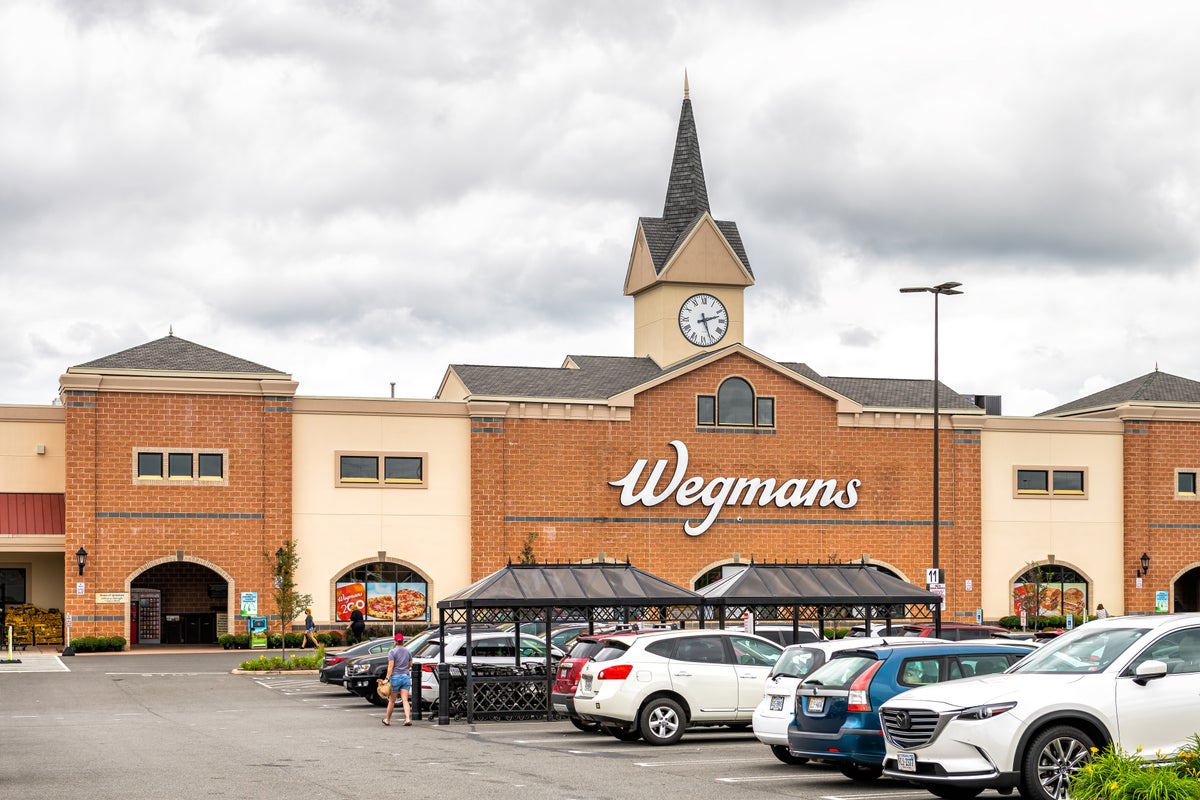
Wegmans issued a recall (notice dated November 26) for Locatelli Grated Pecorino Romano Cheese sold with Wegmans scale labels due to potential Listeria contamination; affected tubs were sold November 14–25 across multiple East Coast states and all lot codes have been removed (UPC pattern 2-77580-XXXXX-7). The notice follows a separate Boar’s Head pecorino romano recall this week (Class I designation for some Boar’s Head products); no illnesses have been reported to date, but the recalls could cause localized retail sales disruption, reputational risk for suppliers/distributors, and warrant monitoring of inventory, returns and potential liability exposure for affected retailers and food distributors.
Market structure: This localized Listeria recall selectively hurts suppliers of grated Pecorino Romano and retailers with concentrated ready‑to‑eat cheese SKUs but is immaterial to national grocers’ core sales (expect <0.5% same‑store sales hit for large chains). Winners are food‑safety testing labs and packaging/sterilization vendors who sell recurring validation services; expect a 5–15% incremental testing revenue bump for exposed vendors over 3–6 months if recalls widen. Pricing power for commodity milk/cheese is unlikely to move materially unless recalls expand to >5% of national supply within 60 days.
Risk assessment: Tail risks include a widening outbreak triggering multi‑jurisdictional Class I recalls, $100M+ litigation pool for a large supplier, and accelerated FDA rulemaking (higher compliance capex of 5–10% for mid‑sized processors). Immediate risk (days) is reputational and inventory recalls; short term (weeks/months) is lost retail shelf space and promotion cost; long term (quarters) is higher OPEX for routine Listeria testing and supply‑chain consolidation. Hidden dependencies: co‑packing relationships and third‑party co‑manufacturers can transmit risk across brands quickly—monitor distributor exposures (SpartanNash/SPTN).
Trade implications: Direct long: NEOG (Neogen, NEOG) and ERF (Eurofins, ERF.PA) exposure—establish 1–2% portfolio longs targeting 15–30% upside in 3–6 months as testing demand rises. Relative trade: long NEOG vs short SPTN (SpartanNash) 0.5–1%—SPTN is more distribution/exposure to recalled SKUs and weaker margin cushion; set stop‑loss 5%. Options: buy 90‑day NEOG 25–35% OTM calls or call spreads sized to 1–2% notional to exploit event‑driven vol expansion.
Contrarian angles: Consensus will overestimate grocery revenue damage and underweight testing beneficiaries; historical parallels (2006–2012 listeria/meat recalls) show testing labs outperformed grocers by 20–40% in the next 12 months. Reaction is underdone for the testing sector and overdone for small regional distributors—if FDA issues >3 related recalls within 30 days, accelerate longs in NEOG/ERF and widen shorts in exposed distributors. Unintended consequence: sustained recalls could force retailers to pay premium (+3–7%) for certified‑safe cheese supply chains, structurally benefiting accredited testing providers.
AI-powered research, real-time alerts, and portfolio analytics for institutional investors.
Request DemoOverall Sentiment
mildly negative
Sentiment Score
-0.25
