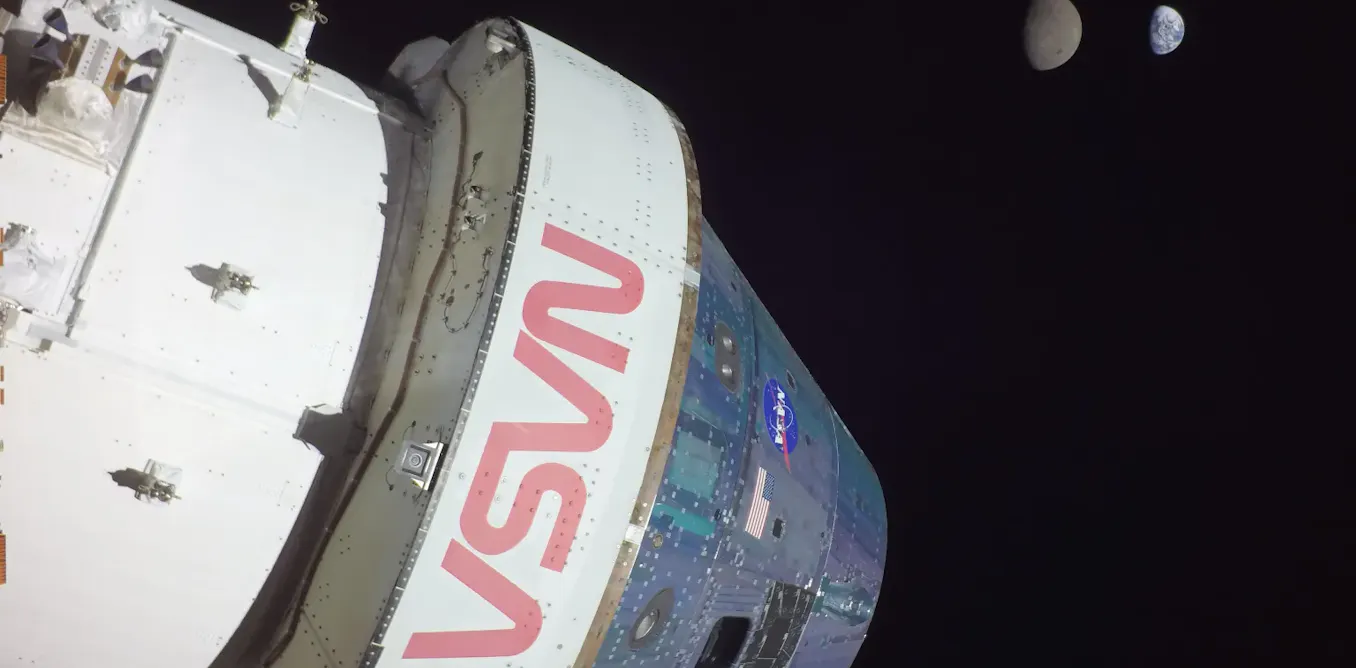
Artemis II will be the first crewed lunar flight since Apollo, carrying four crew on a lunar flyby that the agency says will lay groundwork for an Artemis IV landing. The article attributes the multi-decade delay to technical challenges (e.g., Starliner thruster issues, Orion heat-shield chipping), long development and testing cycles for SLS and Orion, and the need for sustained political and budgetary support across administrations (the Augustine review noted a roughly $3 billion annual shortfall for beyond-LEO exploration). Artemis I was a 25-day uncrewed SLS/Orion integration test in November 2022 that validated systems but underscored the complexity of returning humans to the Moon.
Primes with long-standing, politically sensitive contracts operate with asymmetric downside: technical failures generate headlines but rarely eliminate contract flows because congressional appropriations tend to preserve regional jobs. That protects revenue visibility for incumbents with diversified defense portfolios, but it also shifts value capture away from reputationally damaged commercial franchises and toward suppliers that own niche, hard-to-replace hardware and certification expertise.
Certification and materials risk creates concentrated windows where stock moves decouple from fundamentals—weeks-to-months around re-entry tests, propulsion firings, and budget markups—because a single anomaly can trigger program-level design changes, inspections and multi-quarter schedule slips. Those slips compress free cash flow recognition for commercial vehicle divisions while often increasing funded backlog for defense and guaranteed-cost elements, shifting margin mix unpredictably over 6-24 months.
Consensus is underestimating how procurement structure (fixed‑price vs. cost‑plus) and political geography will reallocate cashflows across suppliers after any tech setback: winners are likely to be firms that own legacy integration skills and test infrastructure, not necessarily the lowest‑cost subcontractors. That makes directional equity bets on program outcomes higher-beta than they appear and suggests event-driven option structures or matched-pair trades as superior ways to harvest asymmetry without clean exposure to headline volatility.
AI-powered research, real-time alerts, and portfolio analytics for institutional investors.
Request DemoOverall Sentiment
neutral
Sentiment Score
0.00
Ticker Sentiment
