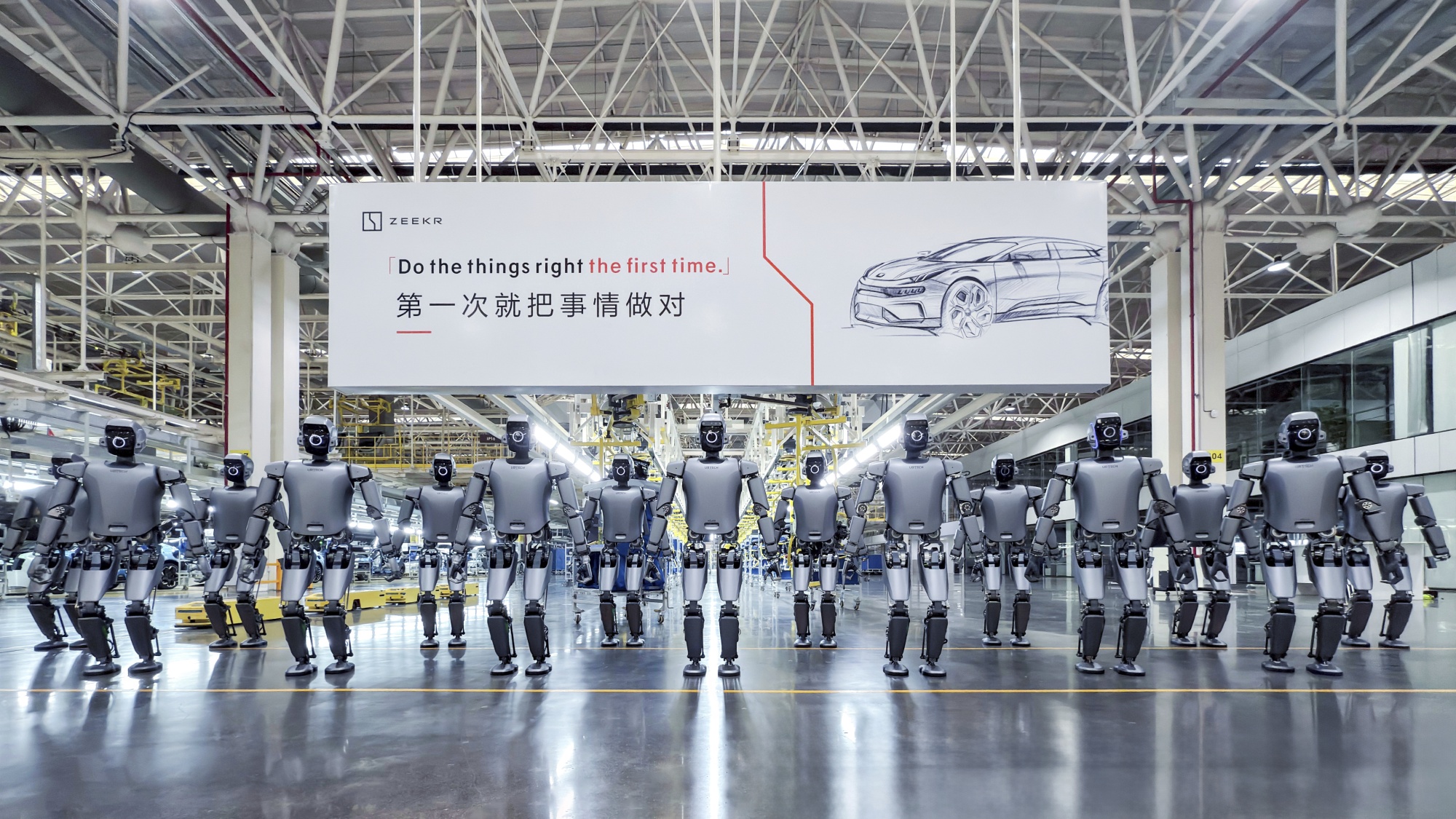
Chinese startups are aggressively pursuing the humanoid robot market, driven by government support, manufacturing expertise, and AI advancements, positioning China to potentially lead the industry despite existing U.S. competition. Companies like EngineAI and Unitree are developing robots for diverse applications, from manufacturing to healthcare, with projections estimating a $7 trillion market by 2050 and Elon Musk expressing concern that Chinese firms may dominate the field. While challenges remain in perfecting humanoid technology and demonstrating economic viability, China's strategic investment and focus on robotics are creating a competitive landscape and driving innovation.
China is aggressively positioning itself to dominate the nascent humanoid robotics market, leveraging substantial government investment, its established manufacturing prowess, and rapid advancements in artificial intelligence. The article highlights a projected 1 trillion yuan ($138 billion) state investment in robotics and high-tech over two decades, significantly outpacing US or European commitments, which is enabling startups like EngineAI and Unitree Robotics to innovate rapidly. This strategic push is underscored by China's aim to produce over 10,000 humanoid robots this year, constituting more than half of global production, and addressing a looming domestic labor shortage, with its working-age population expected to shrink by 22% by 2050. Citigroup's forecast of a $7 trillion market for humanoids by 2050, coupled with Elon Musk's prediction that robot labor could expand the global economy tenfold, signals immense transformative potential. Despite current technological limitations, evidenced by robot failures in public demonstrations, and the historical challenge of commercializing advanced robotics (as seen with Boston Dynamics, previously owned by Alphabet's Google), the intense competition among an estimated 50-60 Chinese companies is driving down costs and accelerating development. Tesla (TSLA) itself plans to deploy thousands of its Optimus robots by year-end, targeting a $20,000-$30,000 price point by 2027, which Citigroup (C) analysts calculate could offer a payback period as short as 36 weeks against the US minimum wage. The geopolitical implications are significant, as leadership in this sector could redefine economic and military power, with some experts suggesting China's state-capitalism model may be advantageous in such capital-intensive, strategic industries.
AI-powered research, real-time alerts, and portfolio analytics for institutional investors.
Request DemoOverall Sentiment
strongly positive
Sentiment Score
0.75
Ticker Sentiment
