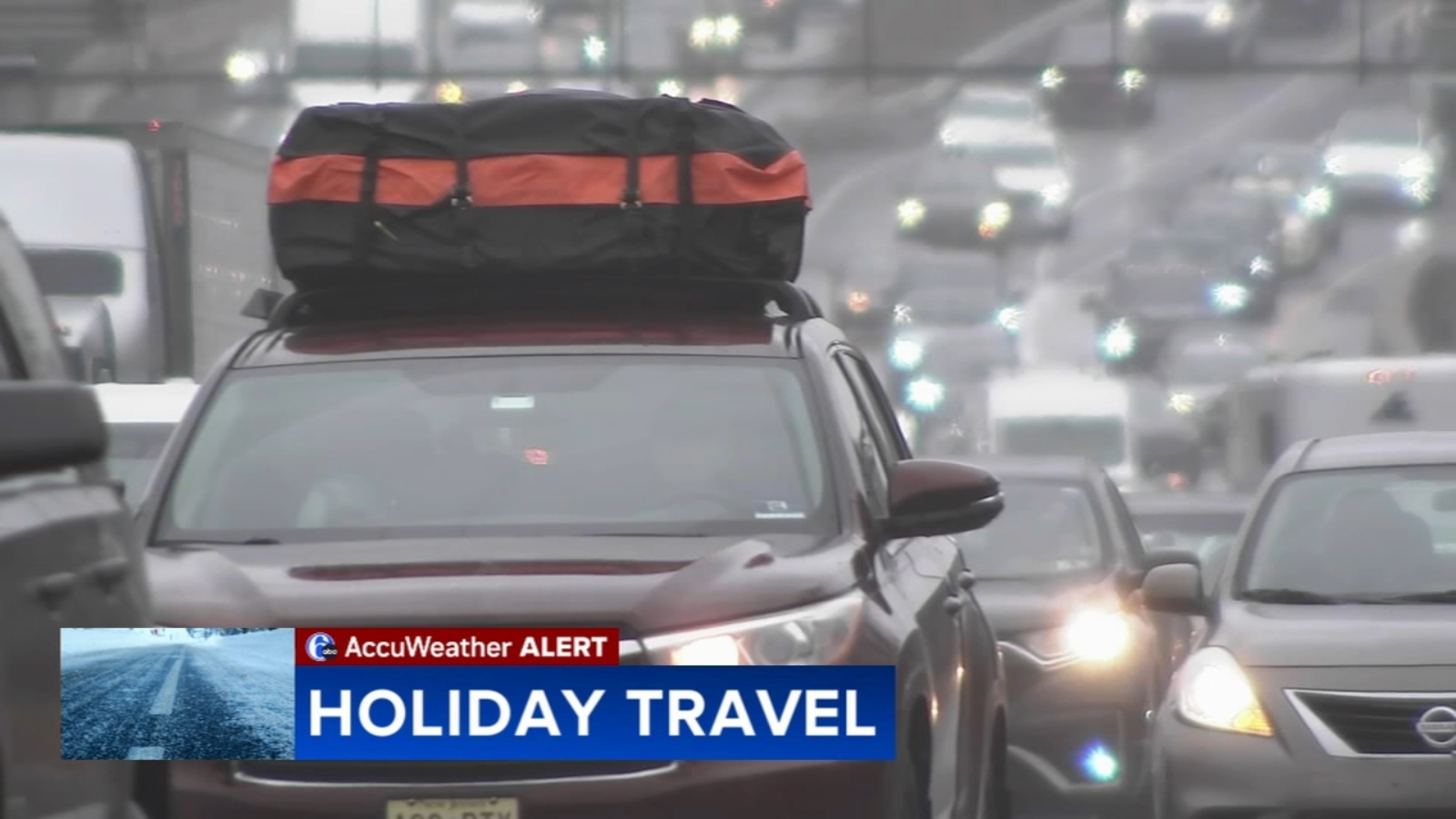
PennDOT and the Pennsylvania Turnpike Commission announced Tier 3 vehicle restrictions ahead of a winter storm expected on Friday, with phased limits beginning at 10 a.m. for I-81 south of I-83 and all interstates west of I-81 (including I-76/I-70 and western turnpike extensions) and additional restrictions at 2 p.m. covering I-81 north of I-83, Route 33, US-22 (I-78 to Route 33) and interstates east of I-81. Under Tier 3, most commercial vehicles, buses, RVs, motorcycles and passenger vehicles towing trailers are prohibited except for loaded single trailers with chains or approved traction devices, speed limits are cut to 45 mph and unaffected commercial trucks must stay in the right lane. The measures coincide with AAA projections of nearly 1.4 million Philadelphia-area travelers over Dec. 20–Jan. 1 (a 2.3% increase year-over-year, ~90% driving), raising the prospect of significant holiday travel and logistics disruption; PennDOT warned of prior winter-season crash data (8,329 crashes, 29 fatalities, 2,959 injuries) to underscore safety risks.
Market structure: Immediate winners include de-icing and road-maintenance suppliers (e.g., Compass Minerals CMP) and local tow/plow contractors; losers are time-sensitive transport—including parcel carriers, truckload brokers and airlines serving PHL—where expect route-level transit times to rise 10–20% on affected corridors for 6–72 hours. Competitive dynamics favor firms with redundant networks or pricing power (UPS, some asset-light logistics brokers) while pure-play regional carriers and last-mile contractors face margin pressure and potential spot-rate spikes. Cross-asset: expect a 20–60% intraday jump in implied volatility for travel/airline equities, a transient 3–10% uptick in regional natural gas (if cold persists), and negligible sovereign bond or FX moves absent a multi-state escalation.
Risk assessment: Tail risks include multi-day interstate closures causing cascading holiday-delivery failures that compress Q4 revenue for exposed retailers by 1–3% and elevate auto-insurance P&C losses regionally by ~5–10% above seasonal norms. Time horizons: cliffs in days (0–3) for travel and logistics, carry-through weeks (1–4) for delivery backlogs and short-term earnings noise, minimal structural effect beyond a quarter unless storms recur. Hidden dependencies: e‑commerce cutoff times, UPS/FDX hub resilience and state-level salt inventories; catalysts that would amplify impacts are FAA mass cancellations or contiguous regional cold extending >7 days.
Trade implications: Favor short-dated, event-driven trades: tactical long exposure to CMP (1–3% notional, 2–6 week hold) and small, size-limited bearish put-spreads on large US carriers (e.g., UAL/AAL) expiring 7–14 days to capture volatility; implement a relative-value long UPS / short FDX position (1–2% net notional) to play network-resilience premium. For commodities, set a conditional long on short-dated Henry Hub call-spreads (0.5–1% notional) only if 7-day heating-degree-days run >10% above seasonal baseline; after the storm, look to sell travel/airline volatility within 48–72 hours of realized-vol crush.
Contrarian angles: The market tends to over-rotate into broad travel/airline selloffs on single-state storms—this one is geographically limited, so post-event IV will likely mean-revert quickly; selling premium 3–5 days after clears often captures >30% IV decay. Historical parallels (holiday storms 2014–2019) show localized EPS hits to airlines/trucking of 1–2% for the quarter with full recovery in subsequent weeks, so size event trades small and use options to cap tail risk. Unintended consequences include CMP underperformance if warmer-than-expected forecasts arrive or if inventory replenishment is immediate—use stop exits and conditional triggers tied to HDD/airport cancellation metrics.
AI-powered research, real-time alerts, and portfolio analytics for institutional investors.
Request DemoOverall Sentiment
mildly negative
Sentiment Score
-0.30
