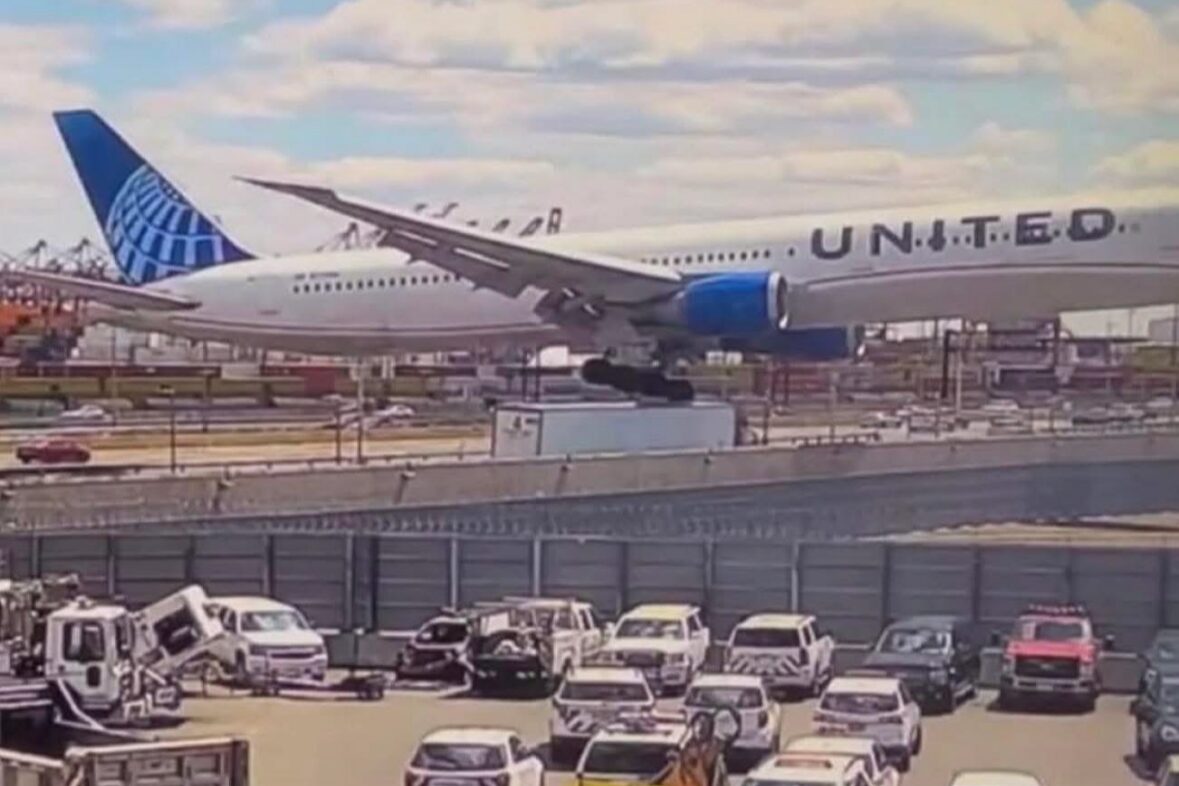
United Flight 169, a Boeing 767-400ER carrying 221 passengers and 10 crew, struck a light pole and tractor-trailer while landing at Newark on May 3, 2026, causing damage to the aircraft, the pole and the truck. No passengers or crew were injured, but the truck driver was hospitalized with minor injuries and the NTSB has classified the event as an accident and requested the cockpit voice and flight data recorders. The incident is primarily an operational and safety matter, with limited direct market impact beyond scrutiny of United and Newark approach procedures.
This is more of an idiosyncratic operational event than a true balance-sheet or demand shock, so the market should treat the initial move in UAL as a headline-risk overreaction unless the investigation widens into systemic maintenance or runway-procedure issues. The near-term risk is not compensation from this single incident; it’s incremental scrutiny on Newark operations, which can pressure unit costs through schedule padding, inspection burden, and higher cancellation risk if regulators or the carrier slow throughput. The second-order read-through is actually more negative for airports and infrastructure reliability than for airlines broadly: Newark’s constrained approach geometry and roadside exposure create a repeatable operational vulnerability that can raise insurance, delay propagation, and local regulatory friction. If the NTSB finds a procedural or weather-governance issue, the pressure likely shifts from UAL’s brand to the airport authority’s operational model, which can still hurt UAL through slot utilization and on-time performance over the next 1-3 months. BA is largely insulated at first order because this is not a design-specific event, but any extended grounding, inspection directive, or public narrative about 767 approach/gear vulnerability would be marginally negative for the widebody aftermarket and maintenance cycle. The contrarian point: the absence of injuries and the quick resumption of operations reduce the probability of a durable earnings hit; this looks like a trading headline, not a multi-quarter demand impairment. That makes the opportunity more about fading short-term volatility than about establishing a structural short.
AI-powered research, real-time alerts, and portfolio analytics for institutional investors.
Overall Sentiment
mildly negative
Sentiment Score
-0.35
Ticker Sentiment
