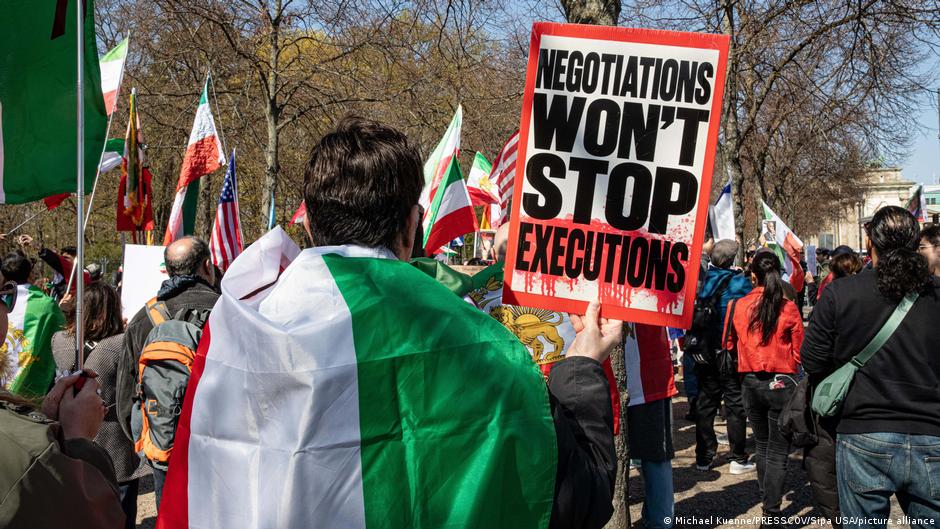
Amnesty International said global executions rose to 2,707 in 2025, up 78% year over year and the highest level since 1981, driven mainly by Iran's 2,159 executions and Saudi Arabia's 356. The report also noted 2,334 new death sentences and 25,508 people under sentence of death at year-end, while excluding likely-thousands more executions in China. Despite the surge, Amnesty cited progress in abolition efforts, including reforms in Vietnam, legislative moves in Gambia, Liberia and Nigeria, and Zimbabwe's commutation of all existing death sentences.
The investable signal here is not the humanitarian headline itself, but the policy regime it implies: states under fiscal stress and domestic legitimacy pressure are increasingly willing to use punitive justice as a low-cost display of control. That tends to coincide with tighter internal security budgets, greater surveillance spend, and more discretionary legal risk around foreign firms operating in or adjacent to those jurisdictions. The second-order effect is a modest but durable risk premium for EM assets with opaque rule-of-law profiles, especially where capital punishment is being used as a political tool rather than a narrow criminal-justice instrument.
The clearest market implication is for sectors exposed to Gulf and frontier-market sovereign risk. Elevated execution intensity in Saudi Arabia and Iran raises the probability of retaliatory rhetoric, sanctions choreography, and episodic diplomatic friction, which can spill into shipping, energy infrastructure, and regional risk assets over a 3-12 month horizon. Even when direct trade flows are unchanged, higher headline repression tends to widen credit spreads and weaken inbound FDI because global allocators price governance opacity as a tail-risk multiplier.
In the U.S., the issue is more likely to matter through legal/regulatory optionality than broad macro impact. If death-penalty use becomes a salient election-cycle issue, expect more state-level divergence and litigation around prison contractors, forensic services, and pharma supply chains tied to lethal-injection protocols. That creates a narrow but actionable volatility setup in names with asymmetric headline exposure, while the broader market impact remains limited unless federal courts or state referenda materially change the policy direction.
Consensus is probably underestimating how much this kind of governance signal bleeds into capital allocation decisions in emerging markets. The bigger miss is that the abolition trend and the execution spike can coexist: reformers are winning the long game, but the near-term state response is often to intensify coercion as a last-ditch legitimacy strategy. That makes this a classic slow-burn negative for EM multiples rather than an immediate catalyst event, with the highest payoff in relative-value shorts against more transparent jurisdictions.
AI-powered research, real-time alerts, and portfolio analytics for institutional investors.
Request DemoOverall Sentiment
strongly negative
Sentiment Score
-0.72
