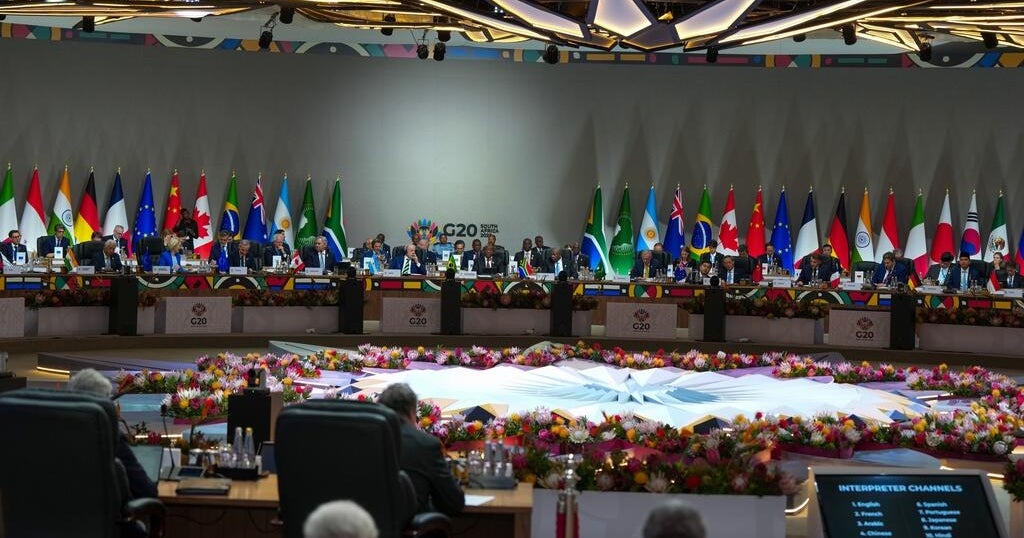
South Africa pushed through a 122‑point leaders' declaration at the opening of the G20 summit in Johannesburg despite a U.S. boycott and reported American pressure not to adopt a joint communique; Pretoria framed the document as a victory for developing‑country priorities, emphasizing more support for climate‑related disaster recovery, sovereign debt relief, green energy transitions and harnessing critical minerals to tackle inequality. While South Africa says the declaration was adopted unanimously, Argentina did not endorse it and the absence of President Trump — who has accused South Africa of mistreating its Afrikaner minority and opposes the summit's climate and inequality focus — deepens a diplomatic rift that leaves the declaration's practical impact uncertain given the G20's consensus rules and the fact the U.S. assumes the rotating presidency after this summit.
South Africa pushed a 122-point leaders' declaration through at the opening of the Johannesburg G20 summit despite a U.S. boycott and reported U.S. pressure not to adopt a joint communique; Argentina did not endorse the document and the U.S. was largely absent after President Trump refused to attend. The declaration emphasizes actionable items for developing countries including more support for climate-related disaster recovery, sovereign debt relief, a transition to green energy and harnessing critical mineral wealth, which Pretoria framed as a victory for African and developing-country priorities.
The move is symbolically significant — it is the first G20 summit in Africa and signals host-driven agenda-setting — but practical impact is uncertain because G20 outcomes rely on consensus and the United States assumes the rotating presidency after this summit. The U.S. absence and a deepening diplomatic rift reduce near-term prospects for coordinated implementation of the declaration's measures and increase the chance that the bloc's direction will shift once Washington leads the agenda.
For markets, the announcement reinforces themes in sovereign debt, ESG/climate policy and critical-minerals supply chains that could influence sectoral flows over the medium term, yet the immediate market reaction should be muted given the procedural and political uncertainty. Investors should therefore watch for concrete follow-through — specific financing commitments, multilateral arrangements on debt relief, and country-level policy measures — before reweighting portfolios toward these themes.
AI-powered research, real-time alerts, and portfolio analytics for institutional investors.
Request DemoOverall Sentiment
mixed
Sentiment Score
-0.05
