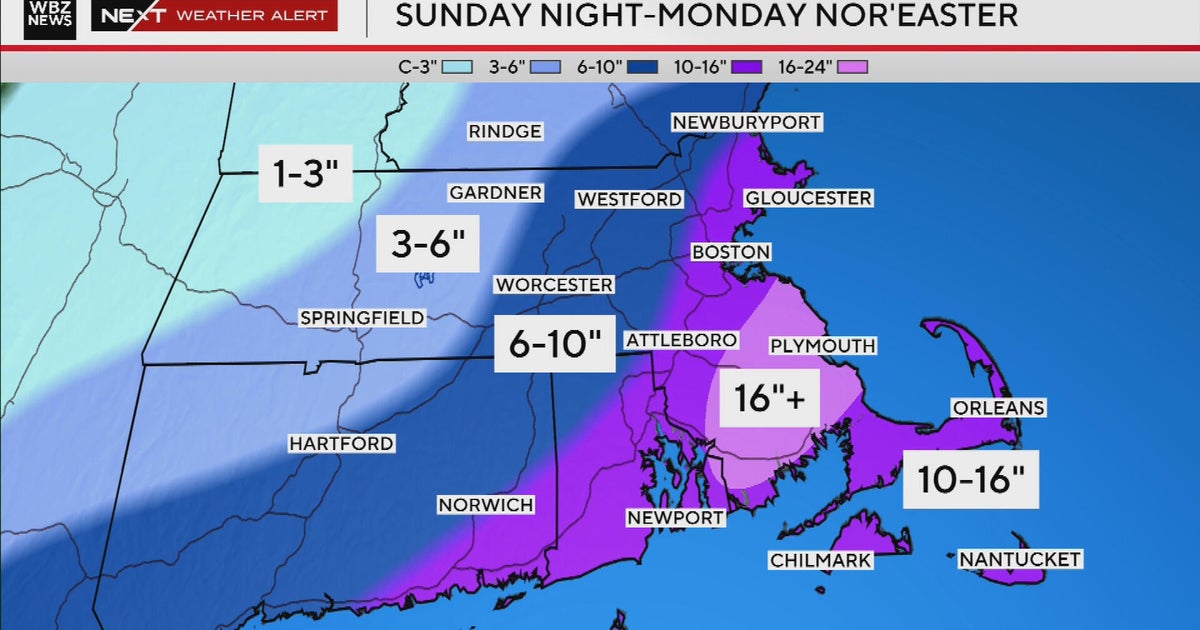
A rapidly intensifying nor'easter (undergoing bombogenesis) is expected to impact eastern Massachusetts late Sunday into Monday with 10–16 inches of snow along and east of I‑95 (6–10" inland), localized totals >16" possible in Plymouth/Bristol, and peak snowfall rates over 1"/hr. Northeast gusts of 55–70+ mph along the coast, combined with heavy wet snow, create a high risk of blizzard conditions, power outages, roof collapse and significant travel disruption, plus minor–moderate coastal flooding at peak tides around 3 p.m. Monday and 3–4 a.m. Tuesday.
Market structure: Winners are short‑term suppliers of emergency gear and fuels (GNRC, NG futures, HD/LOW) and local contractors; losers include Boston‑centric airlines (JBLU), commuter rail/port operators and regional retailers facing closures. Heavy, wet snow + 55–70 mph gusts raise outage and coastal‑flood repair demand; regulated utilities (ES, NGG) face near‑term repair costs but have rate‑recovery mechanics that blunt permanent share loss. Supply/demand: expect a 5–15% intra‑week lift in New‑England spot NG and electricity LMPs if temperatures remain below seasonal and outages depress supply.
Risk assessment: Tail risks include multi‑day outages >72 hours causing business‑interruption claims (insurance shock) and major coastal infrastructure damage triggering municipal relief and reallocation of state budgets. Immediate horizon (0–7 days): travel/logistics disruption and commodity moves; short (weeks–months): roof/generator replacement cycle and insurer loss recognition; long (quarters): potential rate filings for utilities and municipal capex for coastal defenses. Hidden dependencies: local trucking/labor availability and inventory for generators/roofing can cap upside and delay recovery.
Trade implications: Favor short‑dated NG call spreads into the storm (capture heating demand spike); tactical long GNRC exposure (0.5–1% portfolio via calls) to play generator demand; relative short JBLU vs long DAL (pair trade) for 1–2 week window to capture BOS concentration risk. Buy regulated utility (ES) only on >3% post‑storm drawdown for 3–12 month hold—storm costs likely recoverable via rate cases.
Contrarian angles: The market may over‑penalize utilities and insurers; regulated utilities typically pass storm costs to customers, so a >6–8% selloff in ES/NGG would be an asymmetric buy. Generator makers (GNRC) can see a sharp but short‑lived revenue spike; avoid paying full price—prefer options or tight time horizons. Historical nor'easters show 1–3 week mean reversion in travel names and commodities once service restorations begin.
AI-powered research, real-time alerts, and portfolio analytics for institutional investors.
Request DemoOverall Sentiment
moderately negative
Sentiment Score
-0.40
