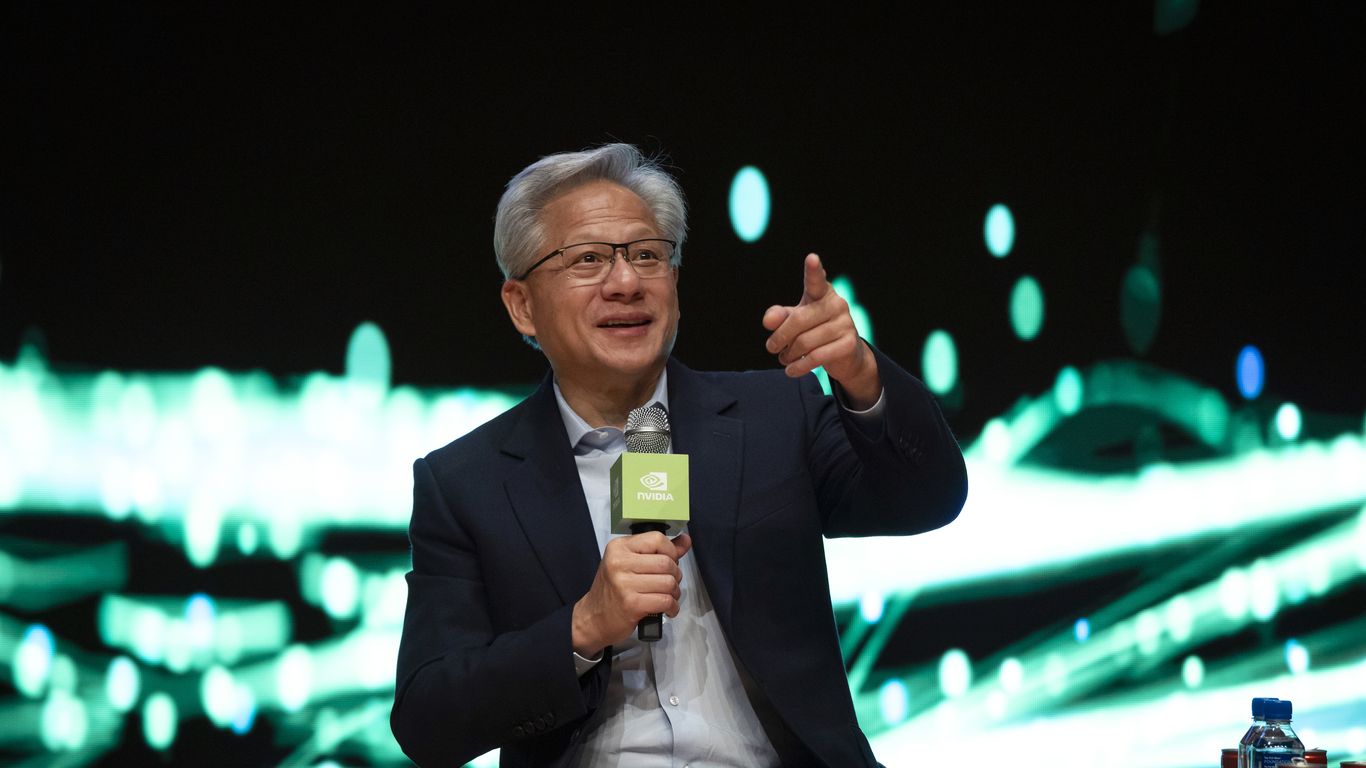
Nvidia CEO Jensen Huang has issued a stark warning that China is poised to win the global AI race, citing potential U.S. regulatory hurdles and Beijing's strategic subsidies for domestic AI chip alternatives. Huang, whose company is significantly impacted by the U.S. ban on advanced chip sales to China, emphasized the critical importance of the Chinese market, which represents a $50 billion opportunity and hosts a large proportion of global AI researchers and open-source model development. His comments highlight the escalating geopolitical competition in AI and the potential for U.S. policy decisions to either bolster or hinder American leadership, directly affecting companies like Nvidia and the broader AI investment landscape.
Nvidia CEO Jensen Huang issued a stark warning, stating China is poised to "win the AI race" due to contrasting policy environments. He cited potential U.S. regulatory burdens, with states considering "50 new regulations," while Beijing actively subsidizes energy costs to bolster local AI chip alternatives. This reflects a "moderately negative" sentiment regarding the U.S.'s competitive stance in AI.
The U.S. ban on advanced chip sales to China directly impacts Nvidia, which views China as a critical $50 billion business opportunity. Huang emphasized China's significant role in AI research, noting it hosts "50% of the world's AI researchers" and generates the "vast majority of leading open source models." This underscores the strategic importance of market access for American technology companies.
Despite previous statements suggesting China was "nanoseconds behind America," Huang's recent comments highlight a more urgent concern about losing the race, tempered by an assertion that the U.S. is "well ahead today." He advocates for U.S. policies to increase energy production and attract AI developers, aiming for an 80% global AI market share. The overall tone is cautious, reflecting the geopolitical complexities and regulatory uncertainties.
AI-powered research, real-time alerts, and portfolio analytics for institutional investors.
Overall Sentiment
moderately negative
Sentiment Score
-0.45
Ticker Sentiment
